The video link of Wilbur Quispe weaving at the Ann Arbor Art Fair is on the blog page but was not included in the email notice – click here to view.
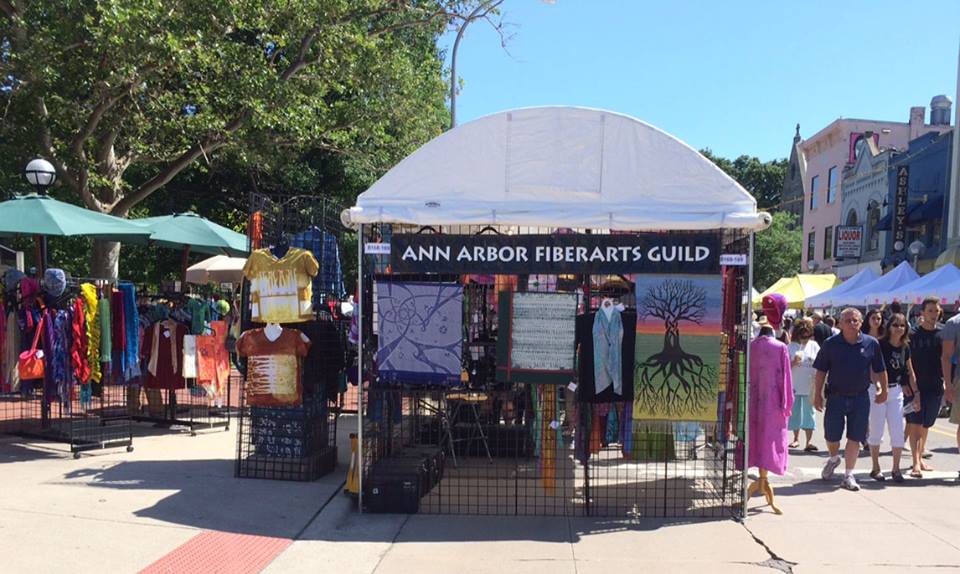
For over 50 years the city of Ann Arbor, Michigan becomes one of largest street art fairs in the country with 4 different art fairs going on simultaneously for 4 days in July. Streets are closed off as over 800 artists from around the country, as well as right here in town, set up shop with items large and small made from clay, glass, wood, and metal; paintings and photographs; sculptures and of course…. fiber! The Ann Arbor Fiberarts Guild (my local guild) has a booth as part of the State Street Area Art Fair.
This is a team effort with myself and 15 other members selling items, plus 27 members volunteering their time to help man the booth this year.
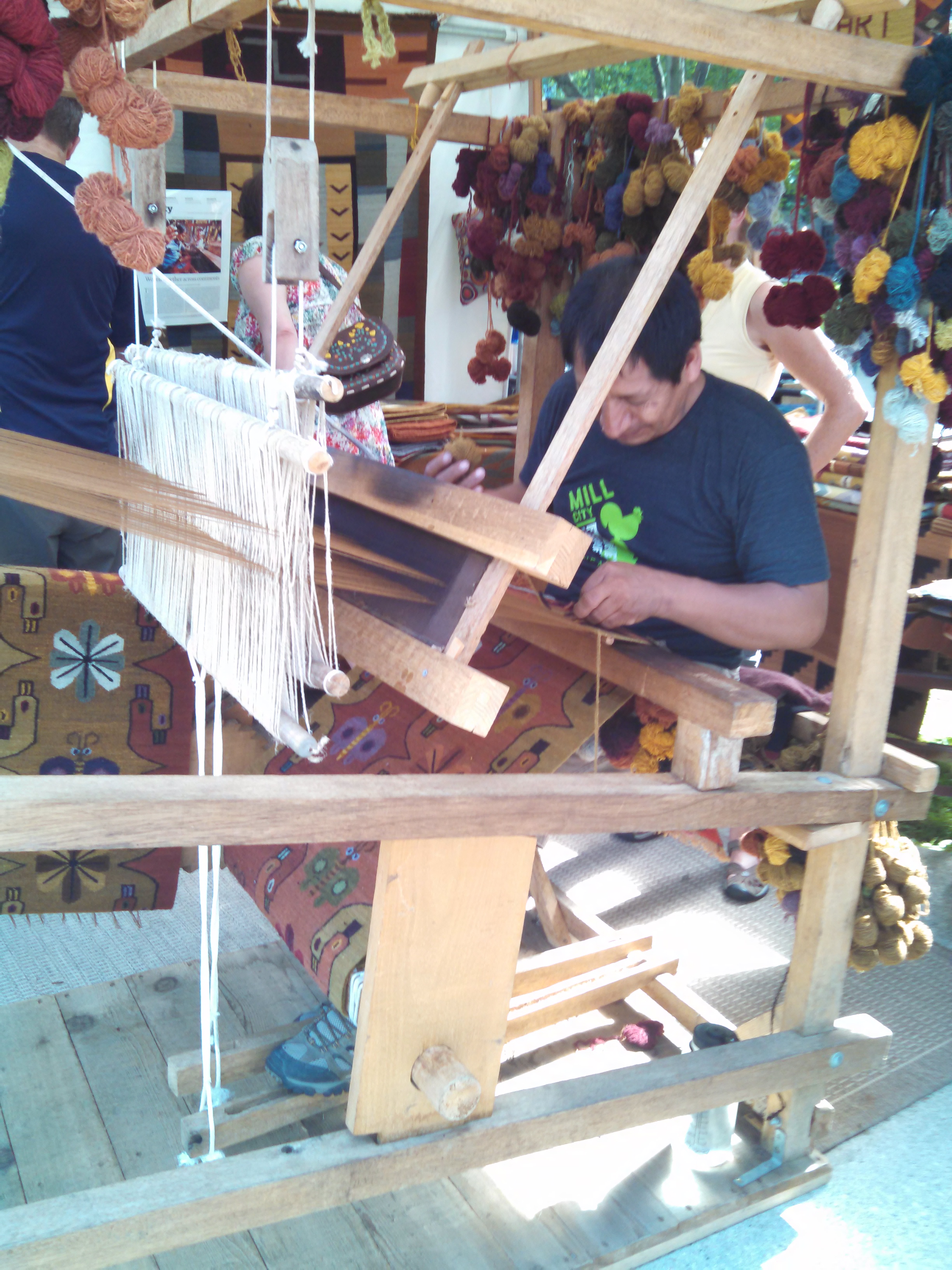
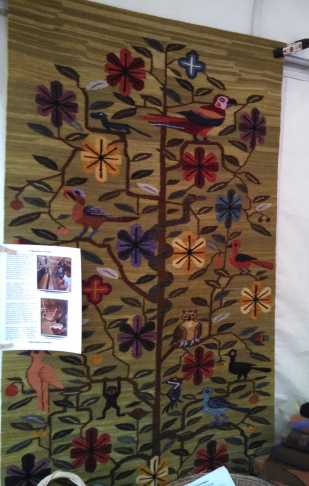
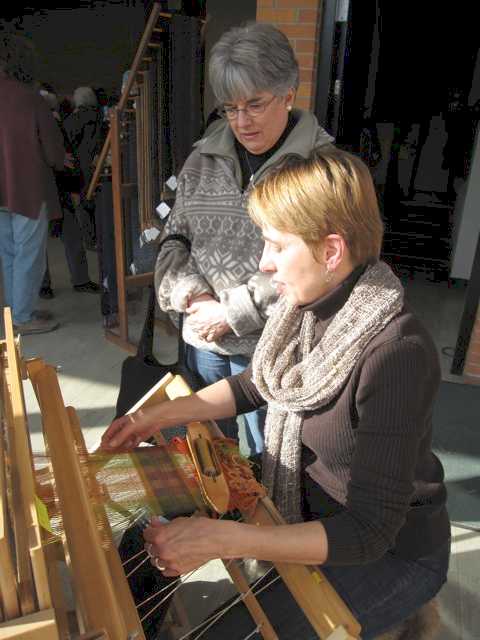
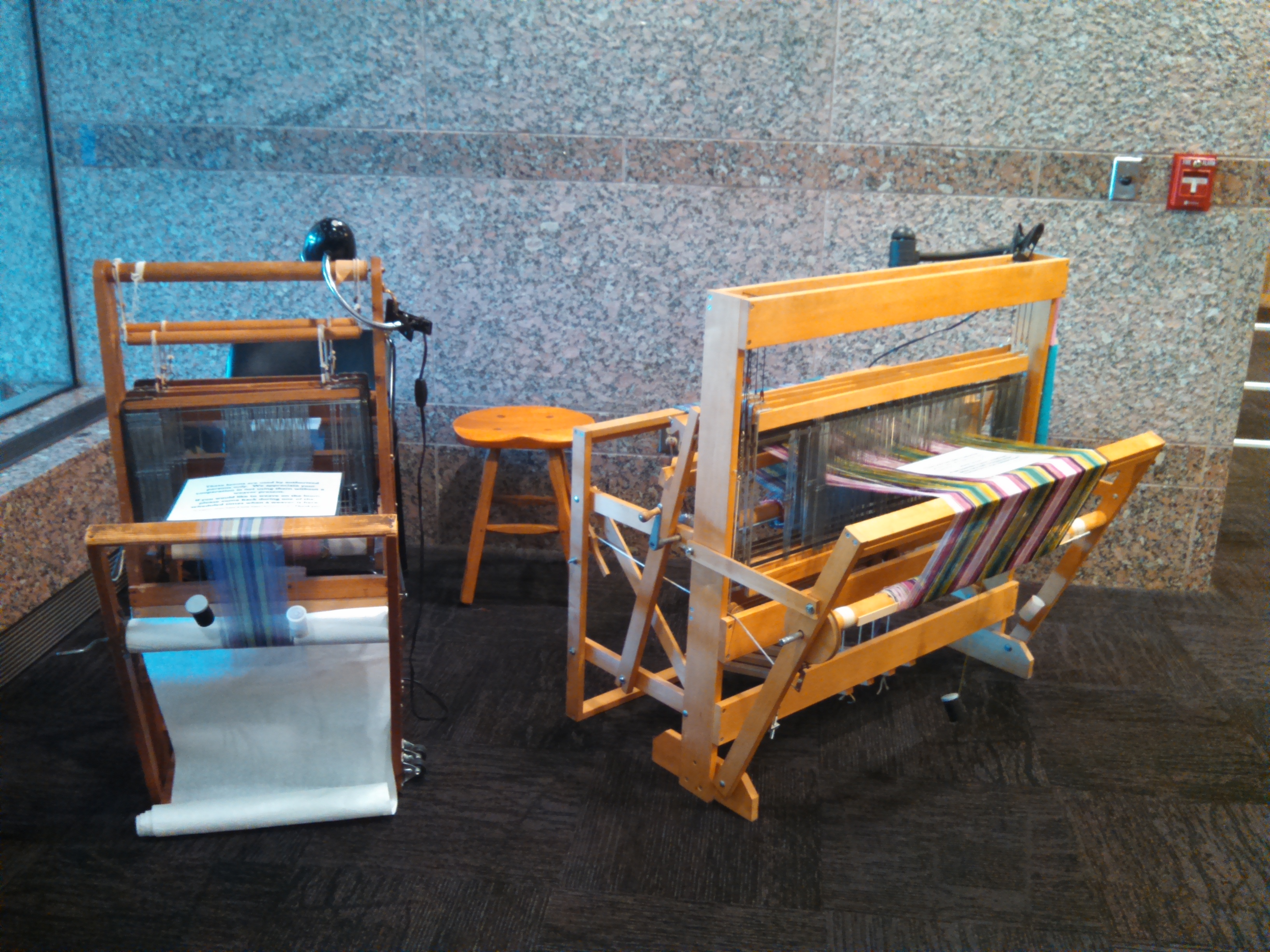
As I walked past the booths of artists on my way to work one of evening shifts, one booth in particular caught my eye – a weaver working on a large loom….
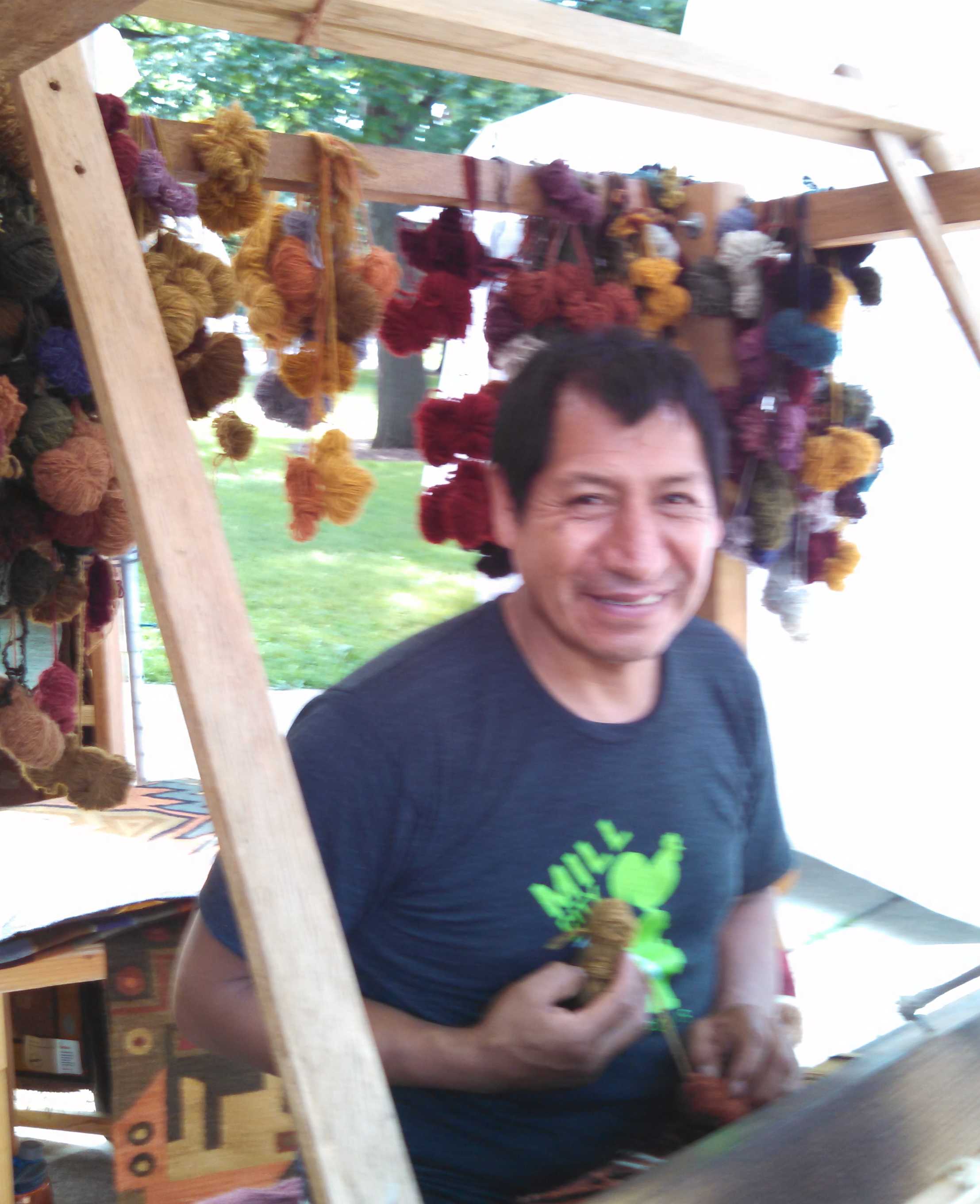
.. and of course I had to stop and take a look! Here I met Wilbur Quispe, a master weaver visiting from Peru, and Melanie Ebertz, of ArtAndes. ArtAndes, based in Stillwater MN, was created out of Melanie’s personal interest in the people, culture, and textiles of Peru. Over the years she has developed long-term collaborations with weavers, especially those in the Ayacucho area of the Andes.
The story of how Wilbur Quispe became one of Peru’s master weavers is fascinating. His dream is to create a weaving workshop in the Ayacucho area with enough looms to teach several men at a time and thus providing jobs for weavers, spinners, and the gathering the dye materials. In 2011, he was interviewed by Dick Gordon for NPR’s ‘The Story’.
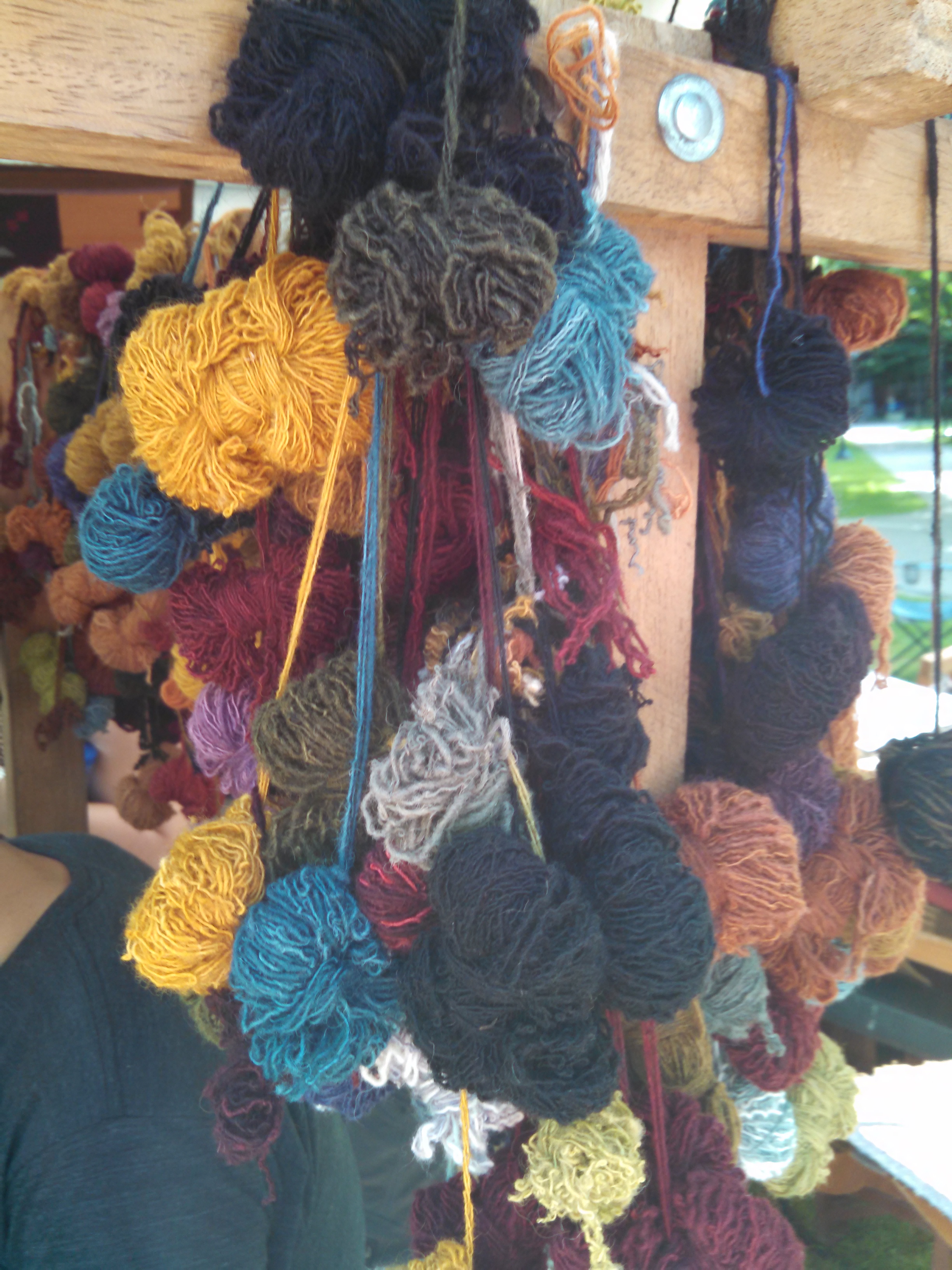
As I am not fluent in Spanish and Wilbur is not fluent in English, Melanie explained how each rug is made. Using Alpaca fiber, sheep wool, and traditional methods going back thousands of years, 3 ply yarn is handspun on drop spindles creating a stronger, tighter, and finer yarn for weaving. Natural dyes made from local leaves, seeds, minerals and insects are used to create color fast hues with no harm to the environment.
I watched as Wilbur worked without using a cartoon (a physical pattern/drawing to follow) creating the images from memory.
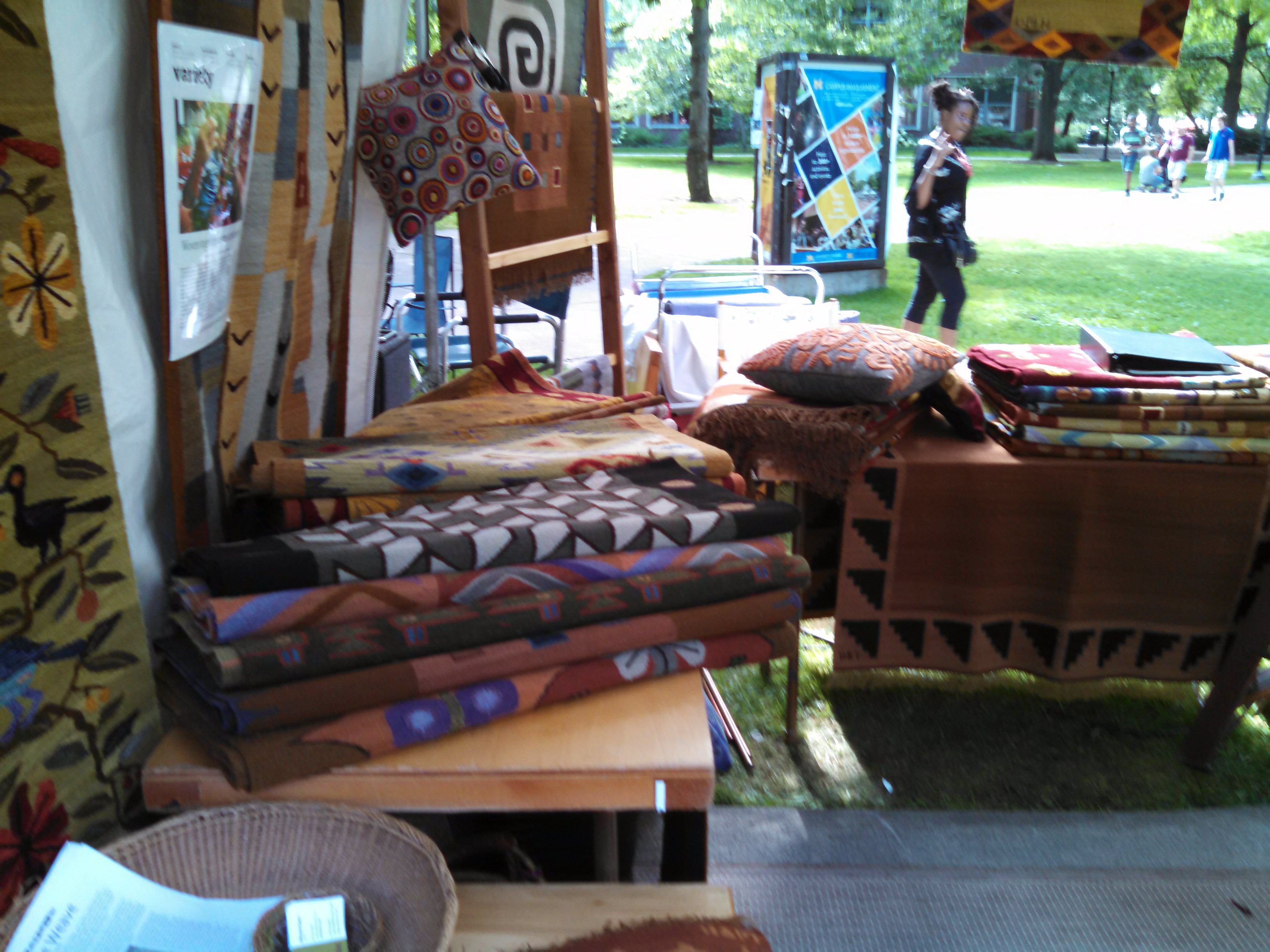
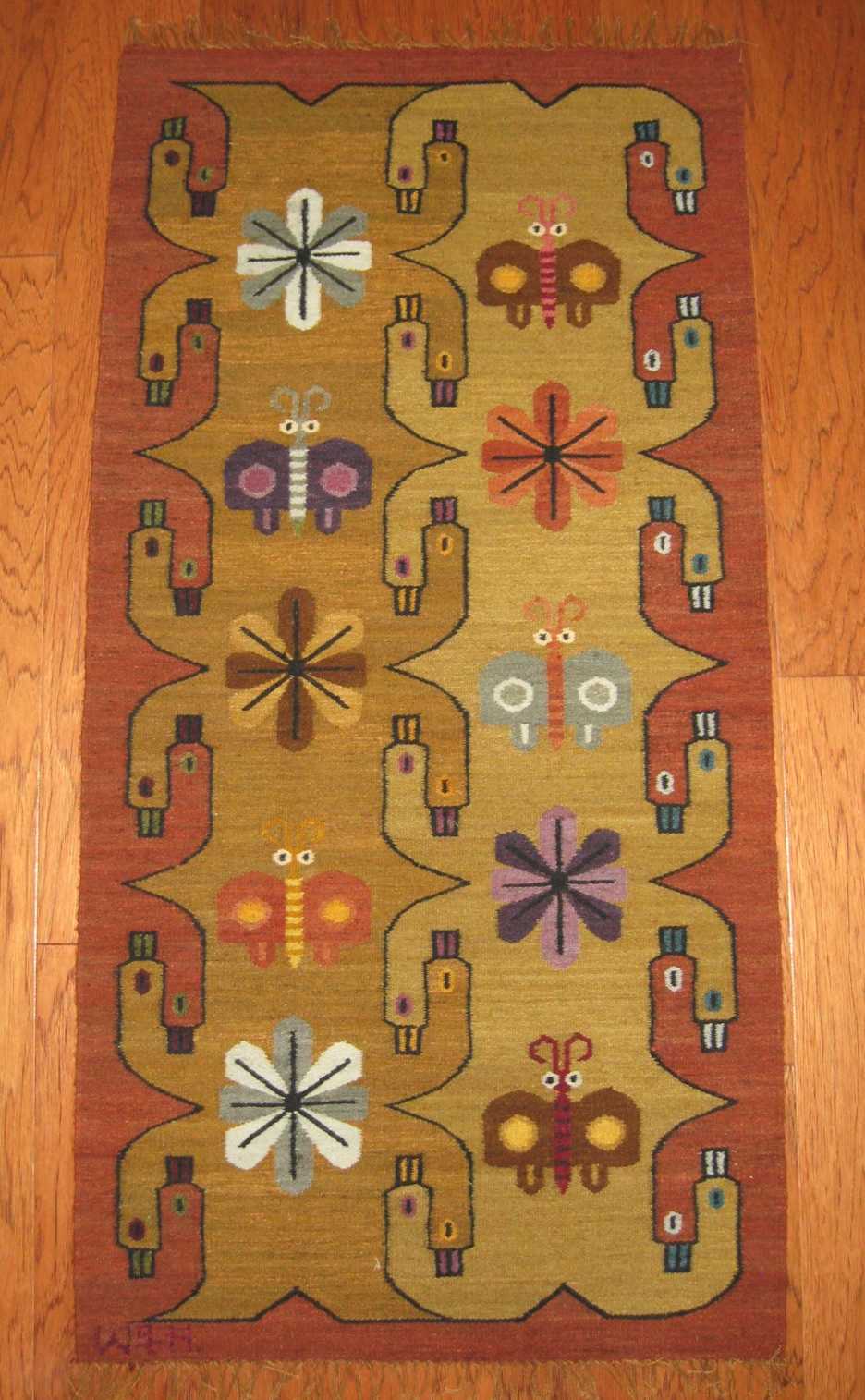
These exquisite contemporary rugs use many ancient pre-Incan and pre-Columbian motifs.

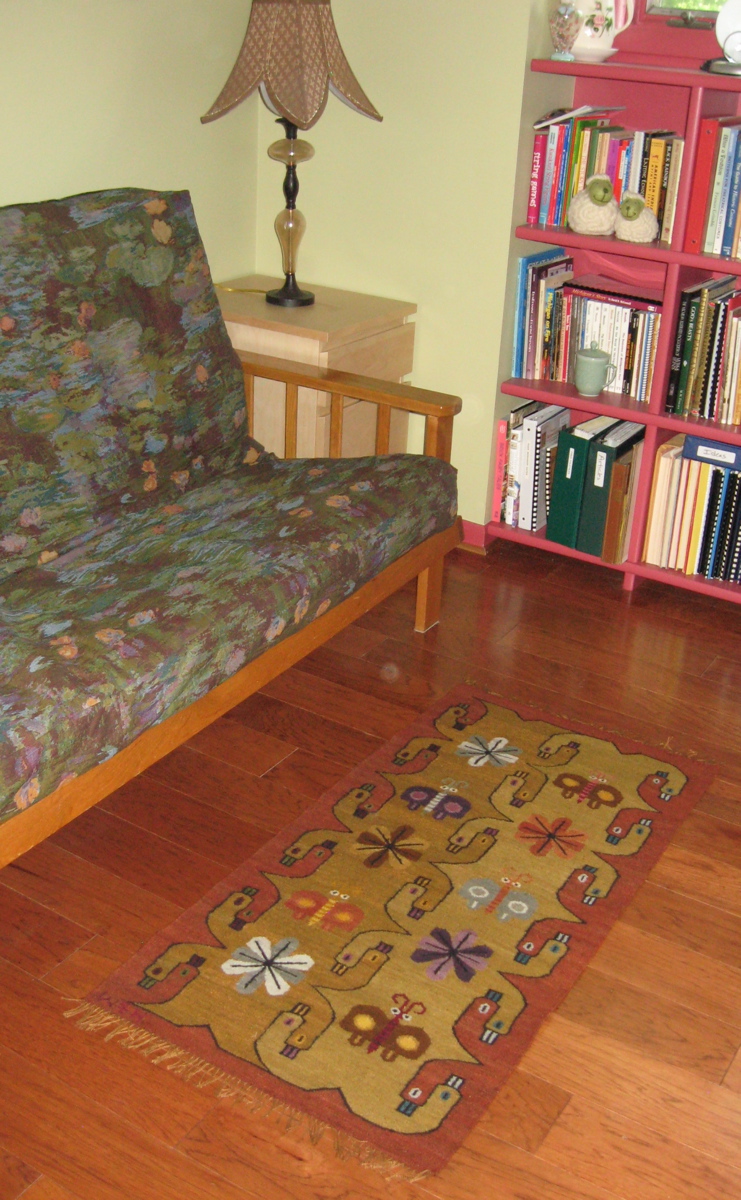
I was drawn to the pattern of intertwined birds used as the border on the rug Wilbur was weaving. This image dates back to a time before the Incan Empire. I am happy to say that a smaller version of the rug has found a place in my home!
Sitting with my feet resting on wool from the Andes I look down and through the art of weaving, I am connected to artisans throughout time and from around the world.
Posted in dye, Interesting stuff, Projects, tapestry, weaving | Tags: Ann Arbor Fiberarts Guild, Art, ArtAndes, collaboration, creativity, design, Dick Gordon NPR, drop spindle, ethnic art forms, hand dyed yarn, hand spun yarn, hand woven rugs, Incan Empire, natural dye, Peru, pre-Columbian, rug, spinning, tapestry, textiles of Peru, weaving, Wilbur Quispe
Guilds and associations are great places to connect with other artists, bounce ideas around, get support, feedback, and be challenged to push one’s creativity and art. My fiber guild is the Ann Arbor Fiberarts Guild and back in May 2014, a challenge was issued for the April 2015 meeting:
Recycled and Repurposed Runway
Tablecloths, cassette tape, telephone wire, discarded garments, curtains and draperies, old sweaters, cast off jewelry – any and all of these materials might go into a garment or accessory you create for this creative runway show.
Your object of fashion may be wearable and useable…. or not,
sedate or flamboyant…. or something in between,
fashionable…. or not.
The only criteria is it must be made from used materials.
How creative can Guild members be?
We will learn the answer to that on the runway!
I had already woven a garment using audio cassette tape [see July 2013 post “Recycle… Upcycle…. Fairs… and more…..”] which had been part of our annual spring fashion show in 2014 so I wanted to come up with something new. What to use and what to do? For the next 9 months ideas simmer in the back of my mind…. and then I cleaned out a cabinet. There were the National Geographic maps that had been collecting for over 30 years!
Cartography ~ study and practice of making maps
The premise being that by combining science, aesthetics, and technique,
reality can be modeled in ways that communicate spatial information effectively.
I’ve always liked maps. The lines, shapes, colors can be beautiful works of art. We even used them to decorate the nursery when the kids were little. I would weave something out this pile of maps!
But what?
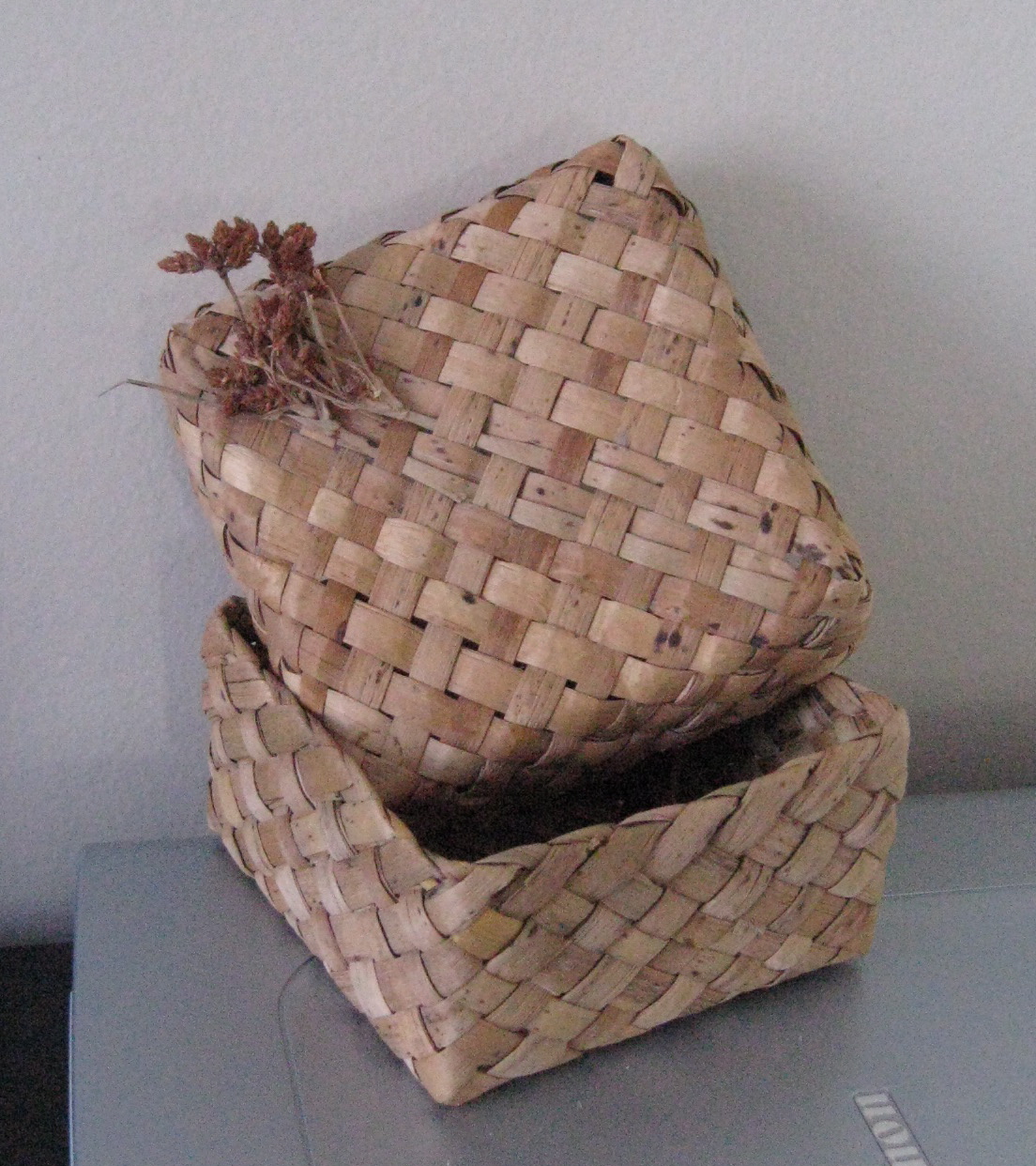
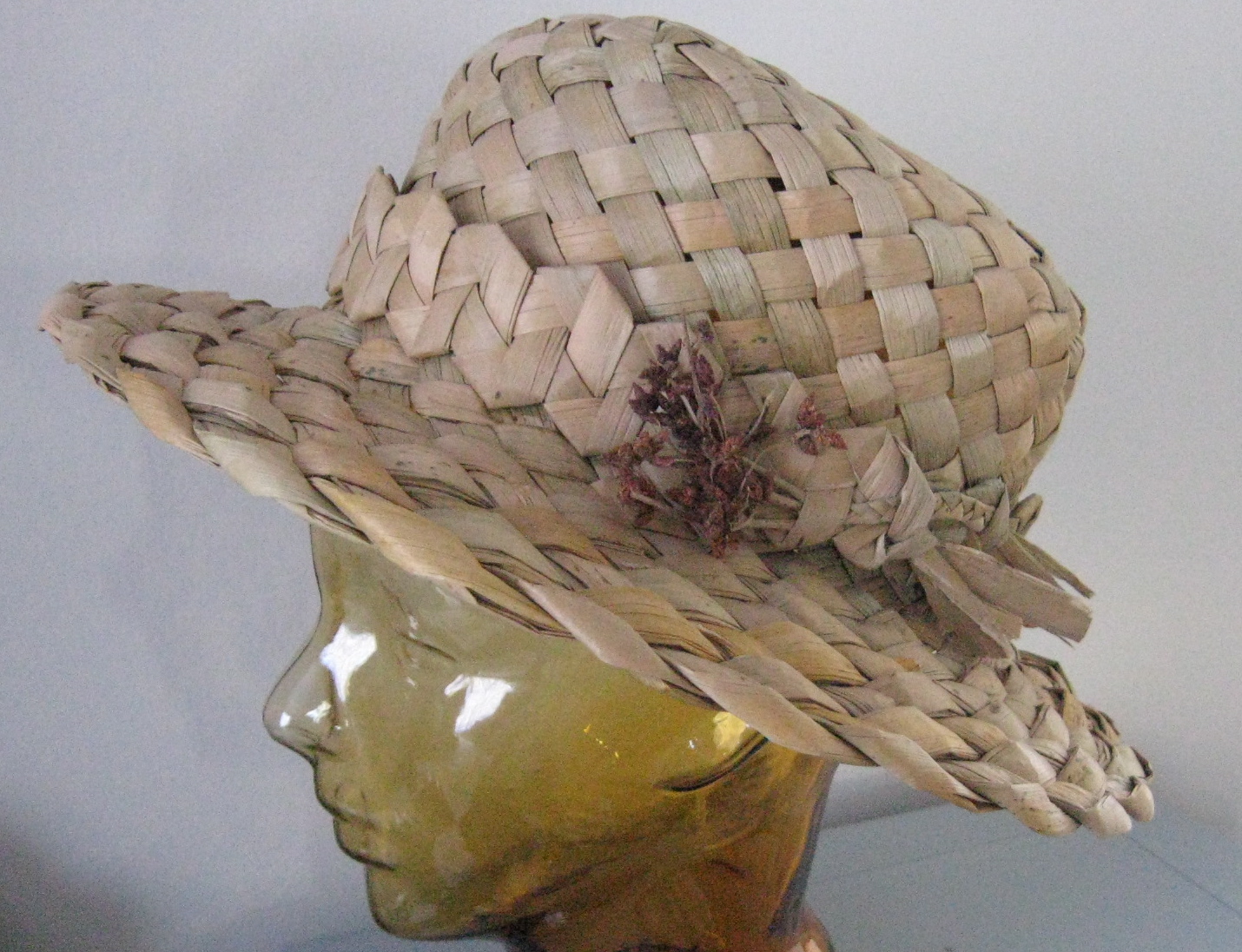
In 1999, I attended my first Association of Guilds of Weavers, Spinners and Dyers summer school taking a course on weaving with bulrushes taught by Linda Lemieux. In the USA, bulrushes are a protected plant but in the UK, they can be cultivated and harvested making this was a unique opportunity for me. We wove braided bands, containers and finished the week with making a hat.
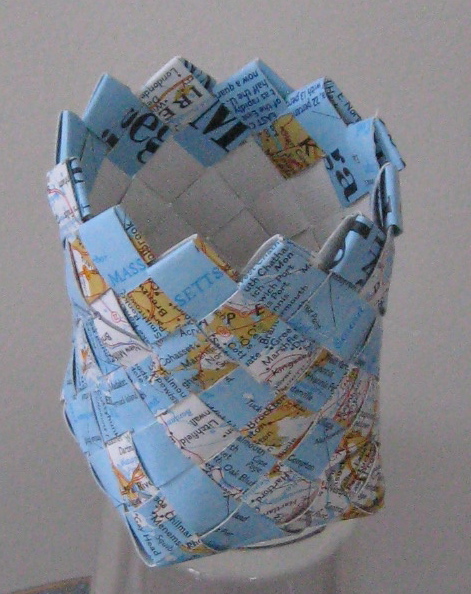
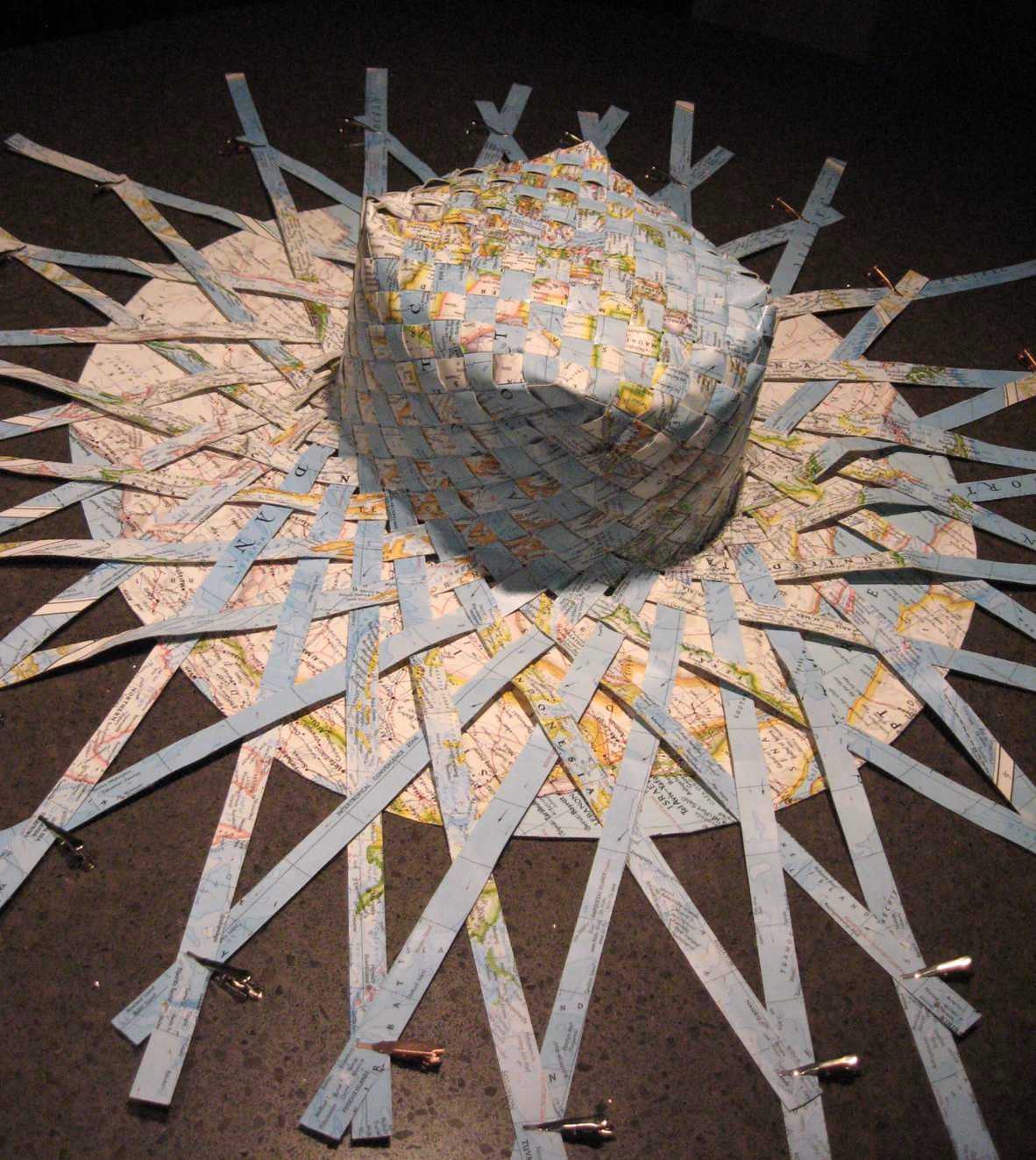
I would use those same techniques to weave a hat & purse out of maps! I made samples weaving on the bias and plain weave to see how pliable the map paper was. It was quickly apparent that the paper on its own was very flimsy and I would have to reinforce it to keep it from tearing and to be firm enough to hold the shape.
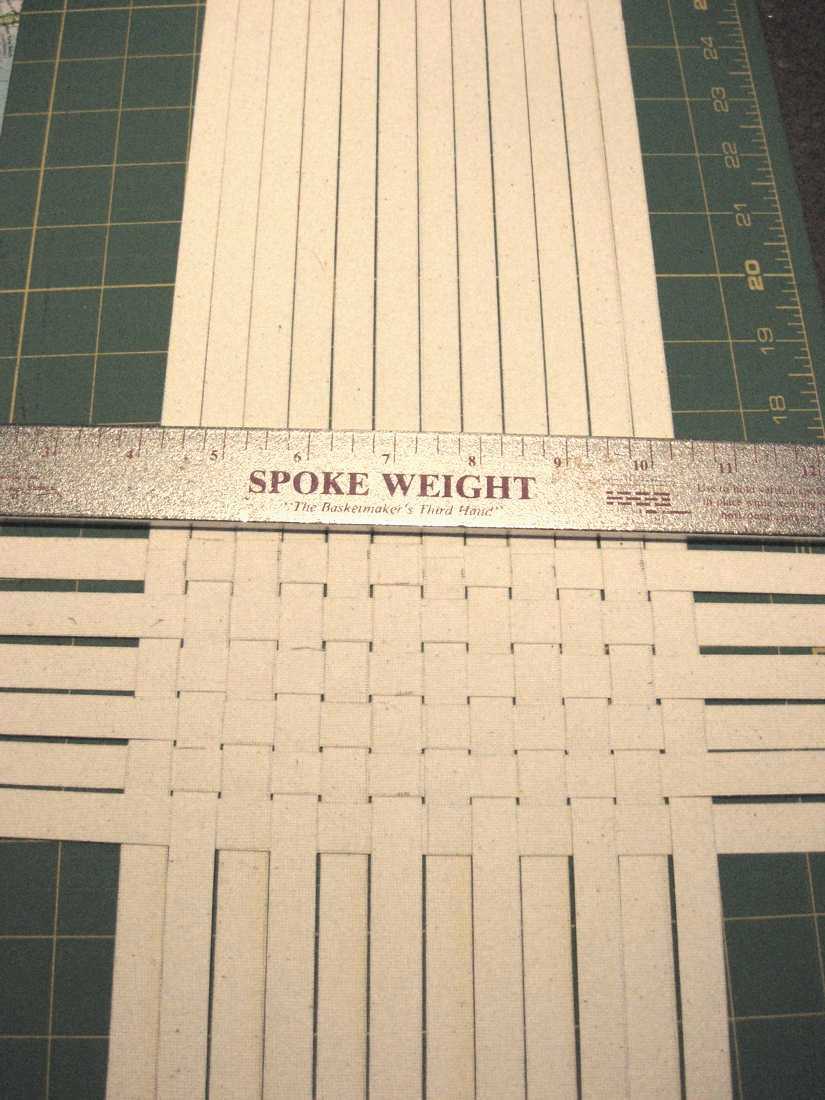
Using my notes from a workshop I took in 2000 from Jackie Abrams weaving with painted cotton paper as reference, I used a spray adhesive to attach the map paper to sheets of artist canvas. I made several more tests cutting the map/canvas strips into 1/2″ and 1/4″ widths and used waxed linen thread when twinning was needed. This worked much better and I was ready to start!
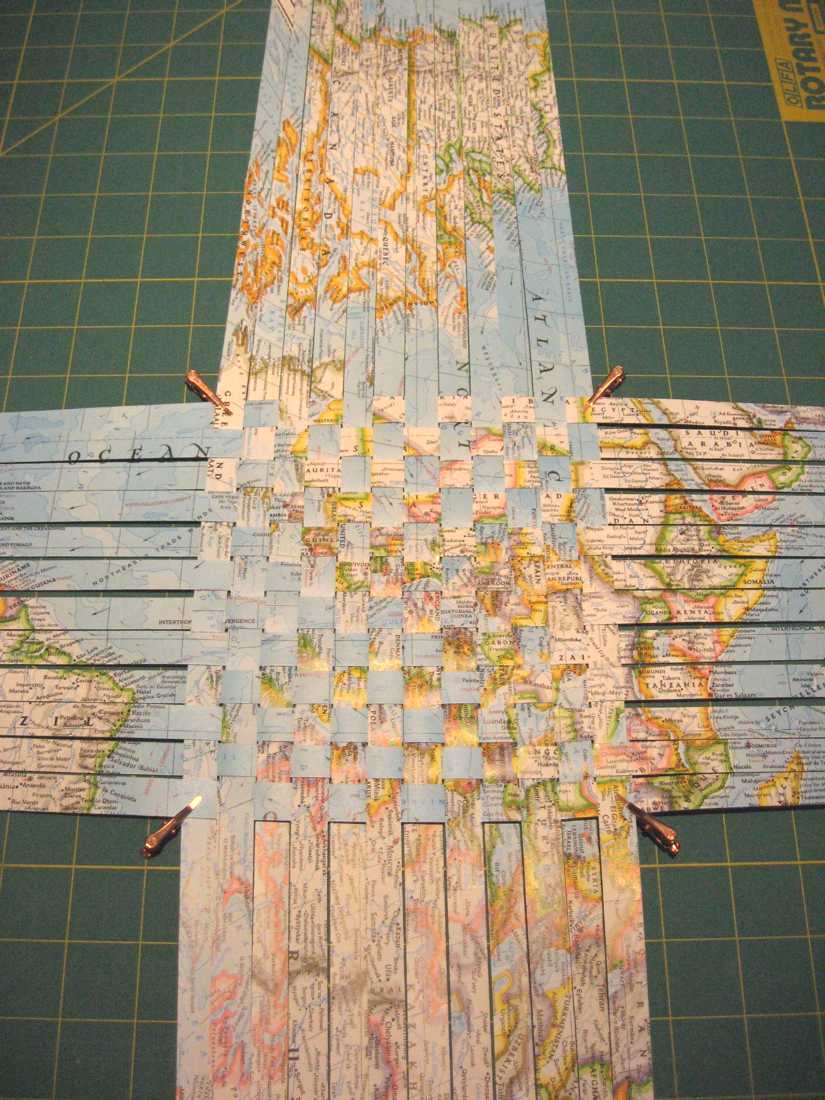
I laid out 1/2″ wide map/canvas strips in a plain weave….
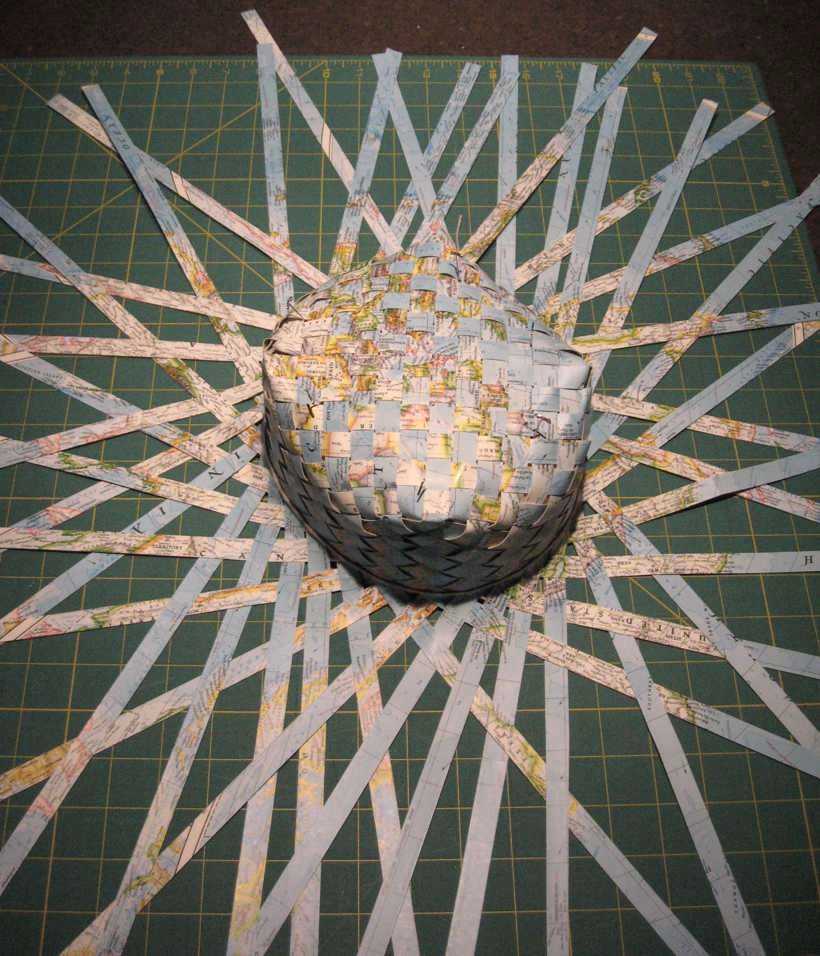
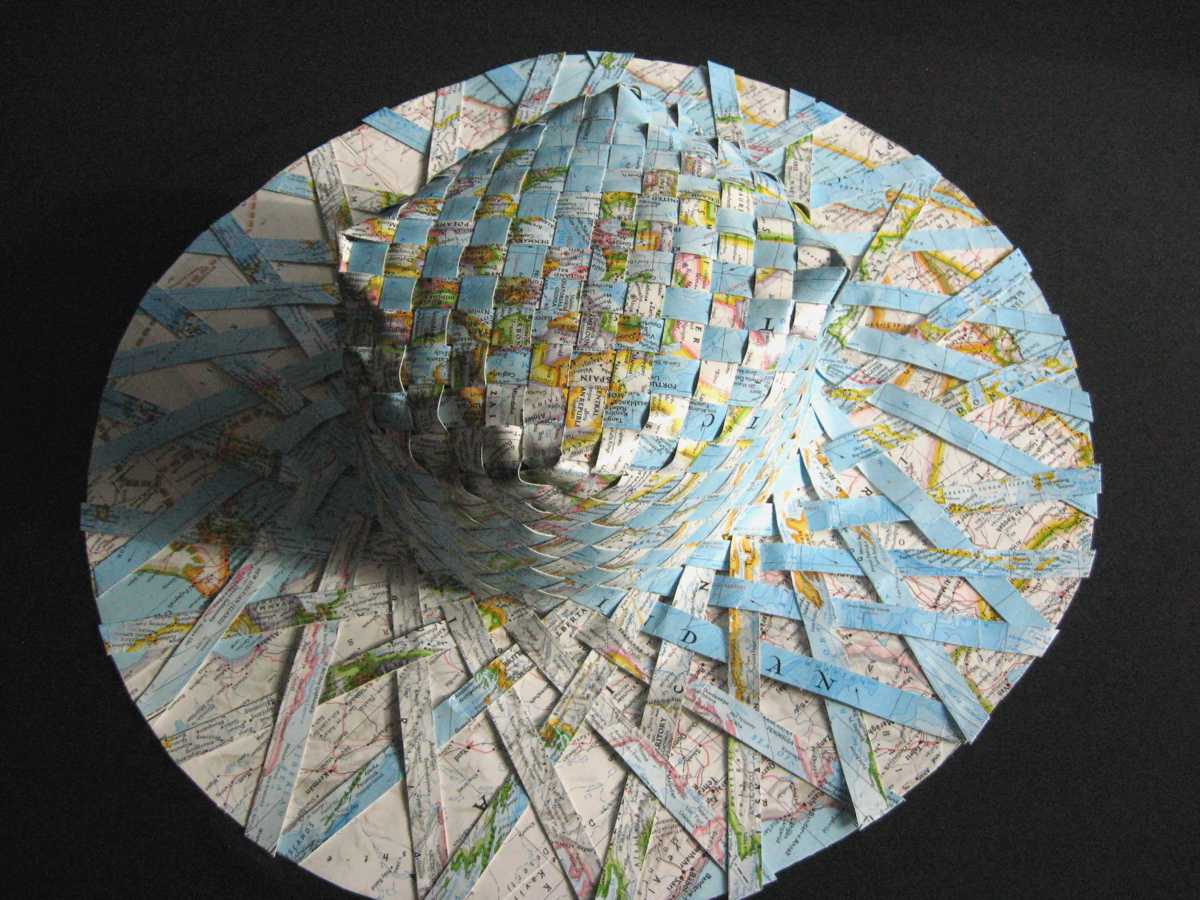
and laid that on the bias over a hard foam hat block to weave the crown using pins and clips to keep it in place. I stitched the base of the crown to secure the proper diameter.
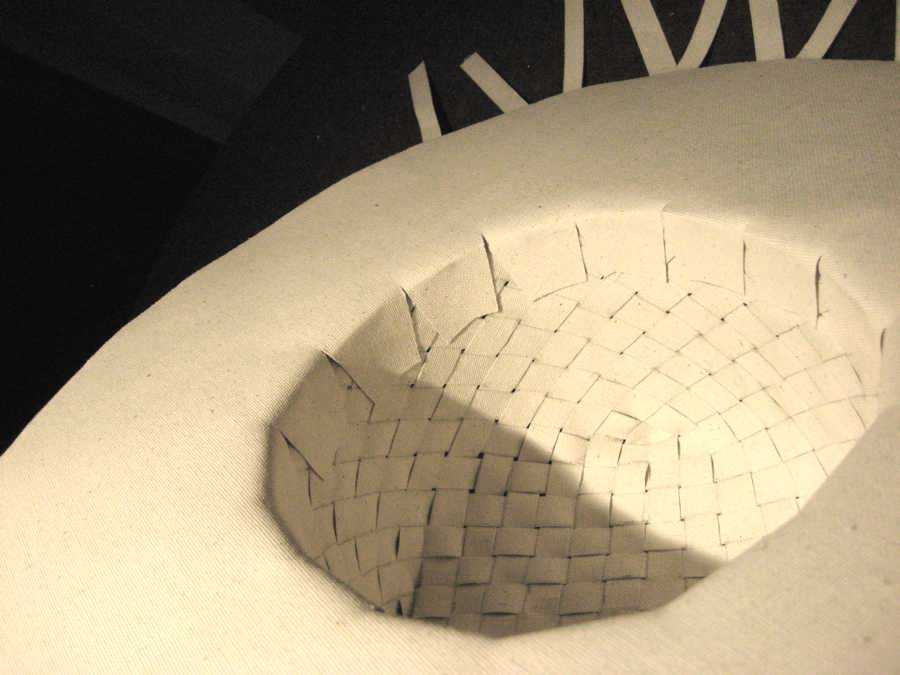
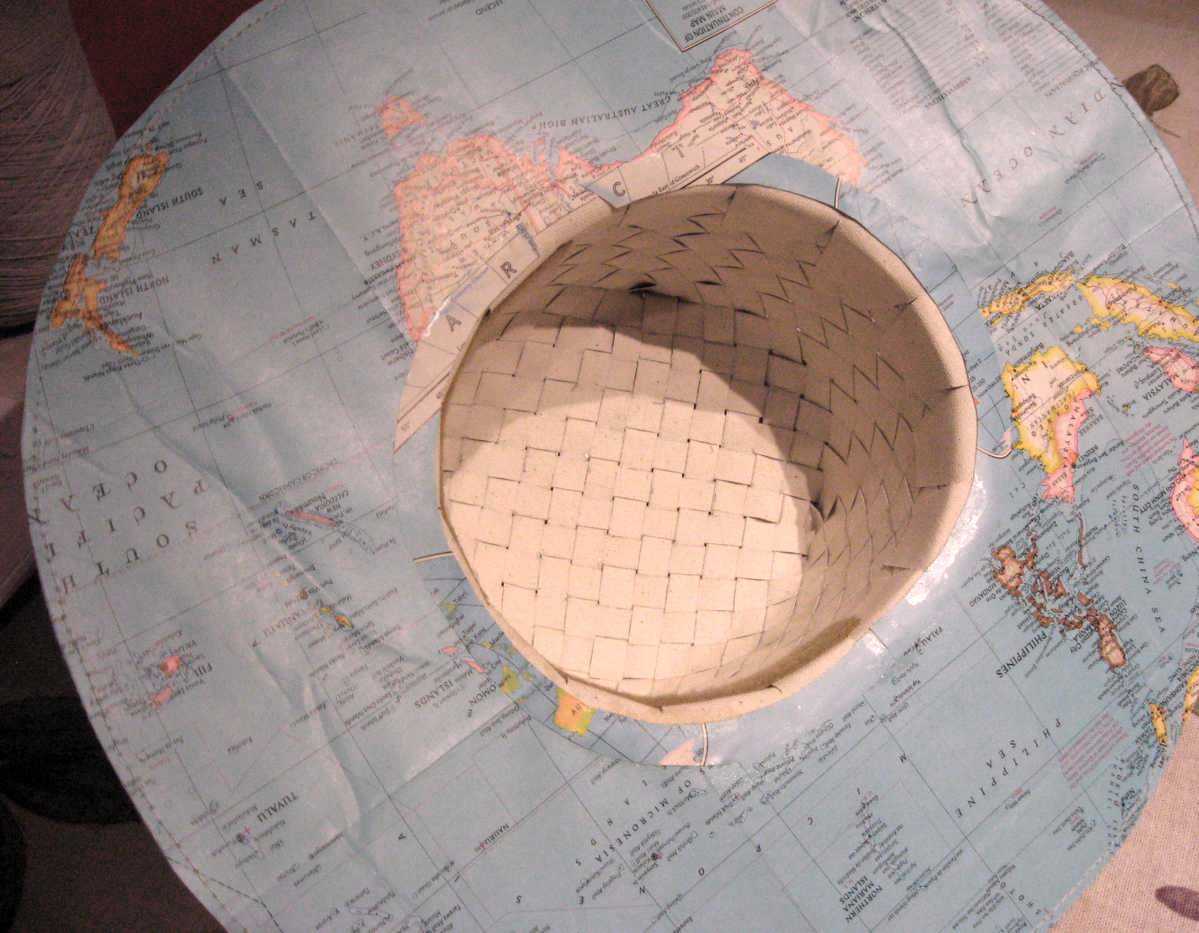
I was not able to weave the brim as I had done on the bulrush hat but made it separate and attached it to the crown using hot glue.
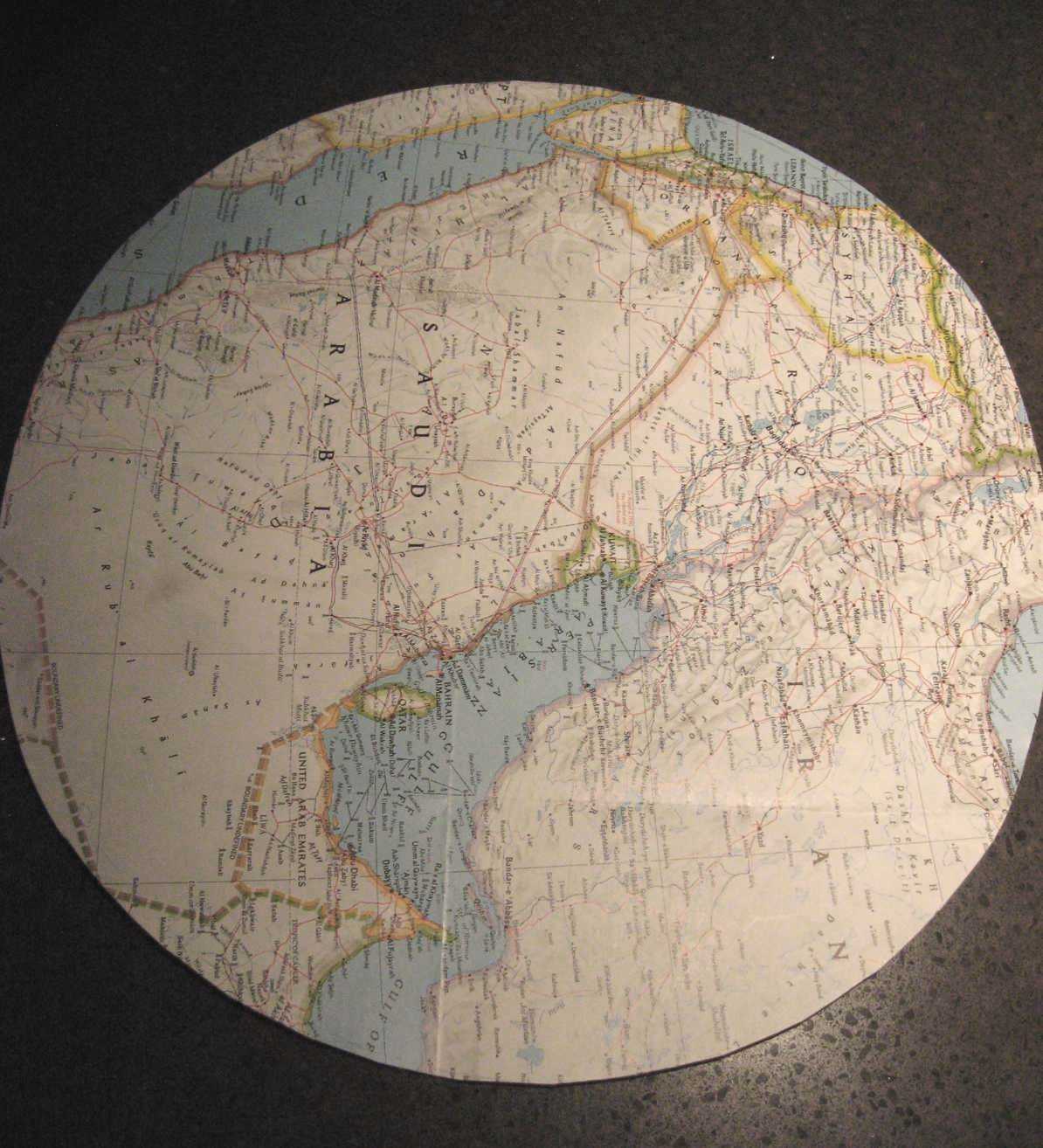
Next I trimmed the spokes, used the spay adhesive to attach a map to the underside of the brim, and machine stitched around the edge.
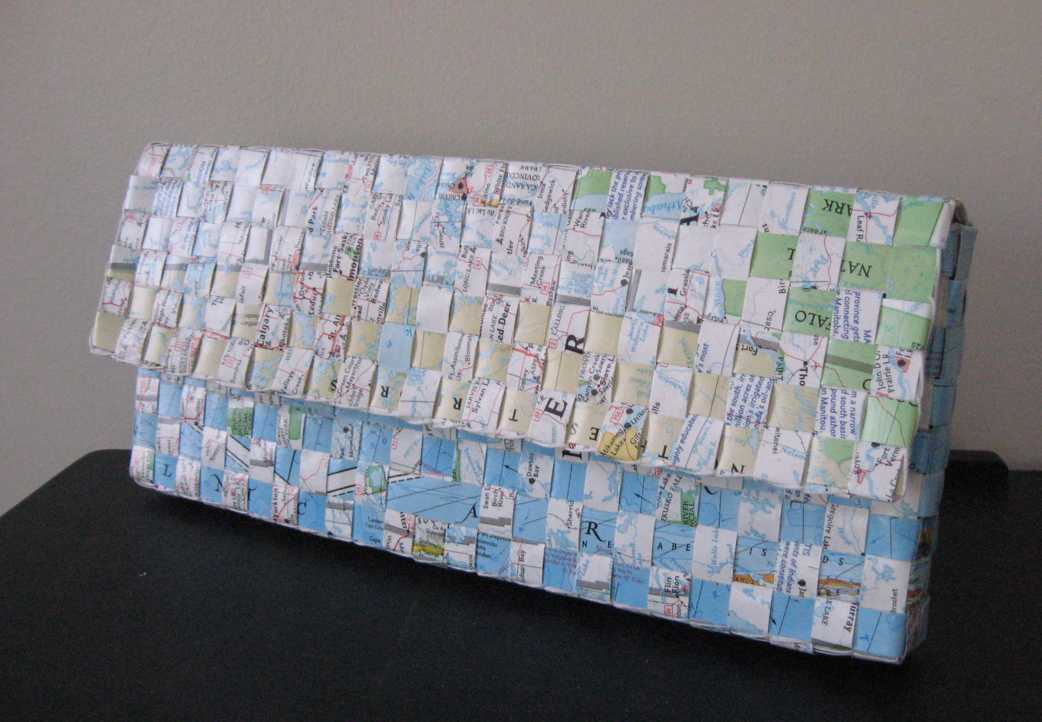
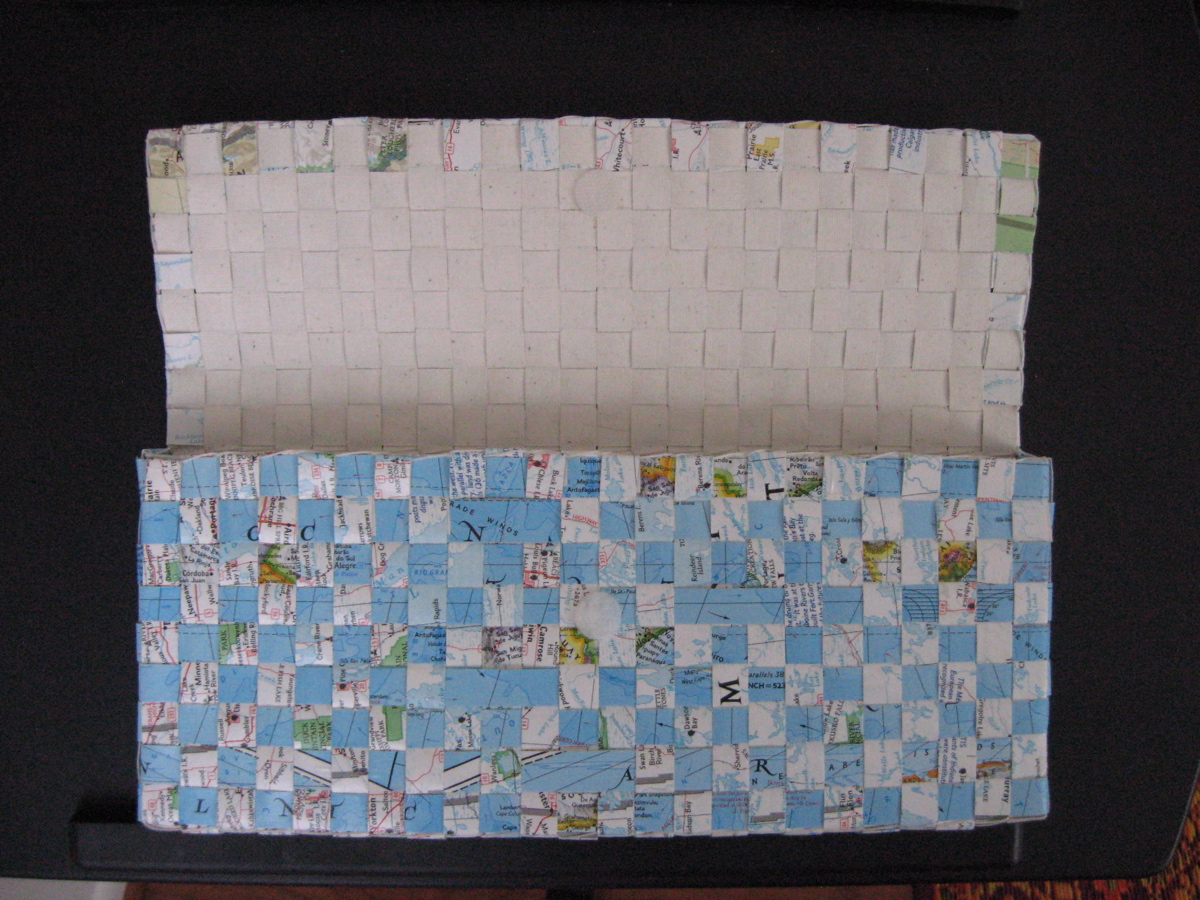
Making the purse was MUCH easier!!! Using 1/2″ map/canvas strips and a styrofoam block for the mold, I wove a 12″ x 5 1/2″ x 1″ clutch bag.
All the pieces were given a coat of matt varnish to provide added strength and protection.
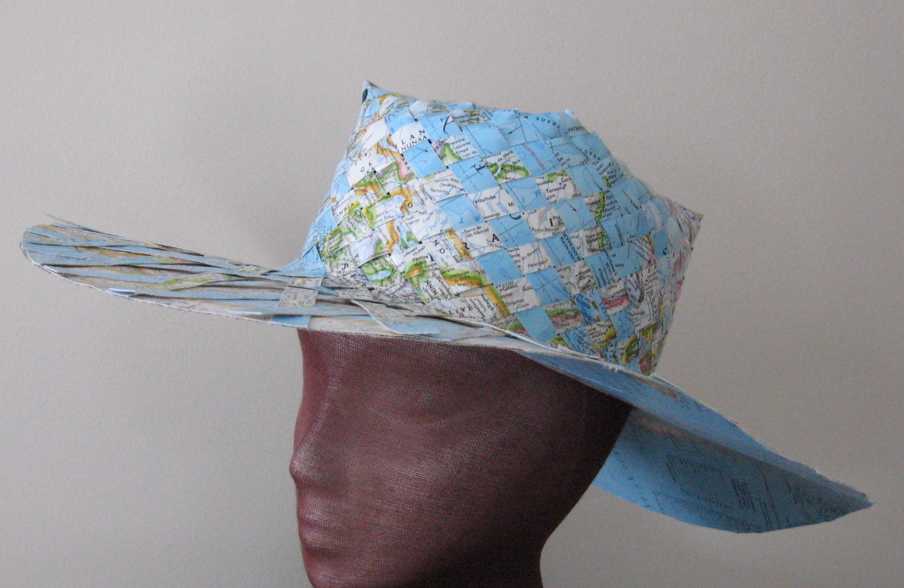
The Cartography Chic Hat & Purse Set is just the ticket
for any explorer with a flair for fashion!
Posted in garments, Interesting stuff, Projects, weaving | Tags: accessories, adaptation, Ann Arbor Fiberarts Guild, arts, Association of Guilds of Weavers, beauty, bulrushes, cartography, clothing, creativity, explorer, fashion, hat, hat making, maps, millinery, National Geographic, purse, recycle, reuse, style, travel, upcycle, wearable art
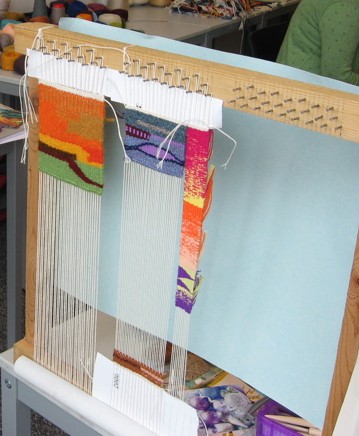
The summer of 2011 I took my first tapestry weaving course at The Association of Guilds of Weavers, Spinners and Dyers summer school held in Edinburgh, Scotland that year. Our instructor, Dot Seddon, had us working on simple frame looms which are very portable, fast and easy to warp, plus I brought along one that I had made.
Midweek we took a field trip to the Dovecot Tapestry Studio in Edinburgh. When I walked into the space I was immediately hit with a déjà vu experience = I’ve been here before!
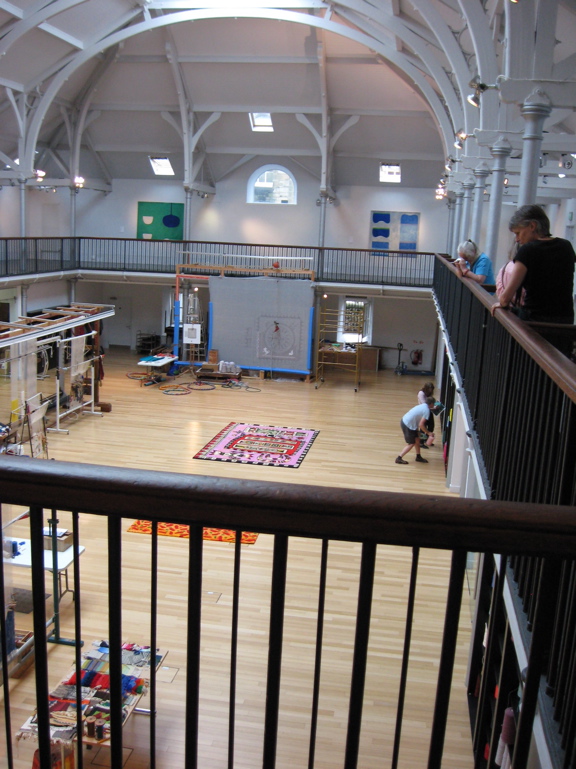
The building that now houses the Dovecot Studio is the old ‘Infirmary Street Baths’, the first public baths in Edinburgh – built in 1885, designed by Robert Morham – and I used to swim there in the mid 1970’s when I was a student at Edinburgh University! The baths closed in the 1990’s and fell into disrepair. The Dovecot Studio moved into the space in 2009 after a 2 year – £12million renovation. This is a perfect studio space with tons of natural light from the glass ceiling, the pool has been filled in to make the weaving floor, the changing rooms have been turned into office and meeting rooms, and the observation walkway is used as gallery space. Click here for a wonderful visual tour of the studio.
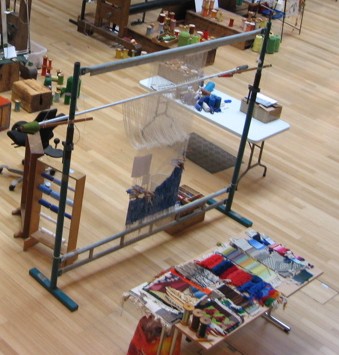
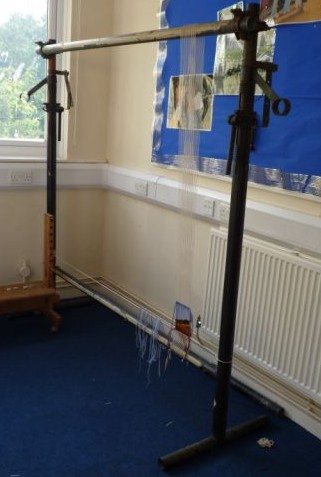
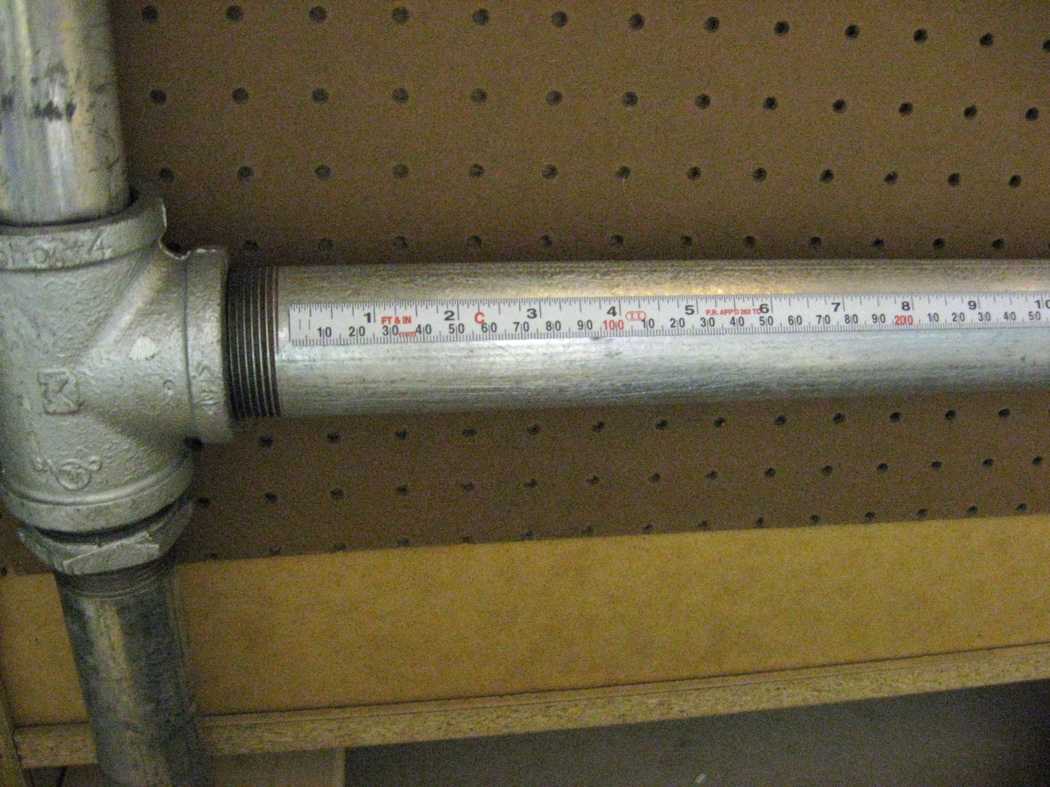
Here I saw vertical/high warp looms built of steel scaffolding pipe.
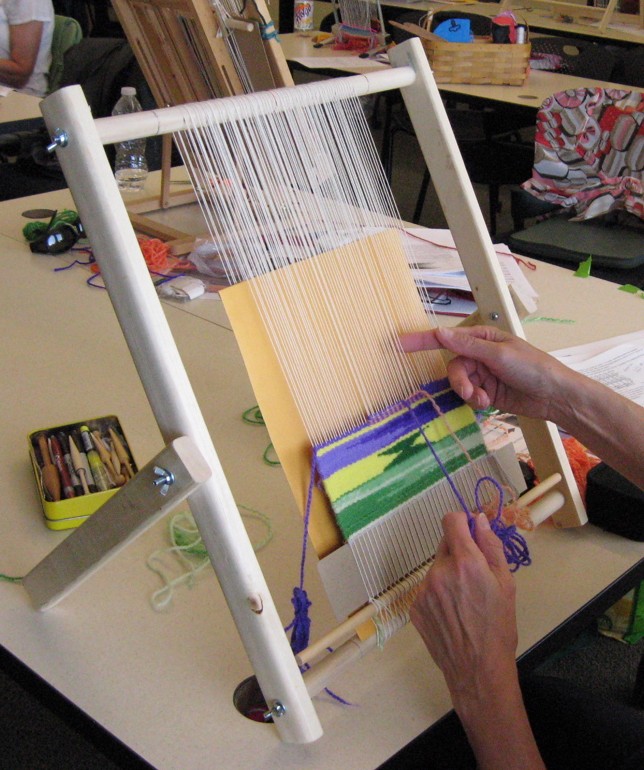
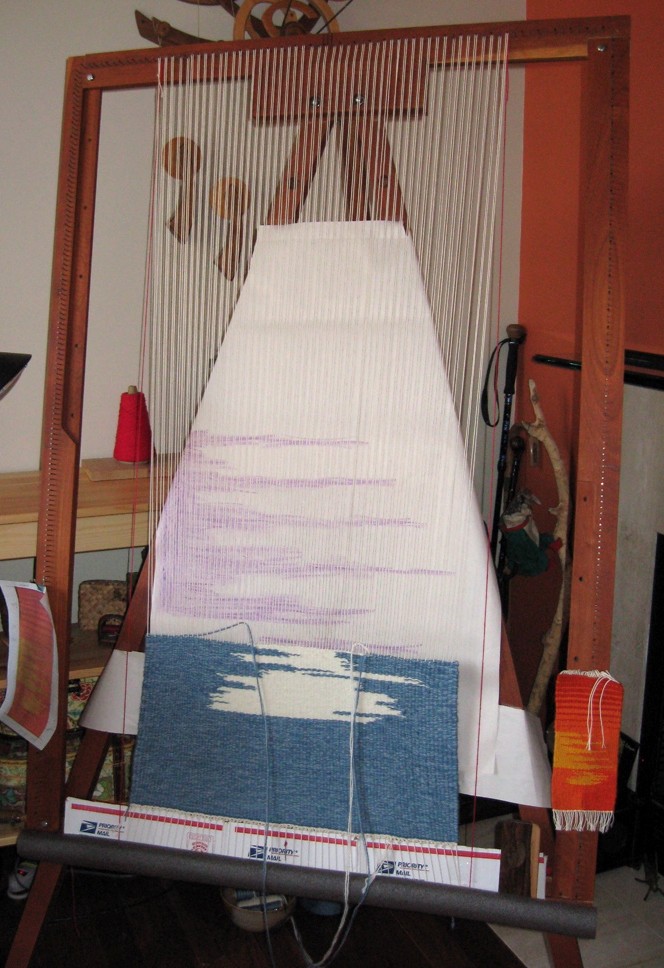
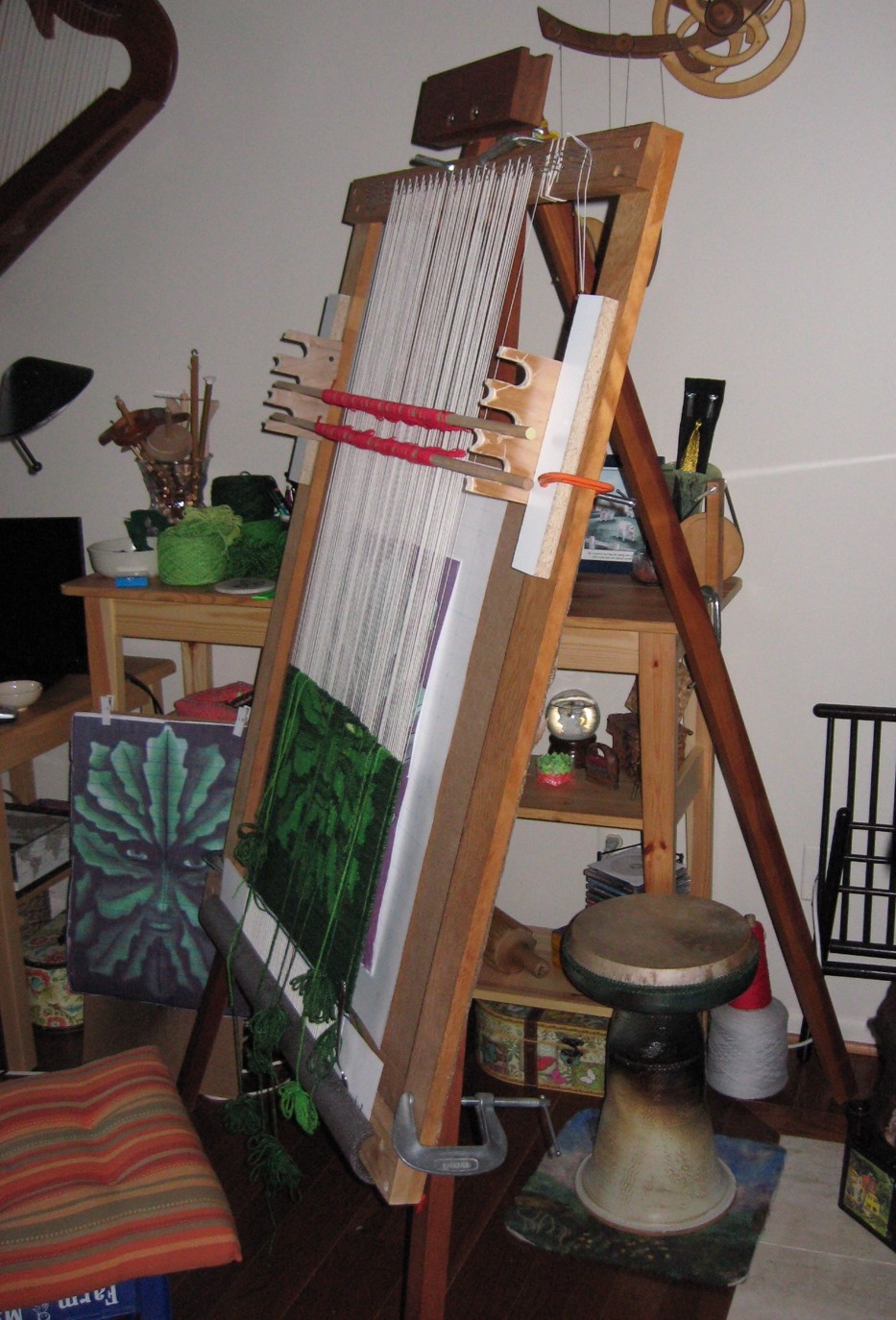
When I came home I was inspired to try weaving a larger tapestry. But looms are expensive so I adapted a triangle loom I already had into a larger version of what I had used at summer school.
I liked working upright but it was difficult to get and keep an even tension on a warp that large, plus I wanted to have an option of being able to lift the warp threads for faster/easier weaving and the frame I was using had nails on all 4 sides. I got another large frame, added nails to the top and bottom only, and figured out a shedding device to lift my warp threads. This was an improvement but there were still problems with the warp tension and the easel stand took up quite a bit of space.
I took another tapestry course at the next AWSD summer school in 2013. [see ‘Weaving in Wales’ posts from September 2013.] Our instructor, Alastair Duncan, brought his scaffold loom. I was able to get a good look at how it’s made and to weave on it for the week.
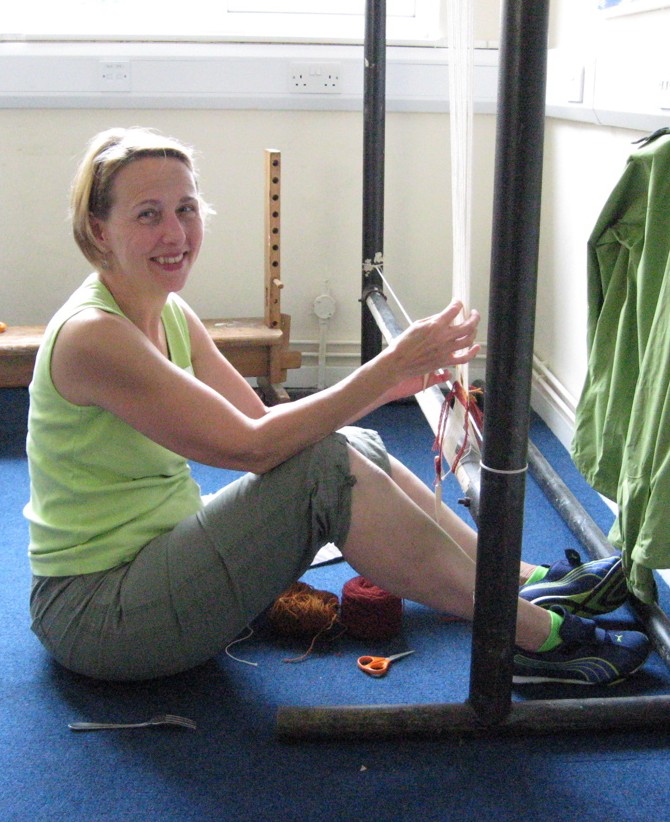
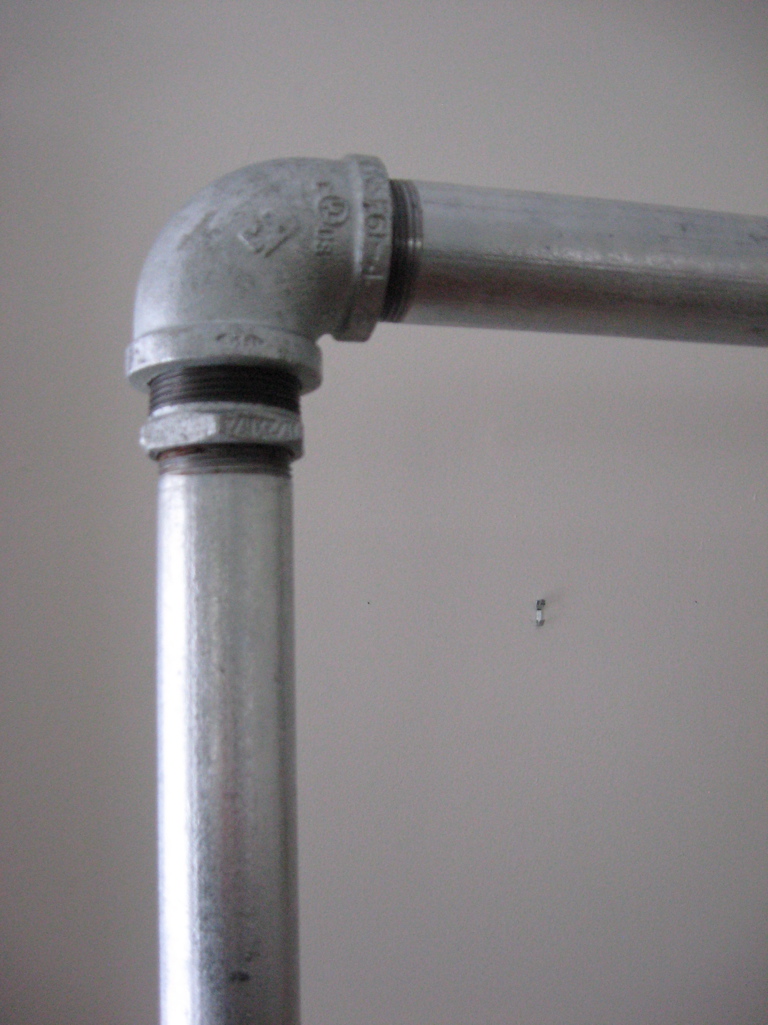
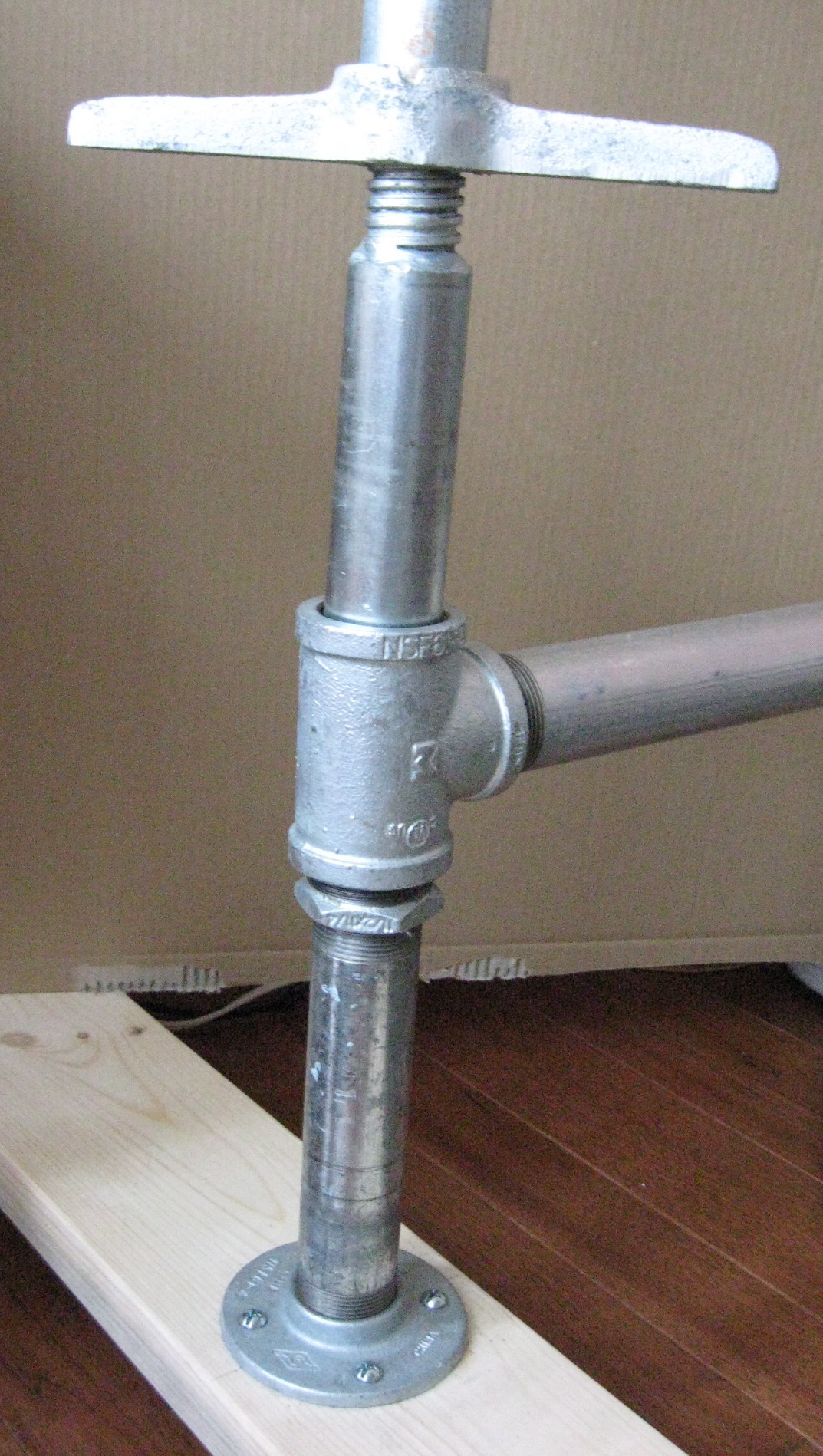
I decided that this is the type of loom I wanted. Looking at my pictures and notes, my engineer husband was able to come up with plan to use galvanized pipe so all the parts would be available at the local hardware store. I received a professional development grant from my guild, The Ann Arbor Fiberarts Guild, to help with the cost of materials.
We used 1 1/2″ pipe for the top/bottom and 1 1/4″ pipe for the sides with bushings to connect and it can be taken apart to transport; scaffold level jacks are used to adjust the vertical sides for control of the warp tension; attached it to a wood base; and added measuring tapes to the top and bottom.
The finished size is 4′ x 6′ with 3 1/2′ x 5′ weaving space.
I still need to create a shedding device like the Dovecot looms have to lift the warp threads but I am excited to get started on a new tapestry!
Posted in Interesting stuff, Projects, tapestry, weaving | Tags: adaptation, artist studio, Association of Guilds of Weavers, AWSD, black pipe loom, bushings, construction, creativity, design, Dovecot Tapestry Studio, galvanized pipe, hardware, leveling jack, scaffold loom, small spaces, studio space, tapestry, weaving
Critic (noun) a person who expresses an unfavorable opinion of something
For many people, including myself, the idea of having your art judged does not bring happy thoughts to mind and can crush creativity. My elementary school did not have an art teacher. A picture from a magazine would be taped to the chalkboard and we were simply told “Draw this.” The results were always graded using letter grades (A to E) one for content and and one for neatness. My work, if I was lucky, might…. just might…. get C-/D and there were no suggestions to help me improve my work. To this day the thought of drawing something sends me into an anxiety attack.
Critique (noun) a detailed analysis and assessment of something
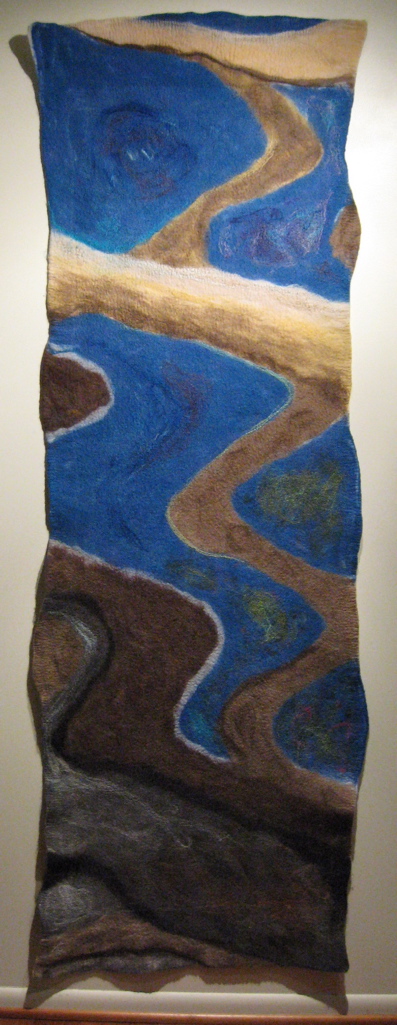
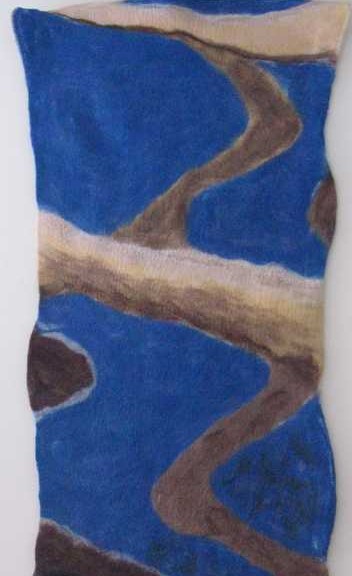
Getting a thoughtful critique can raise art to new levels, broaden perspective and increase creativity. Last year I worked on large felt wall hanging for the annual Ann Arbor Fiberarts Guild show which runs the month of February in the lobby of the Power Center for the Performing Arts here in Ann Arbor, MI.
View From Above
(28″ x 82″- felted wool fibers)
This was one of the largest felt pieces I’ve ever made and felting it was physically demanding. I was pleased with the design – the mix of colors and line movement. It made a statement, especially from a distance. I believed it was good enough, so fingers crossed….. I submitted it.
It was not selected and in my disappointment I suddenly found myself emotionally back in elementary school. But here is where ‘critique’ turned this experience from the negative ‘critic’ into something positive. The jury committee had made comments. Some were positive (it was felted well and it did catch attention from a distance) PLUS there comments about where it still needed work:
1) there is no real change in value (light/dark) within each of the colors used
2) there was nothing new to discover once you stepped closer
So for the next year I thought about what I could do to embellish this piece yet stay true to my desire to only use felting techniques.
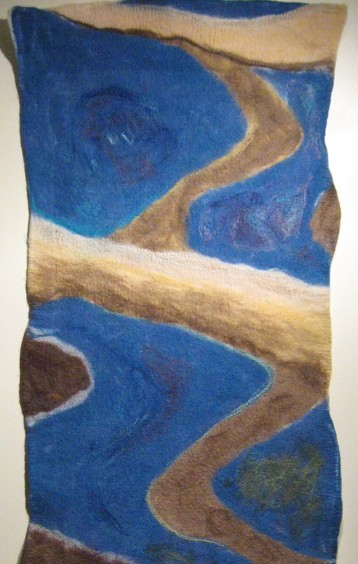
Using a barbed needle to punch fibers into place,
I needle felted silk fibers to give a broader range of color value and bring more interest and details, then I repeated the wet felting to blend everything together.
Top detail – before and after
Bottom detail – before and after
I am happy to say that Coastal Waterways was accepted for this year’s Power Center Show.
Critic or Critique? It’s all in how you say it and where the emphasis is placed.
Coastal Waterways
(26″ x 79″ – felted wool & silk fibers)
Posted in felt, Interesting stuff, Projects | Tags: adaptation, analysis, Ann Arbor Fiberarts Guild, anxiety, anxiety attack, Art, art class, art teacher, assessment, change of plan, coastal, collaboration, creativity, critic, critique, design, elementary school, felting, happy thoughts, importance of art, improvement, needle felt, opinion, Power Center for the Performing Arts, silk, thoughtful critique, wall hanging, waterways, wool
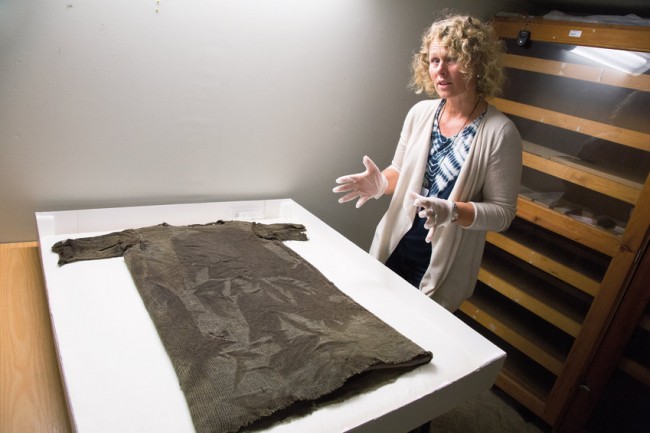
Astonishingly well preserved Iron Age tunic will be recreated (mostly) using the spinning and weaving techniques available at the time. You can read about the examination of the wool fibres, method of spinning, the diamond twill weaving pattern and other factors which have been revealed by this project.
Click on the link to read this fascinating article.
http://www.medievalists.net/2014/11/24/early-medieval-tunic-recreated-norway/
Posted in garments, Interesting stuff | Tags: adaptation, ancient textile techniques, archeology, clothing, consumer items, creativity, design, diamond twill, fashion, glacier, global warming, historic recreation, Iron Age, Lendbreen glacier, Museum of Cultural History at the University of Oslo, Norway, Norwegian Mountain Museum (Norsk Fjellmuseum) in Lom, Norwegian sheep breeds, overhair, prehistoric textiles, rare breed sheep, spindle spinning, spinning, textile techniques, transport route, tunic, underwool, warp weighted loom, weaving, wild sheep
Every artist knows there are times when a project just does not want to go as planned and this was one of those projects.
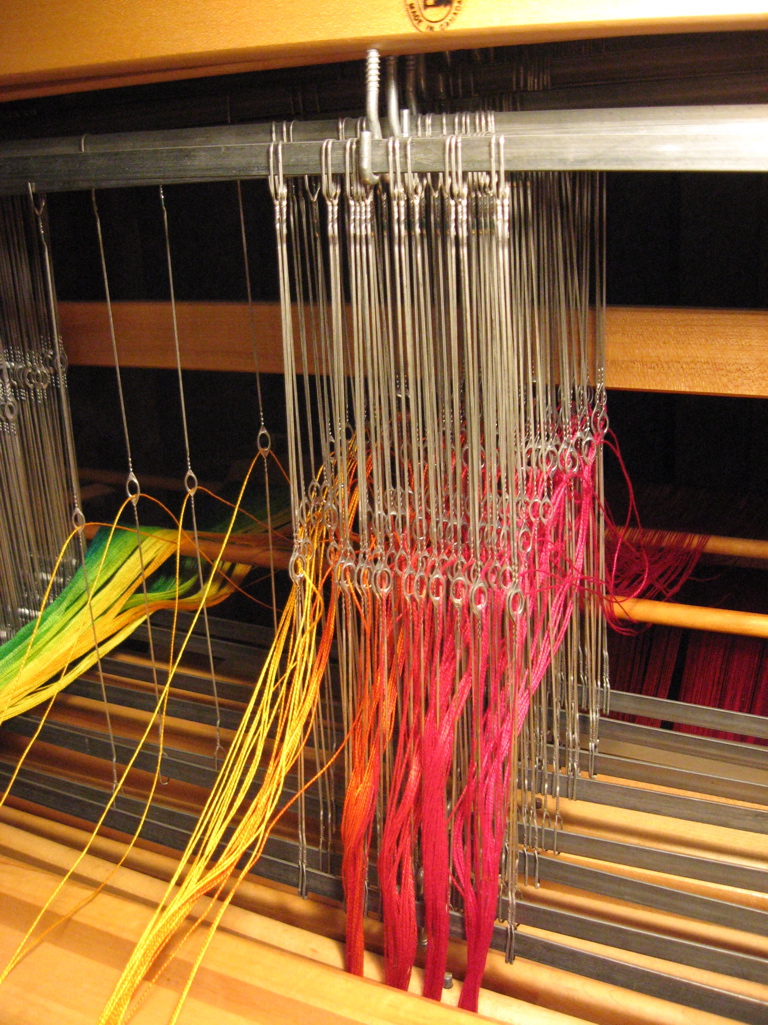
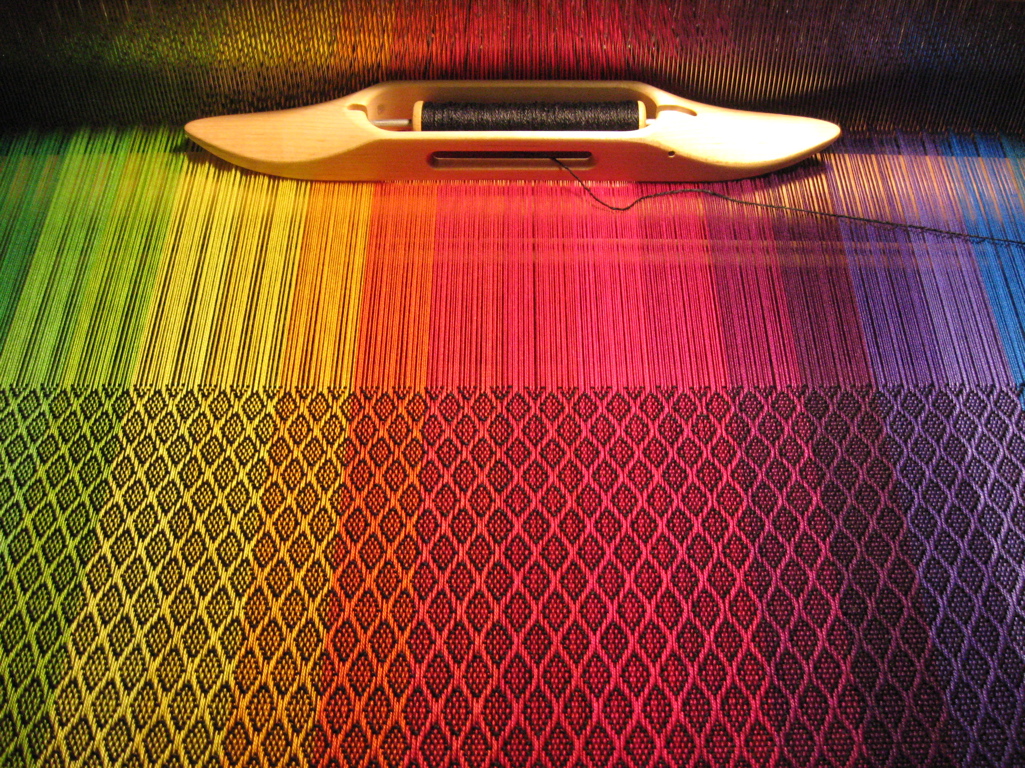
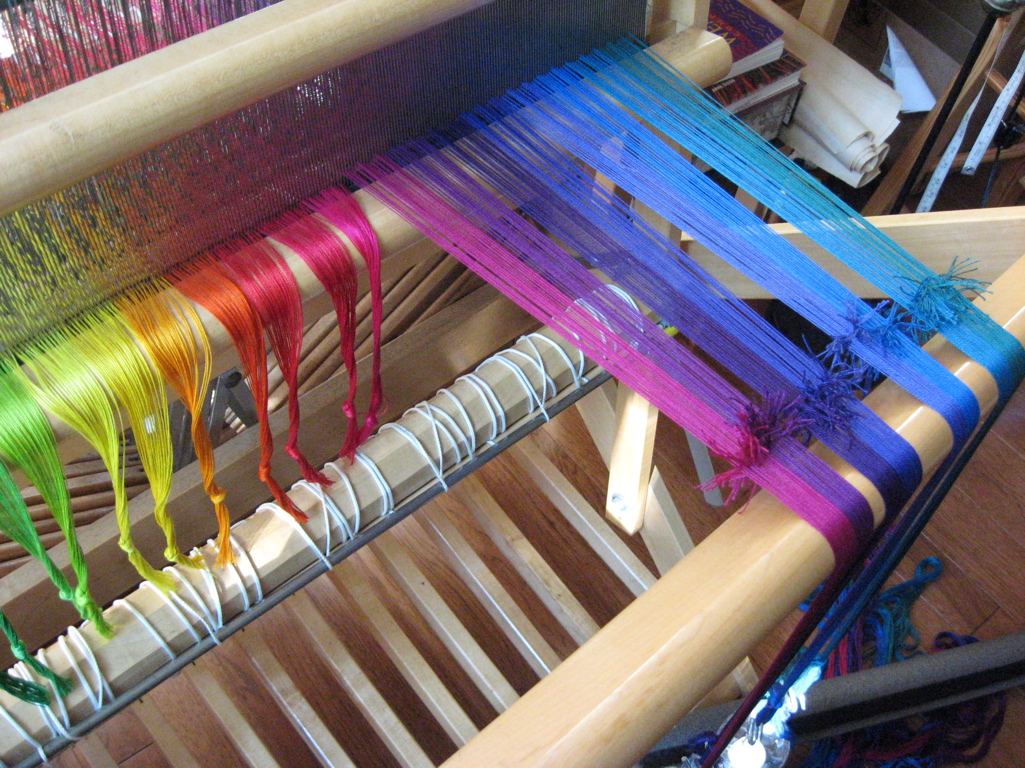
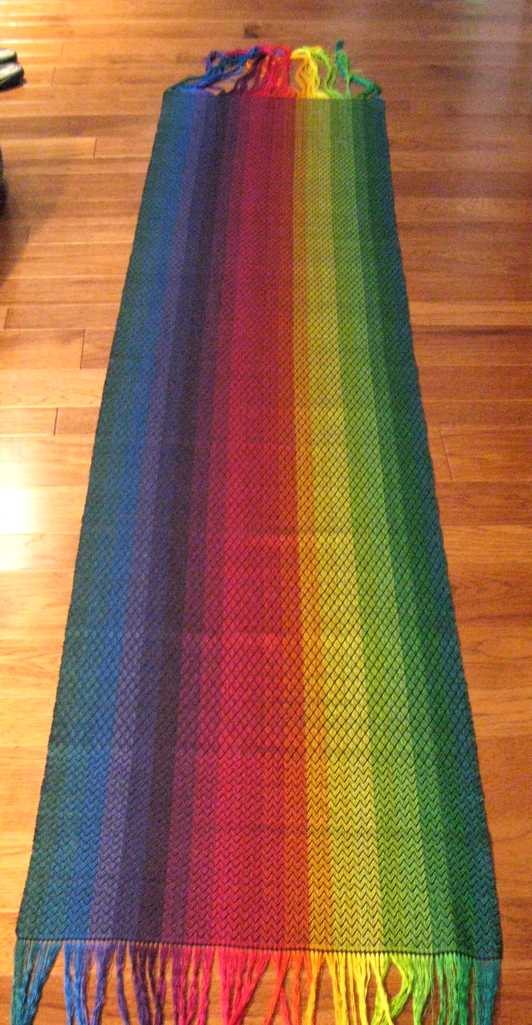
In September I started on a commissioned shawl. The warp was 10/2 cotton in 20 colors.
642 yarns threaded in a point twill over 8 shafts/harnesses.
3″ into the weaving and I realized I had a misthread in the pattern = inappropriate expletive uttered!!! What to do?
Do I (A) keep going with the philosophy that we humans are not perfect and embrace my imperfection or (B) correct the mistake = unweave, untie, unthread, rethread, and retie?
If this was something I was making for myself, I would probably go with option (A) as there was only 1 thread in the wrong place. BUT this shawl is something I am selling and the buyer deserves the highest quality work I can give…. so option (B) is it.
I took out the black 5/2 cotton weft and the red header then dealt with 200+ threads and heddles to get the 1 thread moved to the correct shaft, retie and finally back to where I was…. 24 hours earlier.
Weaving now went fairly smoothly…
…until 5″ from the end when I noticed a lot of black fuzz = uh-oh. I took out several rows to see what was going on and I realized the 5/2 cotton yarn was disintegrating = WHAT is going on here???? This particular cone of yarn had been in my stash for quite a while and though the outer section was OK so the first 2/3 of the shawl was fine, the middle of the cone had rotted and the last third of the shawl was falling apart = REALLY inappropriate expletives uttered!!
At this point I had no idea if the fabric was stable and would hold up during washing so I stopped weaving, hemmed it, cut it off the loom and held my breath as I put it in the washing machine.
Here’s how it came out. A misthread is a pain but this is a disaster that cannot be saved.
I emailed my client and explained the situation. Luckily she was OK with getting the shawl by the end of October so back to square one I go. I decided this time I would use 5/2 bamboo for the weft, ordered the NEW yarn, and as I waited for the delivery, I began to wind out another warp. I kept the ends of the old warp threaded through the reed and heddles so all I had to do is tie the new warp onto the old then pull it through.
The second warp wound on and the new weft in hand, time to start weaving…. AGAIN.
This time there was no added drama as 87″ of this new shawl was woven, hemmed, cut off the loom…
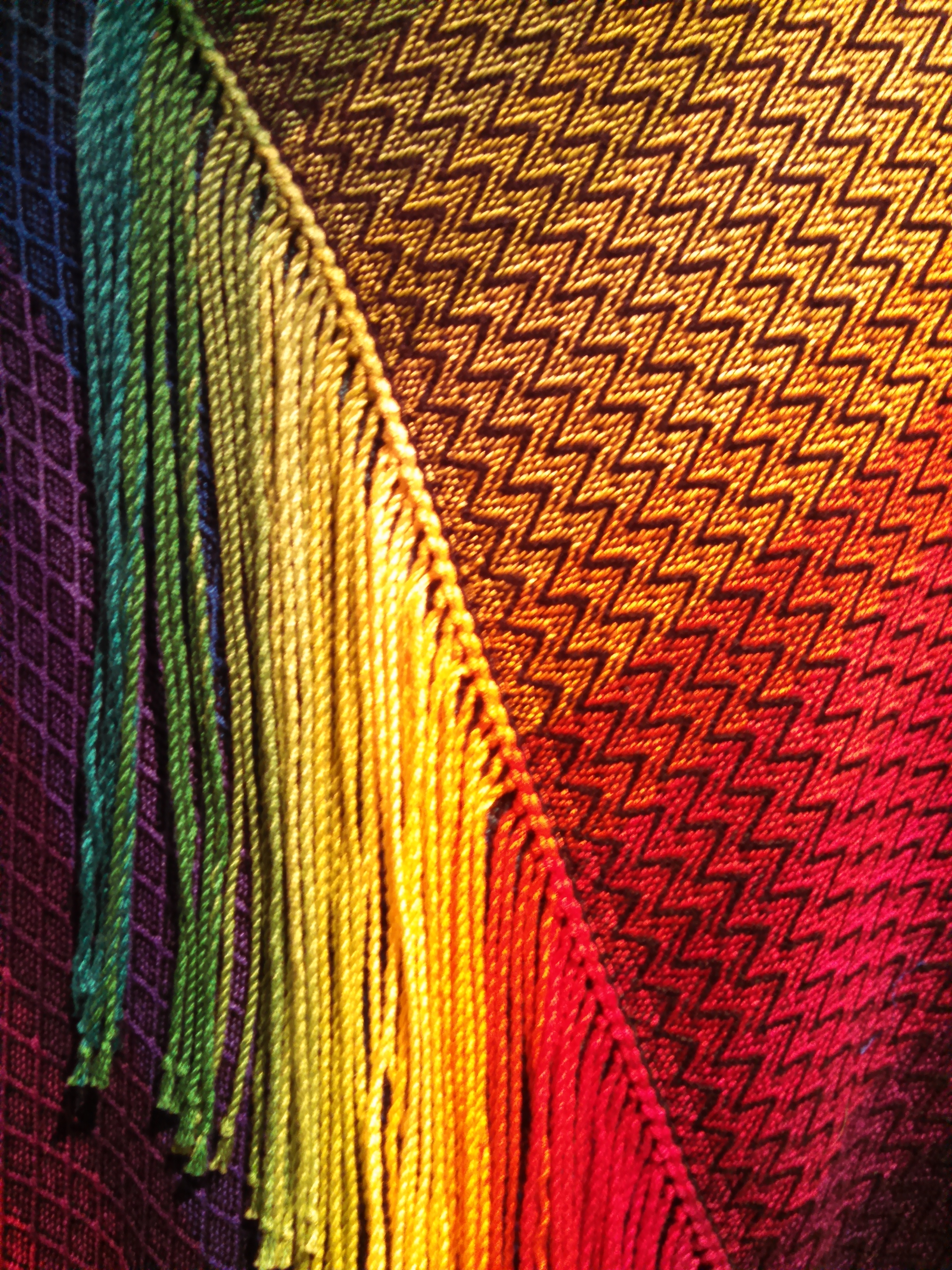
…and the finishing work began = tying knots and twisting fringe.
Holding my breath I put it into the washing machine….. and it came out just fine = whew!!
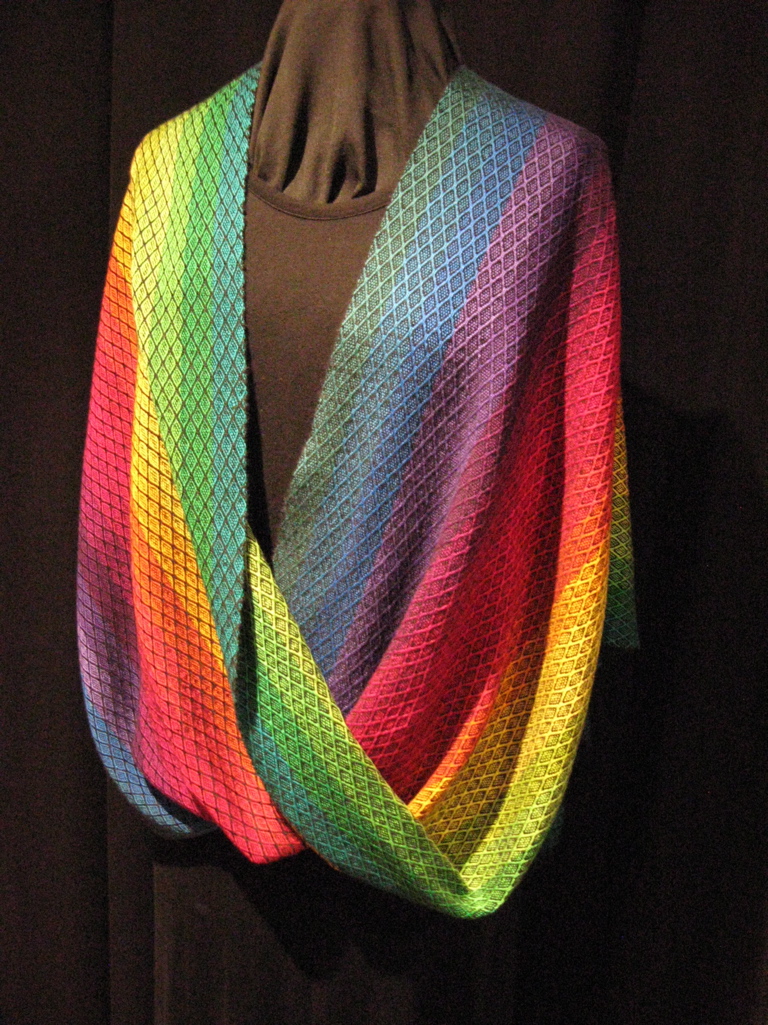
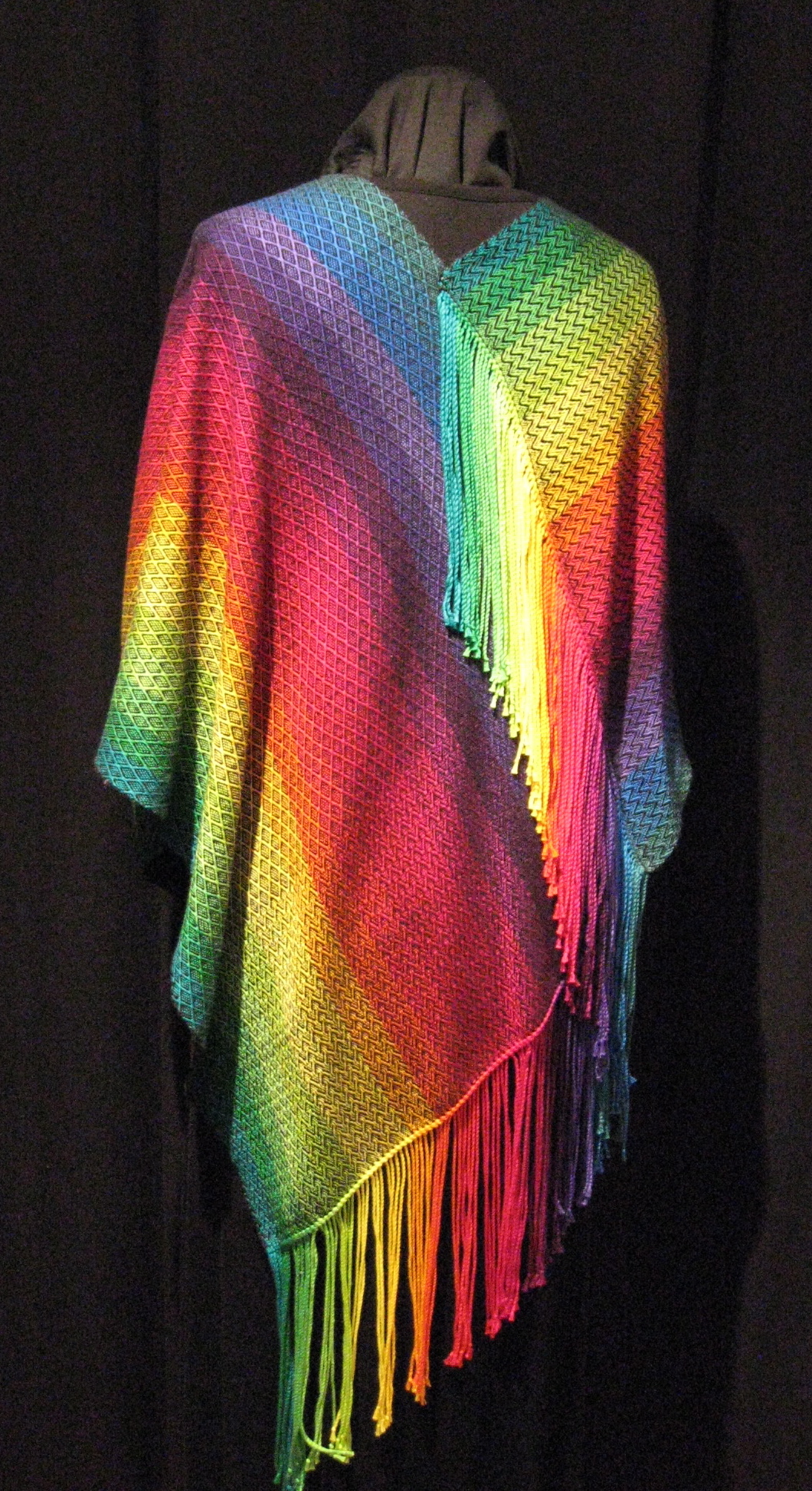
Because one side of the fabric has the colored warp dominant and the other has the black weft dominant I sewed the shawl into a mobius loop so that you can see both sides = SUCCESS!! And the Rainbow Mobius Wrap has been shipped to her new owner.
Lesson learned from this project:
check ALL yarn prior to using it in a project!!!
Posted in Projects, weaving | Tags: adaptation, arts, beauty, change of plan, craftsmanship, creativity, design, do over, imperfection, mistake, quality, warp thread, weaving, weft yarn
In the middle of September I spend 3 fabulous days in a felting workshop with international feltmaker and clothing designer Charity Van der Meer from the Netherlands. The workshop was organized by Michigan felt artist Dawn Edwards and held at Design Street, a community art education center in Plainwell, Michigan.
The old fire station has lots of natural light and plenty of space for 12 large felting stations.
Charity’s work is amazing! She combines colors, textures and shapes to create clothing that is soft, light weight and comfortable to wear.
The focus of this workshop was to make a one-piece nuno felted dress or skirt with an emphasis on pleating, layering and adding godets to the design. Using her very simple but effective patterns we were encouraged to use our imagination and develop our own fashion ideas. We calculated our starting dimensions (the dress will shrink 100%) and Charity showed us how trace out our patterns onto plastic and add the godet panel(s). [A godet is a triangular piece of material inserted in a dress, shirt, or glove to make it flared or for ornamentation.]
Using silk chiffon fabric and merino wool fibers we created layers wrapping the silk & base wool around the plastic pattern. The plastic works as a resist to keep the wool & silk from felting into a 2D shape instead of the 3D shape needed to be a dress. Overlapping the silk fabric and wool fibers at the shoulders and sides creates the ‘seam’ so no sewing is involved!!
Day 2: The silk fabric & wool fibers are layered for the other side but this time making sure to cover the godet separately.
Now the fun begins = adding the details and embellishments to the dress!! I used wool fibers, silk fibers, polyester lace fabric, blended wool/silk fiber, plus wool and silk yarns.
Wet down the front of the dress with warm soapy water.
Layout my design and wet down the back.
Sandwich everthing between plastic……
Roll it all up in an anti-skid rug mat and old sheet then start rolling…… rolling…. rolling….
Day 3: Continue rolling…. rolling… rolling…..
Now it’s time to unwrap and try it on! (Oh…. was this the part soggy!!!)
And…. oh my gosh…. it fits like a glove!!
Charity helped smooth and give finishing touches to everyone’s dress.
And we all went out for a group photo. Each dress and skirt was true one-of-a-kind work of art!!!
I even had enough time to layout a shorter top before leaving and felted it at home the next day.
This workshop was just the ticket to my get my creative juices flowing this fall! I will definitely continue to work with this technique and I’ve made a note in my 2016 fall calendar = Charity may be back to give another workshop!!
Posted in felt, garments, Interesting stuff, Projects | Tags: adaptation, Art, art center, artist studio, beauty, Chairty Van der Meer, clothing, construction, creativity, Dawn Edwards, design, Design Street Plainwell, dress, fabric, fashion, felting, garment, godet, imagination, nuno felt, silk, skirt
Every weaving tells a story.......
adventures in fiber
a little stitching, weaving, writing & hiking
Bringing the outside in
a dialogue for storytellers and story lovers
a self-taught artist discusses acrylic painting, photoshop and the creative process.
Artist | RN | Art Educator
Follow me as I weave along the way