Posted by: bschutzgruber | July 28, 2016

Summer Demos and Fairs

In previous posts (Doin’ DemosWeaving at Cobblestone Farm, and Waulking and Art Fair and more) I’ve talked about how I enjoy demonstrating weaving, felt making, and other fiber activities.  It seems July has become a ‘demo & fair’ month.

Cobblestone Farm & the 4th of July

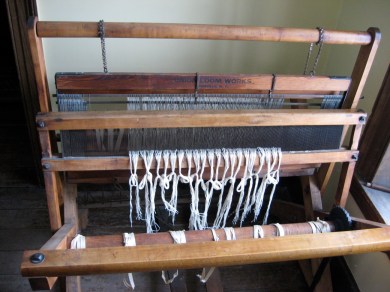
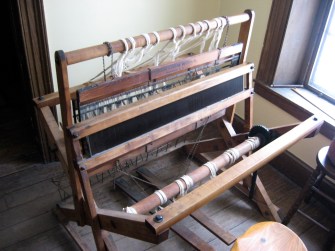
Back in February I had gotten the warp rewound and rethreaded on the 36″ Union Works Loom that is on the second floor of the house but did not have a chance to tie up the warp to start weaving until the July 4th Celebration.

IMG_8403

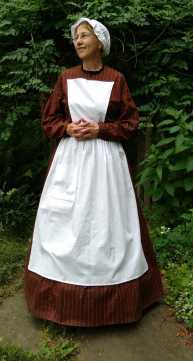
This would also be the first time I would attempt to weave dressed in the fashion of the mid 1840’s!

IMG_20160704_163238997

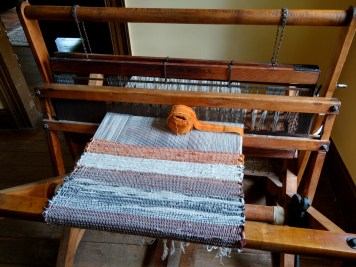
The loom, she may be old (we’re guessing close to 100 yrs) and persnickety but YES…. she works – Yipee!!!

IMG_20160704_152625042_HDR

Lessons learned:
1) Need to do a bit of improvement on the break latch.  It had a tendency to release just because it felt like it which brought some exciting moments!
2) One cannot weave at a floor loom while wearing a hooped petticoat!

Saline Celtic Festival

  IMG_20160709_095301863_HDR

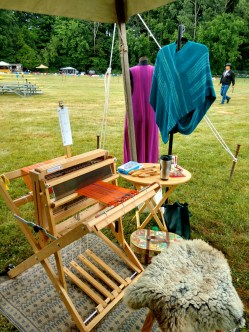
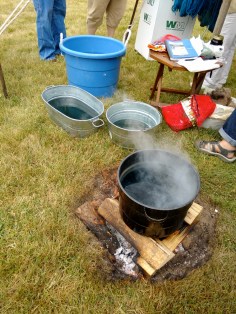
This year at the Textile Tent we did not have “waulking the wool” sessions as Frances, our fabulous leader in Scots Gaelic song, has moved across the country.  BUT….. besides my weaving and the spinning demonstrations by Spinners Flock members we had an indigo dye pot going!

IMG_20160709_120358814    IMG_20160709_120415740

I had some wonderful conversations with people with several enthusiastically trying their hand at weaving but the high point came at the end of the day.

IMG_20160709_170644407

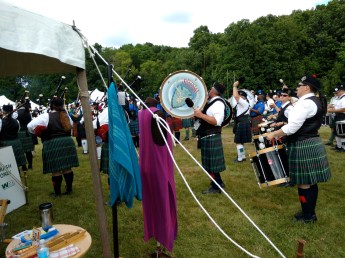
Four bagpipe & drum bands marched right next to where I was weaving
for their final gathering!

Ann Arbor Street Art Fairs

IMG_20160720_095256583   IMG_20160720_095235539

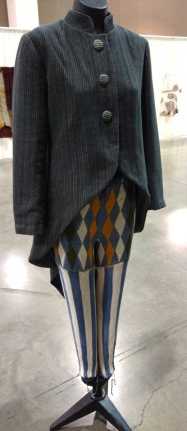
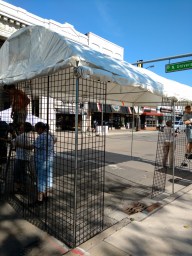
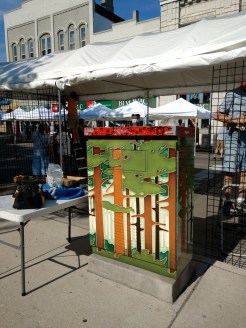
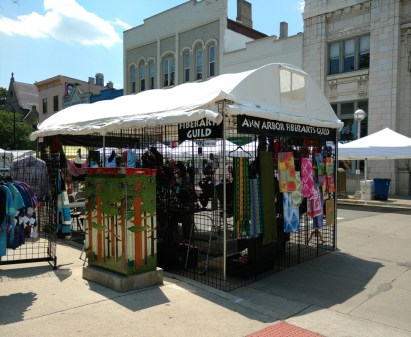
It’s always HOT come the 3rd full weekend in July for the Ann Arbor Art Fairs and this year was no exception.  With teamwork the Ann Arbor Fiberarts Guild booth went up smoothly and we were excited to see that ‘our’ electrical box was one of the many power boxes around the city to receive a ‘make over’ from the Ann Arbor Arts Alliance’s Power Art program.

IMG_20160720_095246355

The one next to our booth at the corner of State Street and N. University is the latest installation with artwork from Motawi Tileworks!

IMG_20160720_180200

Posted by: bschutzgruber | June 28, 2016

Preconceived vs Surprise!

Earlier this month I attended a mandala rug workshop with Australian felt artisan Martien van Zuilen.  ‘Mandala’ is Sanskrit meaning disk or circle.  Martien’s method is one of evolution (verse working out the design in advance) which really resonated with me and I learned several new ways of doing things.

Seeing my mandala come into being had some nerve-wracking moments – especially at the end of Day 1 when I began to regret my color choices!  BUT…. as the workshop continued my excitement grew as my design expanded, changed, and yes….. everything came together.  Thank you, Dawn Edwards, for arranging the workshop!

I am so pleased with the final result – ‘Celestial Navigation’.

[If viewing this in an email, please click the post title to see the sideshow]

This slideshow requires JavaScript.

Posted by: bschutzgruber | May 29, 2016

From Flax to Overalls (or when first you don’t succeed….)

At the Northlands Storytelling Network Conference Hungarian storyteller Csenge Zalka shared a childhood memory of a cartoon/film of ‘Little Mole’s Pants’ showing the steps of making linen from flax. Even though I do not understand Hungarian, I was able to follow the storyline in Part 1.  Part 2 quite accurately shows all the steps that go into turning flax into a finished dyed garment as well as the resourcefulness of Little Mole and the other insects, animals, and pond-dwellers.

Enjoy!

Mole’s Pants Part 1

Mole’s Pants Part 2

For those who get this via email… thank you for your patience!
My first attempt to embed the video links failed.


Posted by: bschutzgruber | April 27, 2016

Shape-shifting

As a storyteller I’ve worked with folktales for over 30 years and I’ve found that many tales change and evolve over the years – both in how they have been remembered/recorded and in how I tell them.   I’ve seen that same ‘change and evolve’ phenomena happen with my fiber creations too.  I find that I am constantly changing items I’ve made – transforming them from one thing into another…. just like the shapeshifter character in the old stories changes from one form to another.

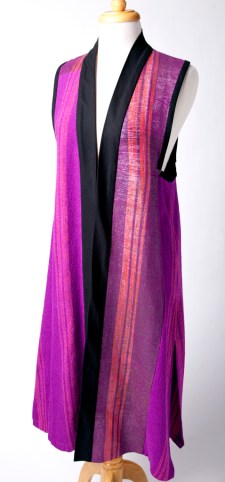
Sometimes the transformation is easy…. like taking a ruana and using the fabric to make a vest or jacket.  Other times it’s more complicated – like when I removed  the sleeves from a fitted jacket I had woven to create 2 different vests.

Here are a few items that have evolved and changed over the years.

Bottom line…. change is part of life!
If viewing this in an email click here to see the see the slide show.

This slideshow requires JavaScript.

Posted by: bschutzgruber | March 25, 2016

Who got you started?

I’m often asked how I got started weaving and my first response is usually a reference to being fascinated with the process since childhood…. but that doesn’t answer the question.  The answer actually is Jean Gordon.

I met Jean over 30 years ago when she came to a Detroit Story League meeting.  On the verge of retiring from teaching, she was looking at ways to expand her interests now that she would have more time.  When she mentioned that she wove, I made a beeline to talk with her as she was the first person I’d actually met who had a loom.  Jean is the one who connected me with Gloria Teeter.  Gloria offered beginning weaving classes in her studio/shop.  I signed up for the class…. and was hooked!  Jean was my introduction to basket weaving and spinning, connecting me with places where I could learn these crafts.
Avid weaver, spinner, knitter, storyteller, gardener and docent at the University of Michigan Matthaei Botanical Gardens, mentor/tutor at the high school where she had taught, Habitat for Humanity volunteer, Jean was always up for an adventure and road trip.  We would spend the next 25+ years traveling to storytelling festivals, conferences and events as well as comparing notes on our latest fiber projects.

Jean died on her 90th birthday in 2013 and I had the honor of helping her family sort through her storytelling and fiber related materials.  Her folktale and storytelling books were donated to the local library.  Her loom, spinning wheel, sewing machine, and all the other items that go along with them found new homes.  Her handspun yarns and dye samples came home with me.

IMG_20160325_085219

I knew I wanted to do something with the handspun yarns and this January I created a felt wall hanging In the Garden in memory of Jean.

In the Garden 29" x 39" felted wool fiber, silk fabric, wool yarn

In the Garden
29″ x 39″ felted wool fiber, silk fabric, wool yarn

So I ask you…..

Who got YOU started in an activity that you love?


Posted by: bschutzgruber | February 26, 2016

Weaving at Cobblestone Farm

Ever since I was a kid, my dream job has been to work at a place like The Henry Ford Greenfield Village doing weaving and fiber craft demonstrations.  Well… I’ve gotten my wish!  This fall and winter I have had the pleasure of demonstrating weaving as a volunteer at historic Cobblestone Farm in Ann Arbor.

Cobblestone Farms13

The house itself has a fascinating history.

The Cobblestone Farm Ticknor-Campbell home, completed in 1845, was originally a two-family home. Benajah Ticknor, a U.S. Naval surgeon, and his brother Heman Ticknor, whig​ politician and farmer, shared occupancy of this classic revival structure with their families from 1835-1860.  The William Campbell family then owned the farm from 1881-1972 where three generations worked the 225 acres and kept the house essentially unchanged for 91 years.  In 1972 the family sold the house and remaining 4 1/2 acres to the City of Ann Arbor. The house was in rough shape at this time as you can see in University of Michigan film student 1975 documentary Cobblestones and Memories. But 40 years of slow and steady work has restored much of the house.  Interpreted to reflect its mid-nineteenth century appearance, the sit​​e provides a view of past rural life in Washtenaw County Michigan.   Today the site is administered through the Ann Arbor Parks and Recreation Services with support from the Cobblestone Farm Association.​​​

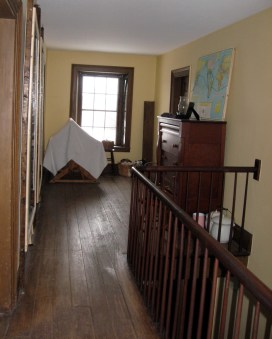
Upstairs at the end of the hall they have a loom.

IMG_8405  IMG_8385

It had been used in the past to demonstrate rag rug weaving but had not been in working order for years as the warp was a tangled mess.

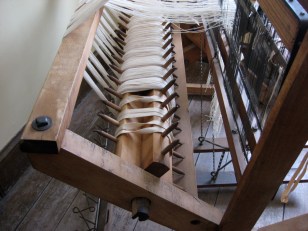
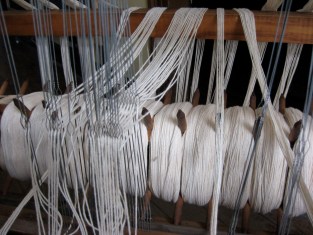
Now there are times when you just has to ‘cut your losses’ and start over… and this was one of them!  I cut off the what had been woven and was able to unwind the remaining warp, stretching it down the hallway. Then slowly…… carefully…… 3 of us spent 4 hours winding it back on.

IMG_8398

From there I was able to thread up the heddles and reed to get things ready to start weaving.

IMG_8390    IMG_8403

I did a web search to see what I could find out about the loom itself:
Union Loom Works – Boonville, N.Y.

IMG_8383

Union Loom Works existed from 1880-1940.  They produced looms intended for weaving rugs for home use or for sale as a cottage industry.  Oriental Rug Company purchased the patent to the Union Loom and I was able to download a copy of the manual!

Union Loom No36 Manual


Instructions for unpacking, taking the loom upstairs, explanation of terms, how to weave, how to get quality work, care of your loom, how to warp, designs you can easily make, are just some of the topics covered.

“At first glance, it may appear difficult to operate a loom, but as you get into it you will be surprised how easy it is after all.  A few things may bother you a little but as you become familiar with the loom, you will have no trouble.”

All the things you can use for your rugs (including old carpets and grain bags), how to make pillows (using silk and velvet rags), portières (door curtains), shopping bags and blankets are also described as well as advise on managing your weaving business.

“As nearly everyone has a supply of old rags, wornout clothing and other waste textile material, it is usually easy to obtain orders for custom weaving from you friends and neighbors as soon as you mention having ordered a loom.”
~~~~~~~~~~~~~~~
“Signs – Place a large placard on a tree in front of your home, tacked to the house-front itself, if preferred, or put inside a front window.  This method is good anywhere, but especially good if you reside where there is considerable traffic past the house.”
~~~~~~~~~~~~~~~
“You should make from 75c to $1.50 per hour”
~~~~~~~~~~~~~~~
“Many customers who become proficient on their looms find lucrative and enjoyable employment showing others how to weave.  Sometimes they form classes, thus swelling their income by a considerable sum.”
~~~~~~~~~~~~~~~
“As your custom trade develops, it may be advisable to have two looms….”

 The age of the loom at Cobblestone has not been documented.  Many of the Union Looms I found listed online date back only to the early 20th century.  But the basic design has not change really – all the elements of this loom could well have also been found on one in the late 19th century so having her up and running will give visitors a taste of yet another aspect of daily life from a bygone era.

And I’ve been told there’s another smaller loom down in the basement……..


Posted by: bschutzgruber | December 29, 2015

A look back at 2015….

With 2015 coming to an end, I took a look at my weaving and felting logs to see what all I did this past year.  This was a year filled with demonstrating weaving and felting, learning new skills, making a new loom, and creating items to exhibit, to sell, and to be auctioned to raise moneys for scholarships, plus gifts for a wedding and an international holiday exchange.  What a fibrously fabulous year this has been.
May 2016 bring new adventures to us all!

If you get this via email, you may have to click here to view the slide show.

This slideshow requires JavaScript.

Read More…

Posted by: bschutzgruber | November 29, 2015

Say “Cheese…..”

November has been one of those “but it looked so doable on paper” kind of months!  Between storytelling performances, the Ann Arbor Fiberarts Guild annual Holiday Sale, receiving/processing 69 entries from 31 states for the lottery drawing of 12 Fringe performance spots at the July 2016 National Storytelling Network Conference in Kansas City, MO, making special order items to ship, plus traveling 400 miles in a Midwest snowstorm to attend a family wedding…. I’m just now sitting down to write-up some thoughts on a workshop I took at the beginning of the month.

On November 8th the Ann Arbor Fiberarts Guild sponsored an excellent daylong workshop “Styling and Photography for the Fiber Artist” with Elaine Palmer and local Ann Arbor photographer Mike Gould.

Elaine has 30 years of experience in styling, most notably with Nordstrom’s and Eddie Bauer. She did all of the styling, photography, post production in Photoshop and laid out all 208 pages for the 90 Anniversary Monograph of the Boston Weaving Guild. That included the artwork of 95 artists.

The morning began with Elaine asking the question “Why are you photographing your item?” She explained the differences between editorial, sales, website, printing/publishing, personal record keeping, and submission for a juried competition.  She talked about lighting, cameras, and the difference between shooting items flat and using a human model or mannequin.

Then using our own items and cameras, we set about trying different ways of styling….

IMG_8147   IMG_8153

grouping items together…..

IMG_8143

IMG_8141

and seeing how shadows can enhance or detract from the photo.


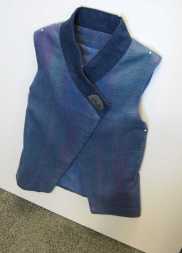
I’ve always used mannequins to photograph my garments so I wanted to try my hand at a flat layout.  Tissue paper was used to fill out the garment and pins to secure it to the white board.  This is MUCH more difficult than having the garment on a mannequin!

IMG_8128

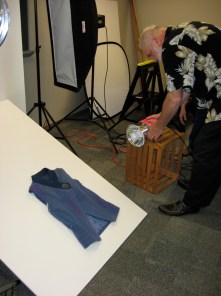
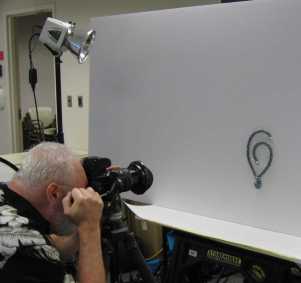
In the afternoon, Mike Gould, took professional photos of our styled work.  We had garments, scarves, shawls, wall pieces, jewelry and purses which was a fabulous tutorial as Elaine and Mike explain what they were doing as we went along.  We learned tricks of the trade as we used fans to create ‘wind’ effect, or fishing line and tape to have the items look their best.

   IMG_8130  IMG_8154

IMG_8158    IMG_8159

Plus with Mike’s camera hooked up to his computer, we could what each photo clearly.

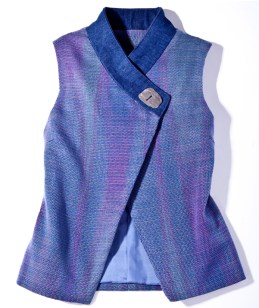
After the workshop, Mike used Photoshop for the final touches and to resize the pictures for use on the web, as photos or for juries.

bsgFiberArts___023 EP  bsgFiberArts___187  bsgFiberArts___096

This was a fascinating day.  I learned a lot – especially observing how all the different items that people brought were photographed.

I will never look at catalog in the way ever again!

Posted by: bschutzgruber | October 28, 2015

Felting Thin, Thick, and Deja Vu

Over the summer I had three very different experiences with felt making.

Felting Thin
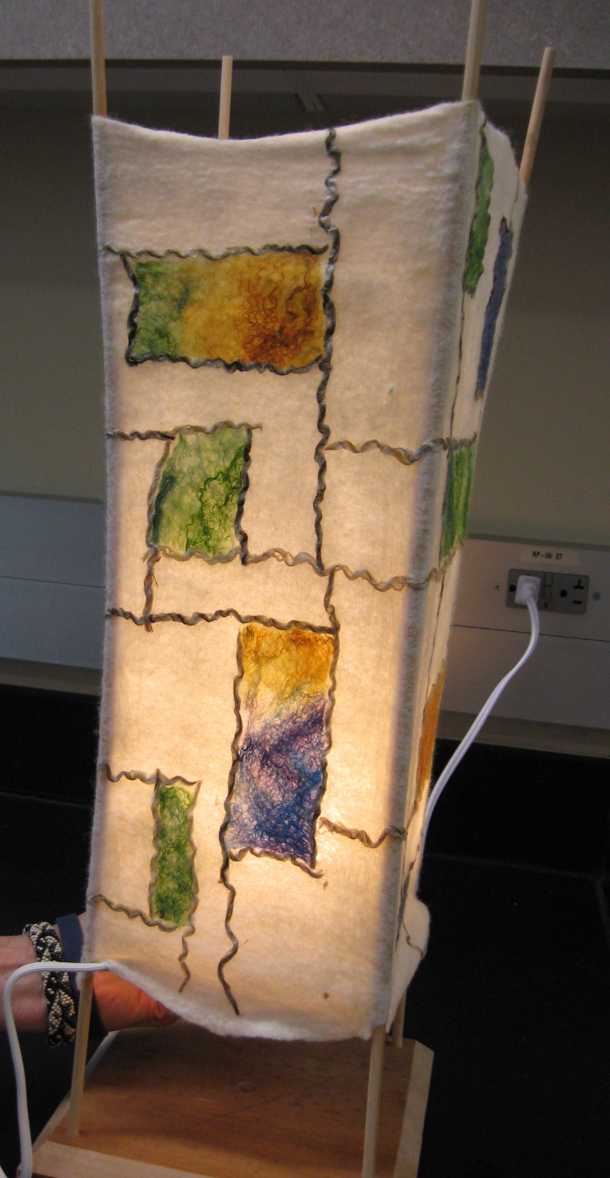
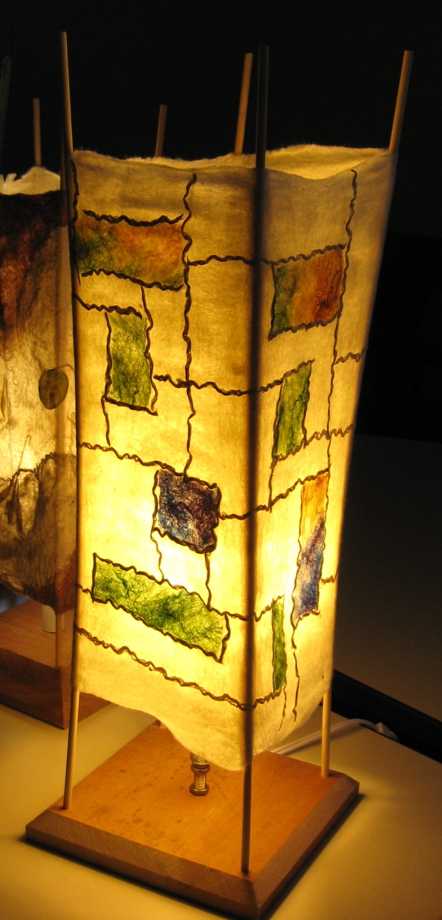
Summer began with the Michigan League of Handweavers biennial conference and workshops.  I took Illuminating Ideas in Felt with Sharon Costello.  A noted felt artist and teacher, Sharon’s art, books and DVDs are well-known and her idea of wet felting a 3 dimensional illuminated shape immediately caught my interest.

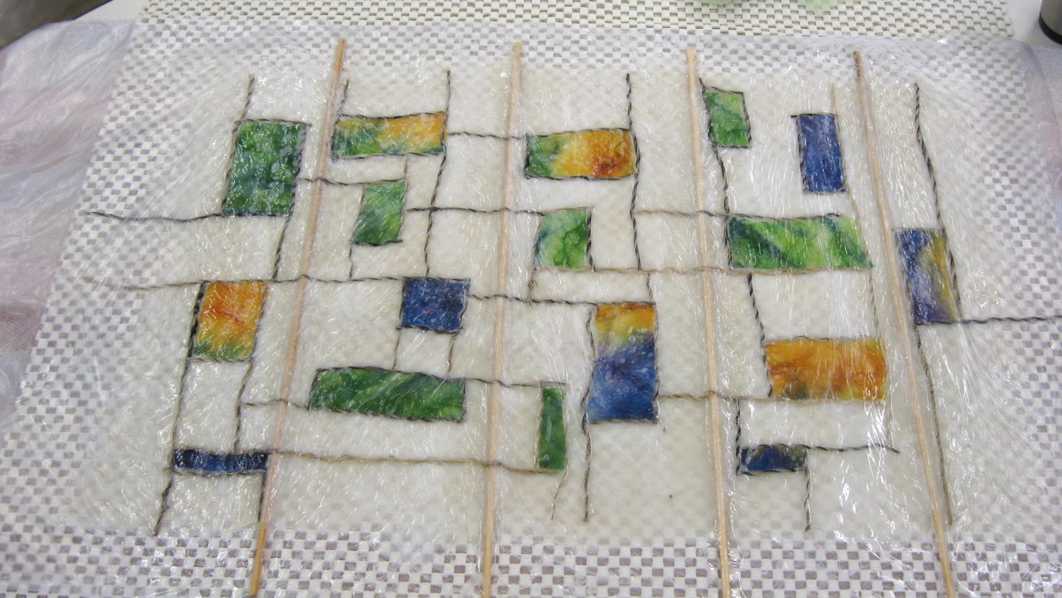
Sharon deftly demonstrated laying out the wool in 2 fine layers…

IMG_6989-1

and set us to making samples…. samples… and more samples as we practiced the finesse needed to create a woolen skin thin enough to be translucent yet strong enough to hold the shape.

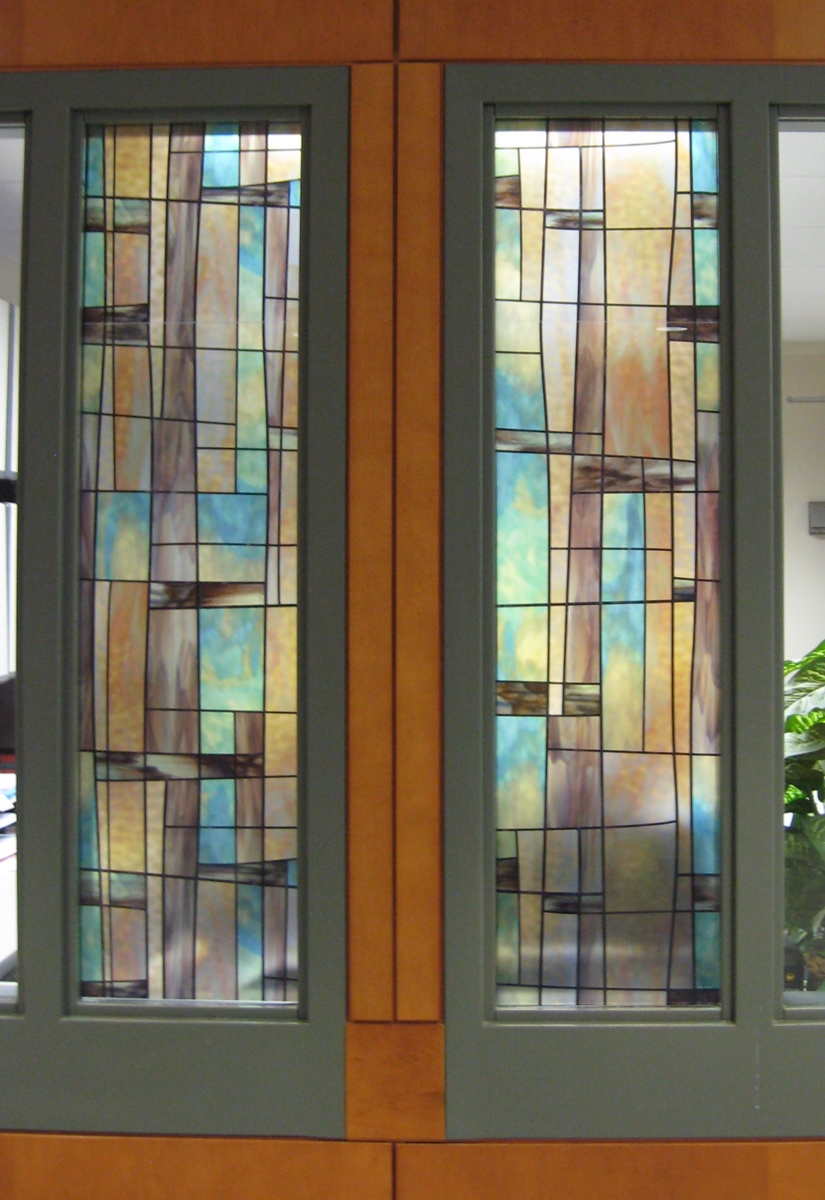
My inspiration was the office window just outside our classroom.

IMG_7007

IMG_7018

IMG_7046  IMG_7050

~~~~~~~~~~~~~~~~~~~~~~~~~~~~~~~~~~~~~~~~~

Felting Thick
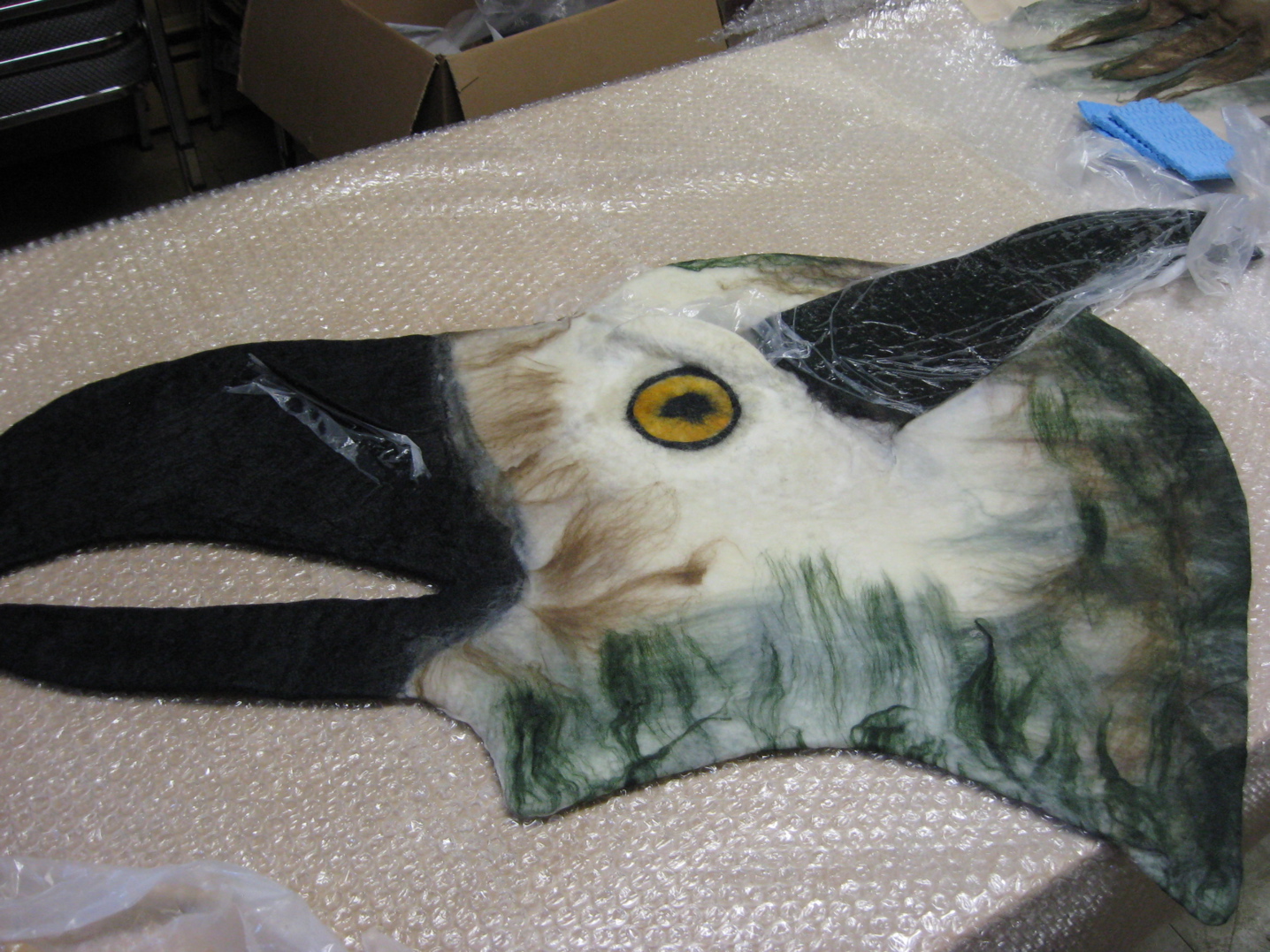
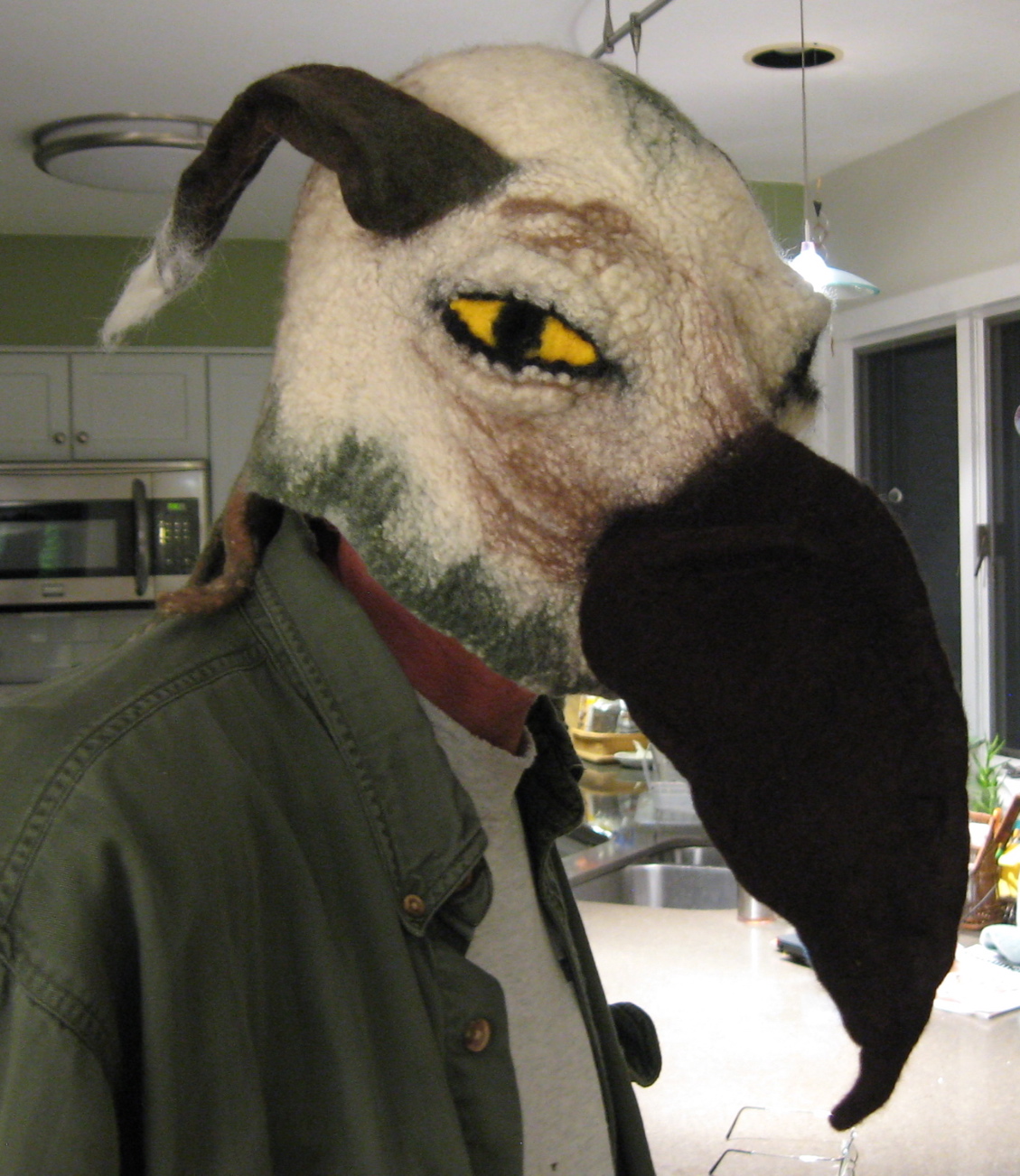
Summer ended with a workshop in September with Gladys Paulus making felt masks of fantasy creatures. The workshop was organized by Dawn Edwards near Kalamazoo, Michigan.

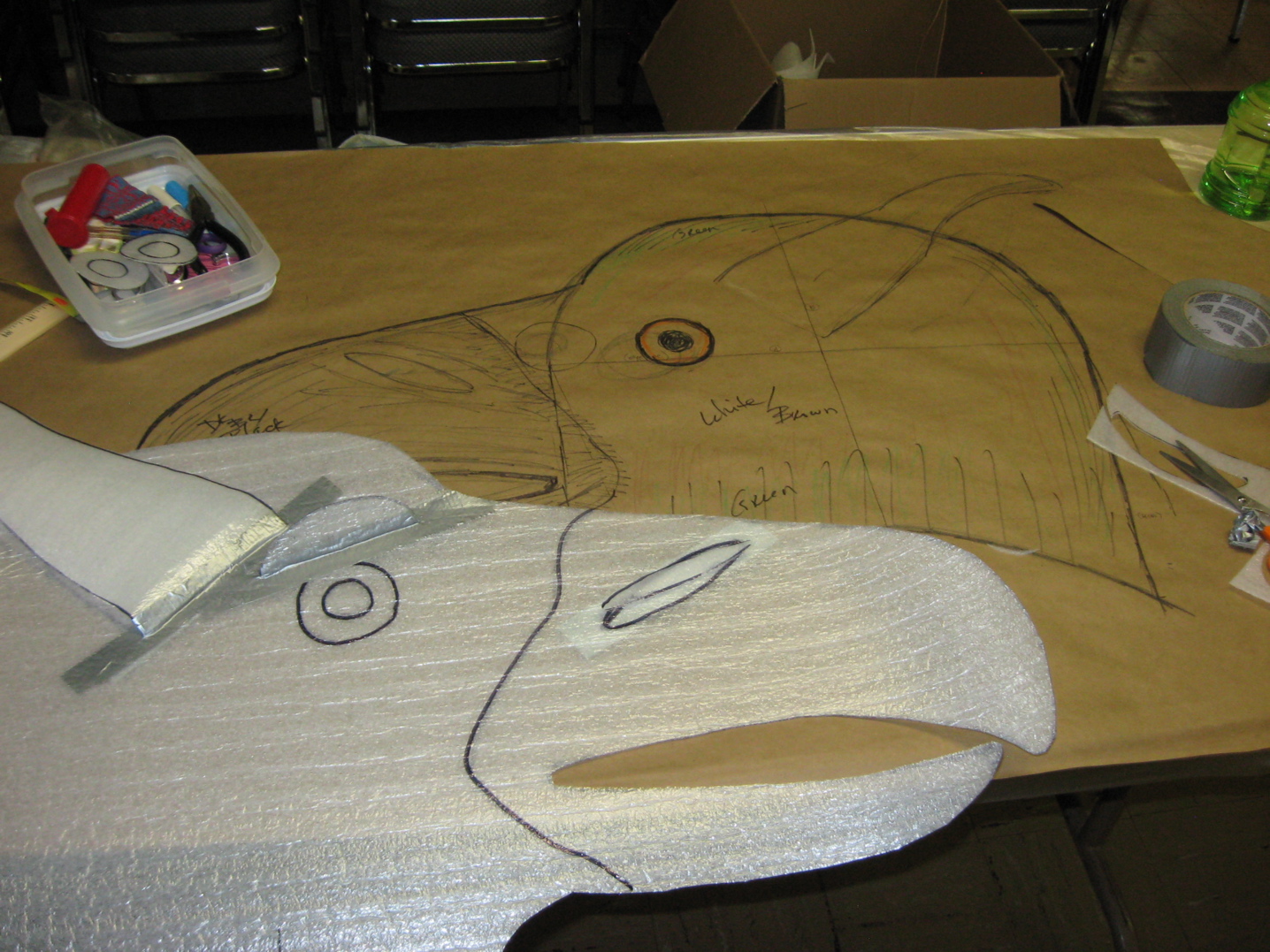
My inspirations were a Steller’s Sea Eagle and a Griffin.

Stellers sea eagle  griffin

We made patterns and resists,

IMG_7911

and laid out courser wool in 6 thicker layers to create a firm, solid shape.

IMG_7927  IMG_7964

IMG_8059

~~~~~~~~~~~~~~~~~~~~~~~~~~~~~~~~~~~~~~~~~

Felting Deja Vu
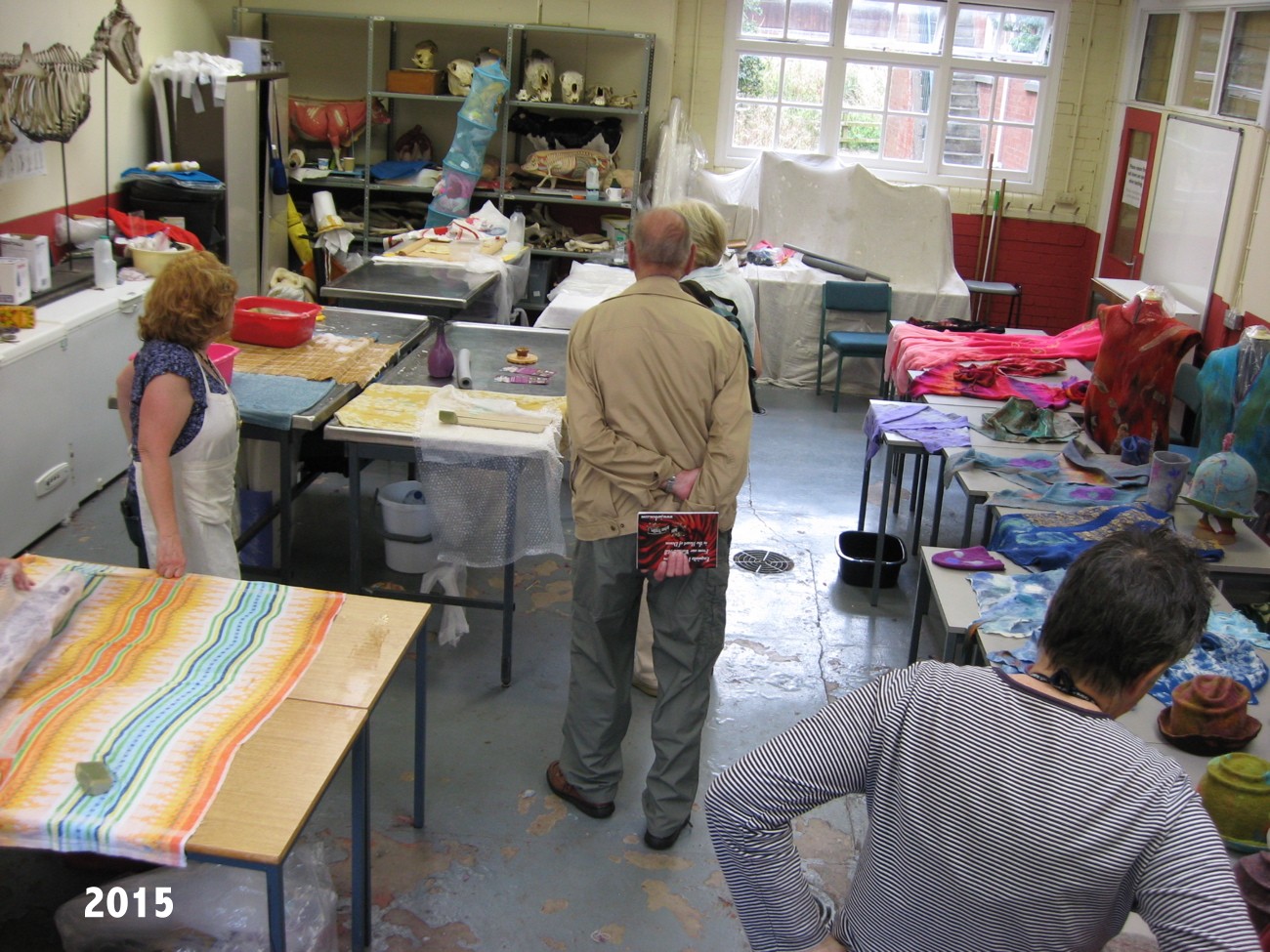
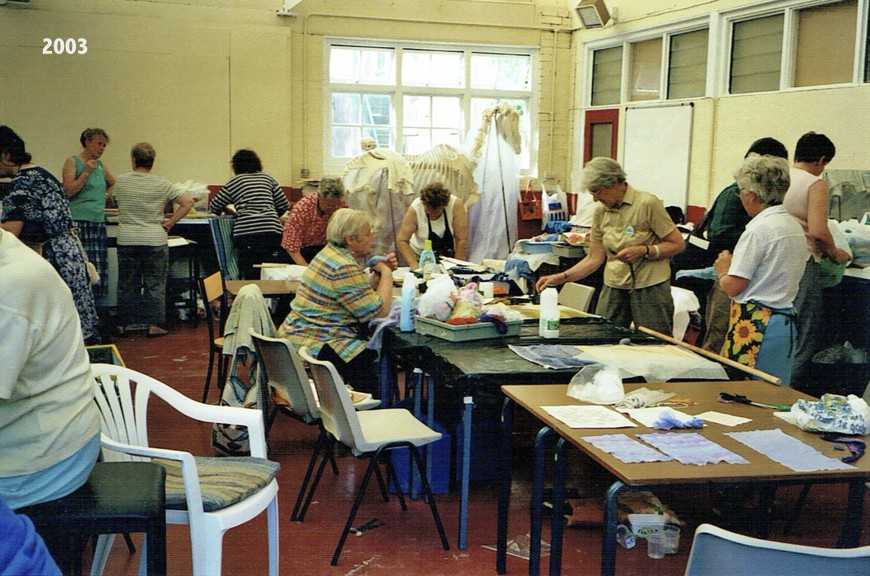
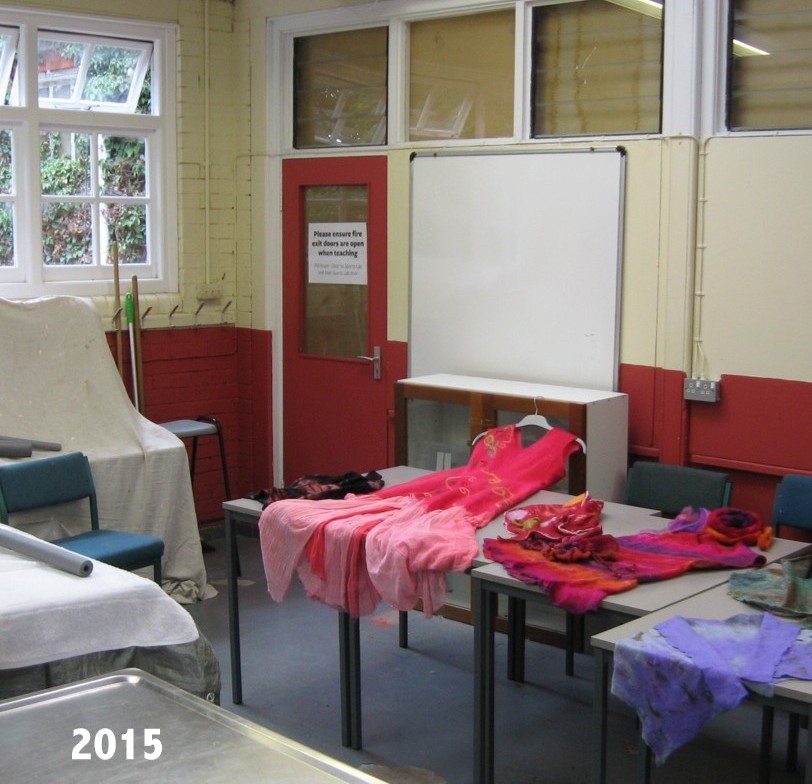
The 2015 AGWSD‘s Summer School was held at Moreton Morrel Agricultural College in Warwickshire, England. (blog post On the Road and Across the Sea)  As I walked around the campus and grounds I was filled with deja vu moments because I had been there before….. at the 2003 Summer School.

weavebioThe 2003 summer school was memorable for a variety of reasons.
–It was my first real experience with fine felting techniques.  (The Silk Route, taught by felt-maker and author Sheila Smith, focused on dyeing and felting with wool and silk fibers.)
–It was held in the most memorable room assignment I’ve ever had – the Post Mortem Lab (a.k.a. the morgue = Do not open the chest freezers!)
–It was one of the hottest summers in UK history with temperatures in the upper 30’sC (90’s F) and reaching 40C (104F) by the end of the week.


The 2015 felting course was held in the same location.  Stepping into the PM room during the ‘Walk About’ brought back a flood of memories of “Felting in the sauna with Sheila…”

2015room  2003room

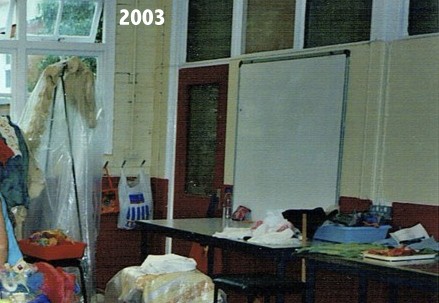
The back corner that had been my work station.  

2015corner  2003corner

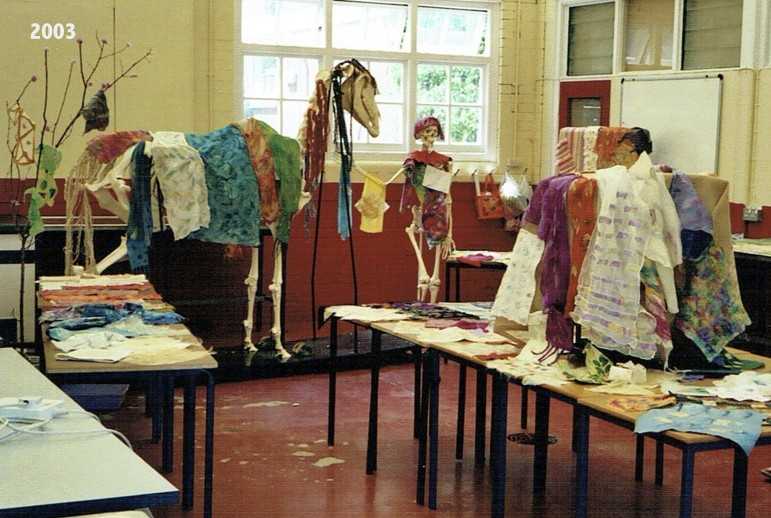
And how we creatively displayed our work back in 2003.

2003 display

~~~~~~~~~~~~~~~~~~~~~~~~~~~~~~~~~~~~~~~~~

Some felt projects call for a light hand and gentleness
while others may take 4 days of hard work
but Thin or Thick…… I like to felt!!

IMG_8044


Posted by: bschutzgruber | September 12, 2015

On the Road and Across the Sea

August brought travel and new adventures as I headed across the Atlantic for the Association of Guilds of Weavers, Spinners and Dyers biennial summer school being held this year at Moreton Morrel Agricultural College in Warwickshire, England.

Moreton Morrell Hall

Moreton Morrell Hall


Cotswold Court

Cotswold Court

17 courses were offered in spinning, weaving, dyeing, knitting, feltmaking, basketry, and design with 250 participants from throughout the UK and Europe,
plus USA, Trinidad & Tobago, and Australia.

IMG_20150817_105930_653

I spent the week with Susan Foulkes

IMG_7499

learning to weave patterned bands from the Baltic region
using a double-slotted heddle.

IMG_7513

On Sunday Susan presented each of us with our own backstrap band that she wove

IMG_8004

which goes around your waist/lower back and your body supplies the warp tension.

IMG_7461
[Yes, I’m sitting on the floor… again!  See my blog entries Weaving in Wales – September 2013]

Our work began in earnest on Monday.  With 13 in the course, space was a bit tight!

IMG_7455


IMG_7470  IMG_7456

But Susan kept us all focused and inspired with examples and exercises.

IMG_20150817_110256_994

I had done a bit of tablet/card weaving in the past but never anything like this and had never worked with a backstrap system.  I moved from rather rough beginnings to at least having straighter selveges by the end of the first day.

IMG_7459

Tuesday we progressed to reading more complicated patterns.  I had to get a little creative to 1) keep the pattern in place and 2) know which step I was weaving as I wove a bookmark.

IMG_20150818_101015_306-1

Now it was time to wind out and thread up a new warp.

IMG_7524

I was sooooo pleased with my weaving UNTIL I noticed that, though an interesting design, what I was weaving did not match the pattern in the book!  Suddenly I realized I had been reading every other row backwards = Oops!
[Left is my ‘original’ interpretation.  Right follows the pattern.]  

oops
Lesson learned and more weaving.  [photos show the front and back of each band]

green_1  green_2

Wednesday ended part 1 of the course and was only a 1/2 day in the classroom.
There were a variety of field trips offered in the afternoon and I went to Stratford-upon-Avon for a talk by the costume department of the Royal Shakespeare Company = FABULOUS!!!

IMG_7541  IMG_7559    IMG_7554  IMG_7556

Thursday began part 2 of the course and brought more weaving
as well as winding out & threading up yet another warp.

IMG_7626

On Friday I created my own design by combining 2 patterns.

combined  brown band

Each day was filled with spectacular examples of bands from Sweden, Norway, Latvia, Estonia, Russia, plus Sami bands from the Arctic circle – all part of Susan’s amazing personal collection.

bands_1IMG_7617 IMG_7616 IMG_7614 IMG_7613 IMG_7610

We could continue working on our projects in the evenings but we also had a variety of other activities too: lectures, a silent auction, and of course…. the fashion show where we get to see all the wonderful garments and accessories people have made since the last summer school.  I brought my hat and purse woven from maps [see my blog Cartography Chic – March 2015].
I am happy to say that the hat survived being hand carried as I traveled on trains, planes, and automobiles as it was too big to fit in my suitcase!

FashionShowHat

The Trade Fair was Friday evening and Saturday,
plus a raffle to raise funds for scholarships.

IMG_20150821_184545_059  IMG_20150822_164255_422

We could also spend time every evening in the ‘Make & Play’ area where we could create a fascinator or even a dress for the Saturday evening party.

IMG_20150818_194842_398  IMG_20150818_194849_293

Saturday brought our class time to a close and I learned several different ways to finish off the band,  a.k.a. what to do with the fringe ends.

finishing ends

In the afternoon was the walk about.  I really enjoy seeing what the other classes have been doing all week and there are always unexpected surprises.  Like meeting the silk worms in the Cocoons to Cloth class and seeing silk spun off the cocoon…..

IMG_7683 IMG_7695

or checking out the equipment the Fleece a Day students used.

IMG_7720  IMG_7728

Signage is always creative.

IMG_7696  IMG_7747

And because this is an agricultural college and equine center the ‘classrooms’ are also interesting!

Weft Ikat was in the coke forge

Weft Ikat was in the coke forge


Shibori Techniques was in the equine therapy center with 2 work stations per stall

Shibori Techniques was in the equine therapy center with 2 work stations per stall


Creative Feltmaking was in the post mortem room

Creative Feltmaking was in the post-mortem room


The week came to an end with a Hog Roast on Saturday evening

IMG_20150822_175428_314

and in celebration of the AGWSD’s 60th anniversary, there was a ‘1955 Dance’
complete with home-made decorations
and many of us wearing 1950’s inspired/vintage attire.

VID_20150822_200725_156

7_Dance

VID_20150822_202803_632

IMG_20150822_212050_174     IMG_7779


Summer School came to end on Sunday morning and I had the honor of giving a storytelling performance for the closing gathering.
What thrill to share stories with this creative group!

IMG_1144  IMG_1147-1IMG_1146-1


Summer School 2015 was a week filled with new friendships,
lots of laughs, and stimulating creativity.
Susan’s enthusiasm was infectious.
Her knowledge, patience and generosity boundless.

I came home inspired and will continue weaving bands!

Patterned Bands - Part 1 2015 AGWSD Summer School

Patterned Bands – Part 1
2015 AGWSD Summer School

« Newer Posts - Older Posts »

Categories

Barbara Schutzgruber - Storyteller & Weaver

Every weaving tells a story.......

handwovenharmony

adventures in fiber

A Little Cloth

a little stitching, weaving, writing & hiking

StillWalks

Bringing the outside in

Fairy Tale Lobby

a dialogue for storytellers and story lovers

BUSY BRUSH CAFE

a self-taught artist discusses acrylic painting, photoshop and the creative process.

MaryGwyn's Art

Artist | RN | Art Educator

Barb-e Designs

Follow me as I weave along the way