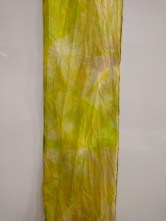
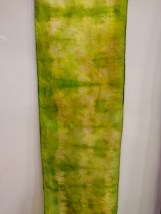
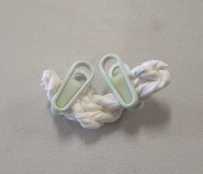
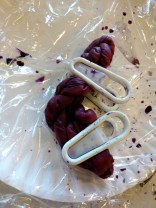
Posted by: bschutzgruber | July 27, 2017

Weaving at the University of Michigan Medical Center

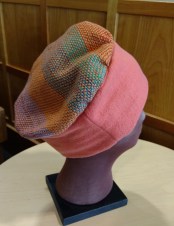
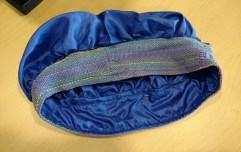
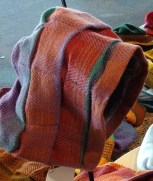
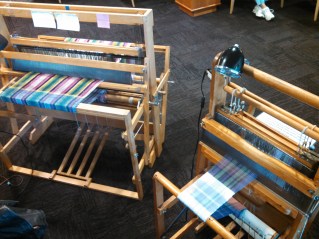
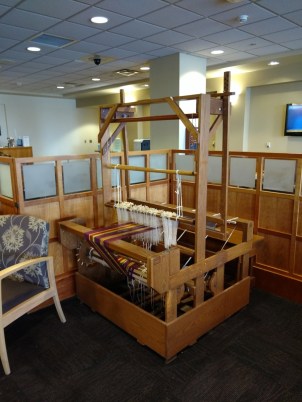
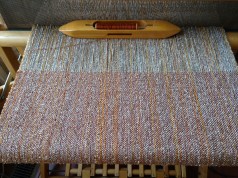
Since 2002 members of the Ann Arbor Fiberarts Guild have been weaving at the University of Michigan Medical Center Comprehensive Cancer Center.  AAFG member Marion Marzolf was asked to set up a weaving program as a form of entertainment and distraction for patients waiting to see the doctor. The University Medical Center owned a Harrisville Floor Loom (4 harness 36″) that could be used to weave cloth for hats that could be given to the patients free of charge.

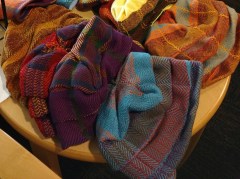
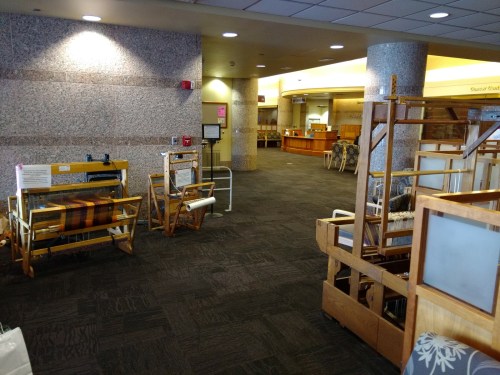
The program is part of the U of M Cancer Center Patient & Family Support Services Art Therapy Department. For the past 15 years we have been set up in a variety of corners, hallways, rooms, nooks, crannies, and now have a home in the main lobby as different weavers come in Monday through Friday to weave for several hours. Over the years nearly a dozen members, myself included, have volunteered to weave or sew hats. We have a budget for purchasing yarns and supplemental fabric, plus other weavers donate yarn. We put 7 yards onto the loom each time and will get about 18-20 hats out of that. So far we have given away close to 1,900 hats!

We spend almost as much time chatting with people as we do weaving.  We hear stories of family members (both here in the USA and from around the world) who would weave, spin, knit, crochet, quilt, tat, cross-stitch, and more. Patients’ faces light up with smiles as they find ‘just the right hat’. And for those who would like to try their hand at weaving we give a simple lesson.

With the loan of a smaller loom we wove memorial handkerchiefs for the Bereavement Center for several years.

Currently we are weaving fabric for the hats as well as for pockets that are sewn onto canvas bags because depending on the treatment, not everyone is in need of a hat.

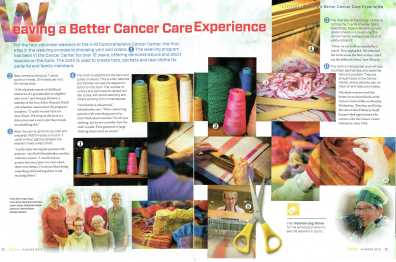
As far as I know we are the only program of this kind in the country and we were featured in the 2015 Summer issue of Thrive magazine (published by the University of Michigan Comprehensive Cancer Center).

In November 2016 we were contacted by the daughter of Josephine Grant Strobel.
“Josephine was a great weaver having learned from Swedish tapestry weaver Lillian Holm while in high school in the late 1930’s at Kingswood (part of the Cranbrook Schools in Bloomfield Hills, Michigan). She loved it and found great peace and fulfillment in weaving. She was so creative and was a breast cancer survivor. I would be interested in donating her loom to the University of Michigan (I am an alum) and I know she would be overjoyed to know that it was being well used.”

It took some time to work out all the details and I am happy to say that in January of this year, we moved the loom into our corner of the lobby.

The “Big Girl” as we have come to call her is beautiful!  She appears to be homemade as we cannot find any makers mark or brand. The Harrisville loom is still being used for hats, the Big Girl for pockets and the smallest loom is warped so we can give quick lessons if someone is interested in trying.

“We are so pleased to have this wonderful skill shared with our patients, not only for the calming affect it has by sitting and observing the weavers, but also for the lovely hats made for our patients from the weavings.”
–University of Michigan Medical Center Comprehensive Cancer Center

Posted by: bschutzgruber | June 28, 2017

Demos… always the adventure!

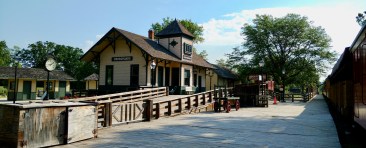
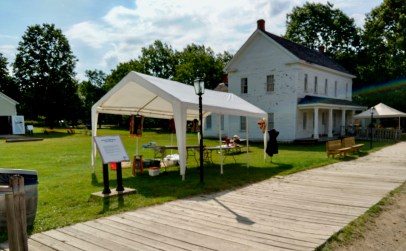
Earlier this month I gave a felting demonstration as part of a Fiber Day at Crossroads Village & Huckleberry Railroad – part of the Genesee County Parks and Recreation Commission in Flint, Michigan. This is a one-of-a-kind collection of restored 19th century buildings, amusement rides and authentic narrow-gauge railroad showing the life and times of the post-Civil War era in Genesee County. In the late 1960’s and early 1970’s many structures of historical importance in the Flint area were being destroyed. Ideas to create a farm museum and preserve buildings of historic importance merged into the concept of a rural “living village” with the sights, sounds, smells, and activities characteristic of 1860-1880.

Activities that day included spinning, sheep shearing, weaving, basket and rope making.


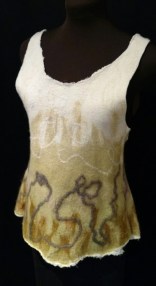
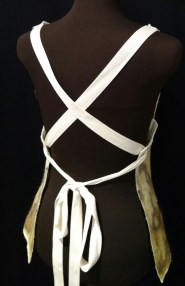
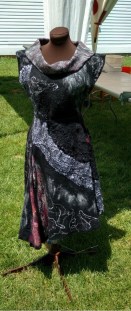
Often when I demonstrate felt making I wear something made from felt but knew this would not be a good idea as this time I would be working outdoors in temperatures in the low 90’sF/30’sC. Thinking about this…. I had an inspiration to remake a felt top into a felt apron.


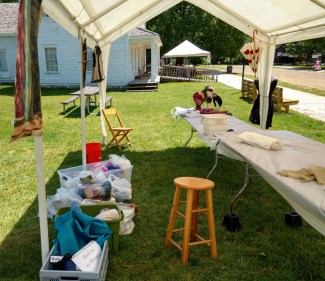
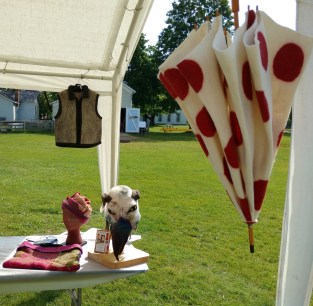
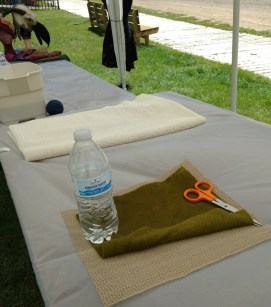
The organizers wanted an activity so people could try their hand at felt making so I was given a good size tent for shade and work space with room for supplies and examples of what can be made from felt.


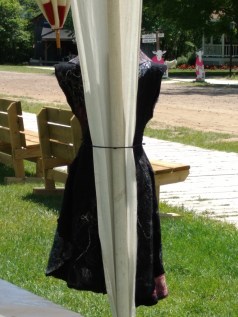
Normally I layout my wool indoors so the fibers do not blow away.  Once everything is wet and the rolling begins, being outdoors is not an issue. Luckily in there was little to no breeze in the morning so laying out the raw wool was not too difficult.  HOWEVER…. as the day went on the wind came up – strong enough that I had to secure the dress form to the tent pole with zip-ties to keep it from being blown over!

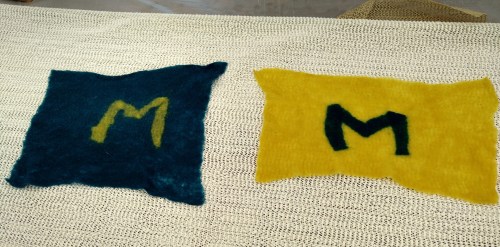
Having a breeze on a hot day makes things more pleasant for being outside BUT not for laying out the wool. Luckily I had brought along wool prefelt (wool that is lightly felted already and can be torn, shaped, or additionally felted) and used whatever was hand to keep if from being blown away until we were able to wet it down and begin rolling.

I learned something new with each group, adapting the activity throughout the day, and working outdoors certainly was an adventure.  All in all…. it was a great day!

Posted by: bschutzgruber | May 15, 2017

And the learning curve continues…..

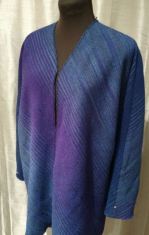
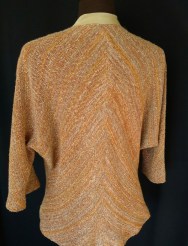
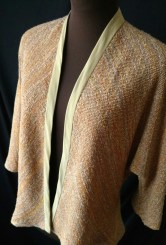
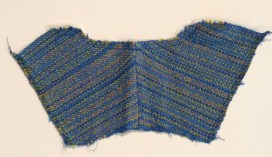
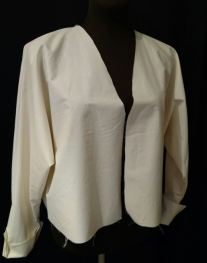
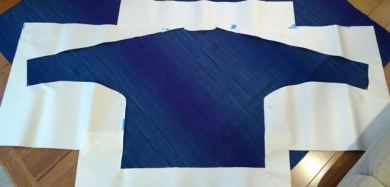
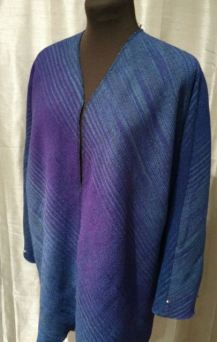
February, March and April have been spent working on jackets using handwoven fabric sewn on the bias.

Take #1 Sapphire Blue Bias
In January I started working on a bias cut jacket. (See my previous post Yup… there’s a learning curve!  January 2017.)

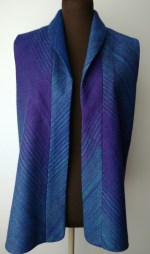
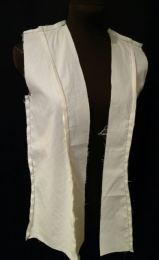
As I let the jacket rest for a couple of weeks I noticed the fabric was beginning to sag and the sleeve seam was beginning to twist. I took the jacket apart and stabilized the fabric with a fusible interfacing. This gave the jacket more structure but it no longer had the drape the attached sleeve pattern needed. With the fabric already cut into the jacket shape there were limited options. I decided make a sleeveless vest.

Using the sleeve sections and left over fabric I was able to make a collar.

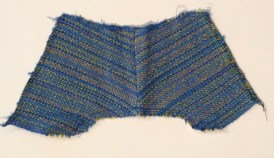
Take #2 Pebble Beach Bias
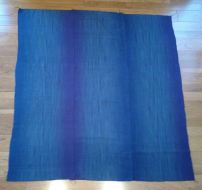
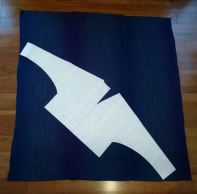
I wove another piece of fabric and laid out my pattern.


Because I had less fabric to work with than I had with the Sapphire Blue Bias there would be a center back seam. I liked how the lines came together BUT… I had a problem keeping the center back seam straight, plus there was a ripple/bunching in the seam at the top near the neck. Eventually I was able to smooth the seam but I needed to find a solution to the back center seam problem.


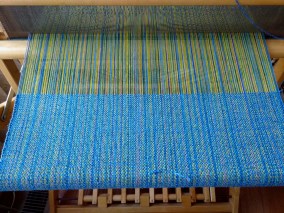
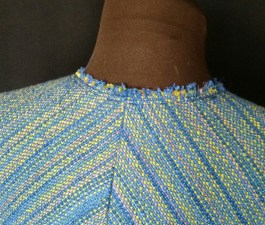
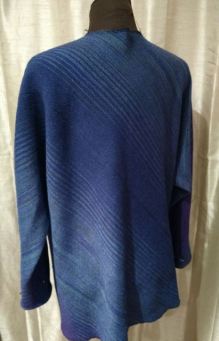
Take #3 Bright Blue Bias
and another warp was on the loom!

I used scrap fabric to see if the angle of the bias at the neck curve caused the seam to ripple.


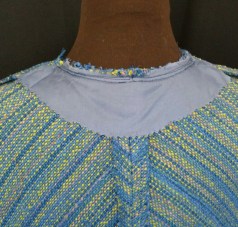
I realized the problem with the brown jacket was not the center back seam but that I had not reenforced the neck opening properly causing the bias fabric to stretch! I used a piece of silk habotai as a stabilizer.  This kept the handwoven fabric from stretching, allowing the seam to lay flat.


Plus it would be flexible enough to be trimmed and tucked into the collar band.


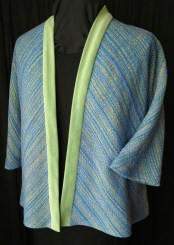
Take #4 Peppermint Stripe Bias
and one more warp to confirm my solution.


The bias cut fits a range of sizes and it always has a nice flare and drape.
Now that I have the neck and back seam figure out I will continue playing!

Posted by: bschutzgruber | January 31, 2017

Yup… there’s learning curve!

I like to make cloth – woven and felted cloth. I like playing with the colors, textures, and patterns and I rarely have an end product in mind when I start. Each piece is unique I never do the exact same thing twice.

I like to make garments out of the cloth I create and will use commercial patterns (i.e. McCall, Vogue or Simplicity). This works great as long as I am not selling the finished garment. If I want to sell the garment I need to get permission or make 3 significant changes to a commercial pattern. I have not been trained in pattern making so I use very simple generic shapes (not the most stylish nor figure flattering), have gotten permission from smaller independent pattern makers, or created ‘Frankenstein’ patterns (i.e. taking pieces from different patterns and putting them together to create a new garment) for the items I want to sell.

img_20170128_142128


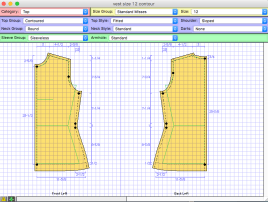
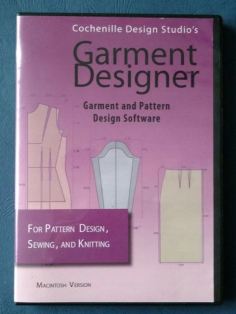
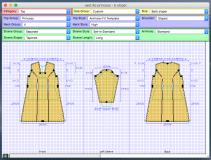
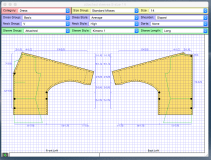
This past summer at Convergence (see City Mouse…. Country Mouse pt 1) I wandered the trade/vendors hall and came across Cochenille Design Studio. This company has developed garment and pattern design software. Being able to get dart placement and armhole/neckline curves accurate as well as making the pattern larger or smaller has always been a challenge for me when trying to come up with my own pattern so this looked interesting. After a long talk with the representative about what I’m looking for and what the program can do, I decided to give it a go!


img_20170128_143704


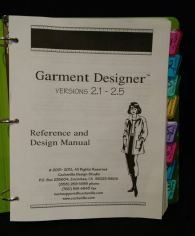
That was back in August 2016  and it wasn’t until January 2017 that I finally had the time to sit down and begin to learn how to use the program. It has a 336 page PDF manual which I chose to print out as I am a ‘book with pages I can write notes on’ person. I played with several of the sample tutorials… which had moments of both frustrated ‘ARGH!!!’ and excited ‘ooh COOL!’.


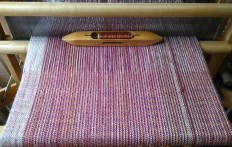
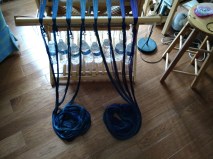
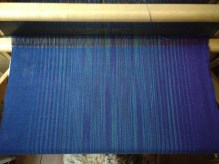
I got a warp on the loom (8/2 Tencel) and wove my cloth (weft is 50/50 Wool/Silk blend). After washing I had 5 yards 14 inches of fabric that is 20″ wide.

img_20170114_112012007   img_20170117_093632073

I now began figuring out some designs filled with more ‘ARGH’ and ‘OK, I’m starting to get it’ moments.

screen-shot-2017-01-26-at-5-30-51-pm   screen-shot-2017-01-26-at-5-30-06-pm

I printed out patterns, made lots of muslin samples, and decided on the jacket.

img_20170128_143131  img_20170128_142906  img_20170128_142847

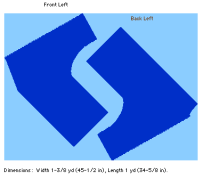
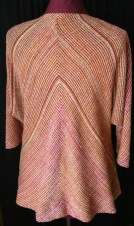
I wanted the jacket cut on the bias so I cut my fabric in 3 sections and sewed them together to make a piece large enough to fit the pattern. I cut a template so I could see what the jacket might look like.

img_20170130_171509  img_20170130_172024

img_20170130_172721

I saw that there was enough fabric to make the jacket longer so more cutouts to make sure BOTH the front AND back fit before I actually cut the woven fabric.

img_20170130_173932

And Tah-Dah!

img_20170130_232648  img_20170130_232338

There is still finishing/trim work to do and I need to decide whether or not I want to add a silk lining.

I knew this would not be a smooth process as computer programs and I do not have history of working well together.  What can I say… we just think differently.  Yes, there is a definite learning curve BUT even with all the ARGHs, Noooooo, and WHY is it doing this???? frustration, this is going to give me so many more options for my creativity!  Let the fun begin!!


Posted by: bschutzgruber | December 31, 2016

Looking Back at 2016

Here it is the last day of 2016!  Where has the time gone?  Looking back, this has been a year filled with projects, workshops and learning new techniques that have expanded my horizons.

[If viewing this in an email, click the post title to see the sideshow]

This slideshow requires JavaScript.

Looking forward, my New Year’s Resolution for 2017 is to challenge myself by incorporating these new perspectives and skills into my work!

img_20161219_161032

Posted by: bschutzgruber | November 29, 2016

When first you don’t succeed = dye…. dye…. again!

I used to say “I will never dye”.
Oh sure… I know that we all eventually die…. but dye??? Nope…. not my thing.

Over the years I’ve taken a few of dyeing workshops and attended lectures on the science behind chemical and natural dyes. I find these fascinating and informative but this aspect of the fiber arts has never ‘clicked’ a desire to study and learn techniques in-depth. And that’s OK…. I do not have to ‘do it all’.  I will gladly support those who love to dye when I need something done.

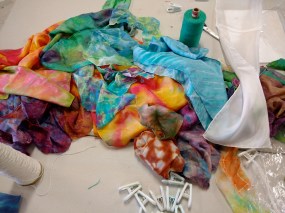
But I have come to realized that I would like to be able to do some simple dye work with silk chiffon or habotai fabric that I can use for felting, garment linings, or trim. So earlier this month I signed up for an afternoon beginners dye class taught by fellow Ann Arbor Fiberarts Guild member Michele Montour at the Ann Arbor Art Center.

Shibori is a Japanese dyeing technique involving folding or stitching fabric which produces patterns on fabric when it is dyed.  This technique which goes back to the 8th century and the patterns can be extremely complicated and detailed.  What we call ‘tie-dye’ here in the USA is very simplistic by comparison. Michele brought plenty of samples for us to see and talked about how folding, tying or twisting the fabric creates different effects.

img_20161113_125453760

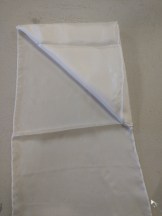
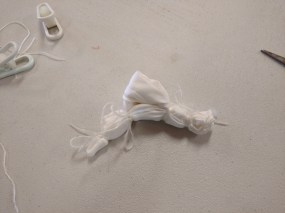
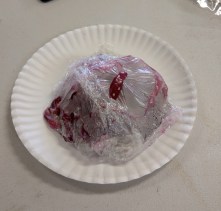
She walked us through the process of using vinegar, fiber-reactive dye, and steaming in a microwave to set the dye.  I folded my fabric into a triangle shape and then tied the bundle.

img_20161113_125812541   img_20161113_130533220

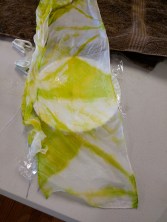
When I opened it I saw that large sections of the fabric did not come in contact with the dye.  So I simply bunched it up and put it into a second dye bath of a slightly different color.

img_20161113_132340464      img_20161113_133953337

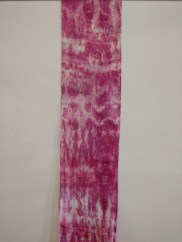
It still needed something else so this time I made accordion folds that were held in place with clips and put it into a dye bath of a third color.  NOW I was happy with the final result!

img_20161113_140134188    img_20161129_185555

For my second scarf I twisted the fabric tightly and held it with clips. I mixed up my own color concoction and into the dye bath and microwave it went!

img_20161113_140711204   img_20161113_141228611

Again I needed to re-twist, over-dye and steam several more times to build the color and design.

img_20161113_142153637      img_20161113_143906861

img_20161113_145437439

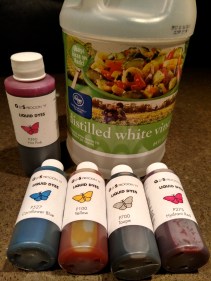
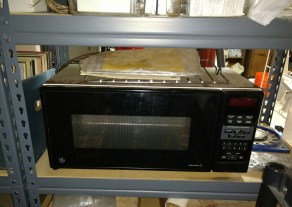
By the end of the workshop I was thinking, “Wow…. THIS I can see myself doing”.  Once home, I ordered primary colors (red, blue, yellow), plus taupe and hot pink and from these I can make other colors.  I have an old microwave (which now will NEVER be used to heat food again!) and vinegar.

img_20161129_183105356_hdr  img_20161129_182446

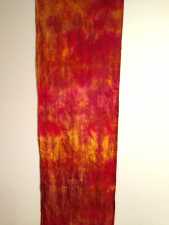
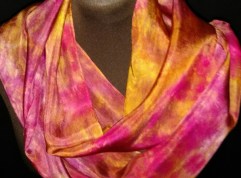
I over-dyed my cranberry scarf using a mix of yellow, taupe, and hot pink and am pleased with the result.

img_20161129_201341517     img_20161129_202733


So yes…. I guess I am going to dye.

dye-class-scarves


Posted by: bschutzgruber | October 28, 2016

Meander

This past month I’ve been working on a wall hanging to submit for an upcoming exhibit that the Ann Arbor Fiberarts Guild will have in the lobby of the Village Theater at Cherry Hill in Canton, Michigan during the month of December. The timetable for the Village Theater required forms to be submitted in September, a full 2 months before the work would be presented for jurying and I had not started the piece yet. Luckily I only needed to submit the title at this point.. something open ended.

‘Meander’ is defined as a winding path.  It is used to describe the interweaving of lines in tile or stone work and it definitely described the process in creating this piece!  What began with a nugget of inspiration from the tile floor in the vestibule of the Milwaukee Public Library Central Branch

img_20160802_140312480

wandered creatively
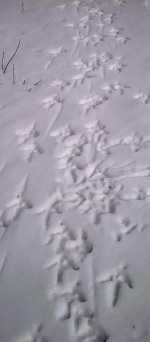
and ended with stitching patterns inspired by turkey tracks in the snow.

img_20160212_140412_228


[If viewing this in an email, please click the post title to see the sideshow]

This slideshow requires JavaScript.

Meander
Wool Felt
32″ diameter

Posted by: bschutzgruber | September 30, 2016

Burning the Candle at Both Ends

September has been a month encompassing creative projects in two different areas.

The first involves storytelling. I have been working with friend and fellow storyteller, Dorothy Cleveland from Minnesota, on a book based on her 2005 master’s thesis focusing on developing a story structure of the Heroine’s Journey. When we started this project we naively thought how hard can it be to translate an academic thesis into a ‘hands on – how to’ guide– we soon learned otherwise.

img_20160806_161001632b

It has been 2 years since we started. The experience of collaborating with someone 700 miles away via the cloud and phone calls plus periodically traveling to work in the same room has been a grand adventure and learning experience. We read, researched and picked each other’s brain as to how this Journey unfolds in traditional stories. We mined the nuances of personal stories.  We witnessed the evolution of our ideas with joy, laughter and a few tears. This past August between attending Convergence and the Michigan Fiber Festival [see last month’s blog] I traveled to Minnesota and we began our final push to complete the manuscript.


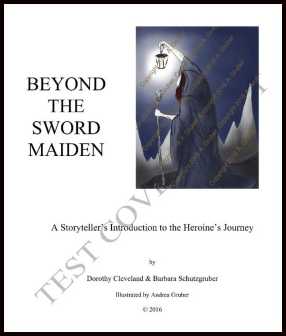
test-cover


Beyond the Sword Maiden: A Storyteller’s Introduction to the Heroine’s Journey is a book focused on both the Hero’s and Heroine’s Journeys to assist writers, storytellers, therapists and counselors in voicing the stories of strong women. We developed templates for structuring these stories and offer sample stories from both folklore and personal narrative to illustrate how the templates can be used to create stories that resonate in 21st Century.

I am pleased to say that in mid September we submitted our manuscript to be considered for publication. Fingers crossed!


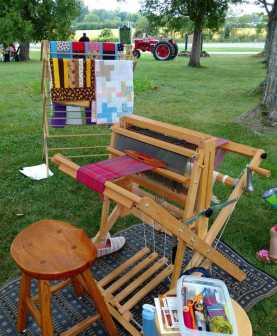
The second half of the month has been focused on fiber with demonstrating weaving at another historic farm in the area and creating a shawl for a fundraiser.

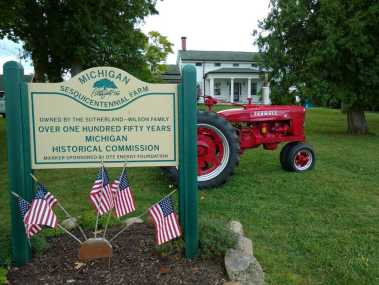
The Sutherland-Wilson Farm is a Michigan Sesquicentennial Farm partnered with the Pittsfield Township Historical Society. The Pittsfield Township Historical Society holds an annual Harvest Festival in September to raise funds for restoration and I was pleased to be a part of the event.

img_20160918_171825713

img_20160918_161429600

img_20160918_171912812_hdr

img_20160918_171855466

The final project for this month was creating a shawl to be auctioned at the Educational Trust Fund Benefit evening for St. Francis of Assisi Catholic School in Ann Arbor. This year’s theme is set in the Roaring Twenties’s at Ruby’s Jazzy Speakeasy. My inspiration came from the lines and colors found in Art Deco architecture and stained glass plus the sparkle of beaded gowns from the 1920’s.

img_20160922_192503658_hdr

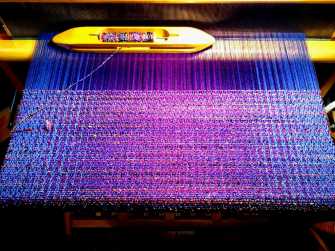
The warp blends 3 colors of  8/2 tencel at 27 epi
threaded in a Rosepath Twill pattern.

The weft yarn is 96% rayon 4% metallic boucle yarn from Fiesta Yarns.

img_20160930_185832567

rubys-speakeasy


Posted by: bschutzgruber | August 24, 2016

City Mouse…. Country Mouse…. part 2

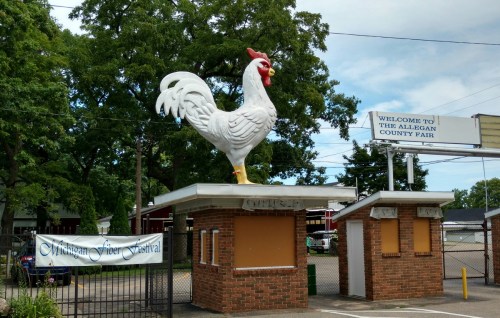
The third week of August brought more fiber adventures in a very different setting at the Michigan Fiber Festival held at the Allegan County Fairgrounds in Allegan, Michigan.  This gathering of fiber artists is also a feast of creativity and inspiration.
IMG_20160818_205239

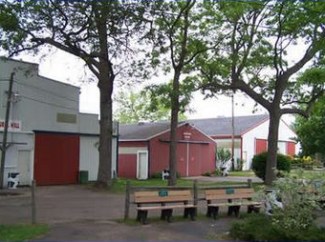
I first attended back in the mid 1990’s and have returned a half-dozen times since.  Workshops are held in the exhibit buildings and with camping available at the fairgrounds this festival has a slower paced, more relaxed, ‘Country Mouse’ atmosphere compared to the ‘City Mouse’ hustle and bustle of Convergence.
  ACF-Red-White-Green-Buildings  IMG_4149

This year I took 3 workshops: Felt Hats with Suzanne Petzold Higgs, Death Head Buttons and Chair Seat Rushing with Gail Hollinger.

I have taken classes with Suzanne in the past (see April 2013 blogs Felting with Suzanne Higgs Day 1 / Day 2) and was excited to take her hat workshop.  Suzanne is a terrific teacher who is constantly pushing the boundaries of creative felt making by using different materials and techniques to get amazing sculptural hats.

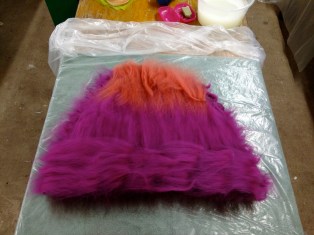
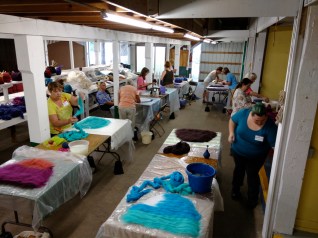
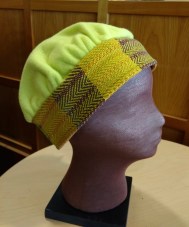
There were 12 of us in the all day workshop, coming from the Great Lakes region of the USA and Canada plus one attendee who has a natural dyes business coming all the way from Mexico.  We started with a discussion of different hat styles/shapes, how to take measurements and develop patterns.  Next we laid out our fiber and began designing our own hats.
IMG_20160817_110449908

I played with blending color….

 IMG_20160817_110502683

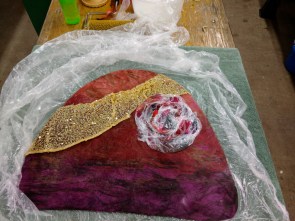
incorporating beaded fabric and a 3 dimensional flower into the felted hat.
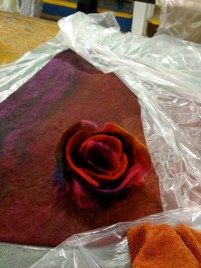
IMG_20160817_122628435   IMG_20160817_131251754  IMG_8507

Everyone’s hat came out beautifully!
Even though we all started with the same base shape…. each one is different!
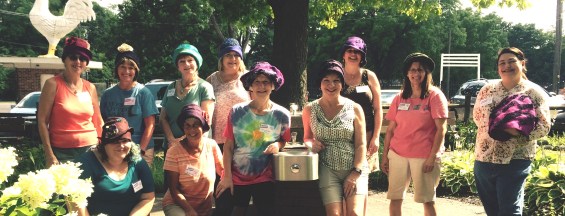
Hat Felt Giirlz

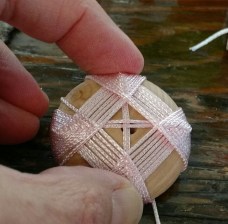
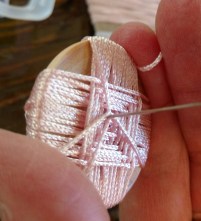
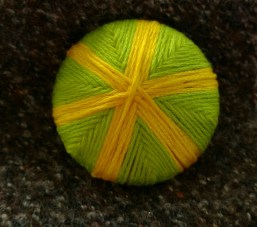
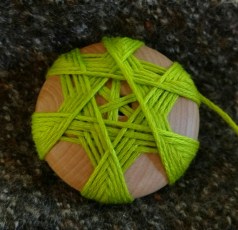
The second day was a 1/2 day workshop making Death Head Buttons.  These are thread covered buttons dating back to the 18th Century. Though no one knows for certain how they got their name, scholars think it is because of the X design – similar to crossed bones, a symbol of morality.

Thread is wrapped around a wooden button mold creating the woven designs.  It takes quite a bit of skill to do this quickly and evenly!
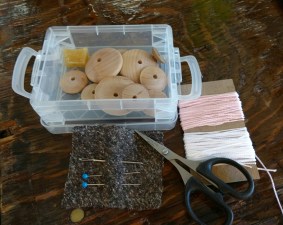
IMG_20160818_205345  IMG_20160818_210400  IMG_20160818_205516

The front and back of a 4 section button
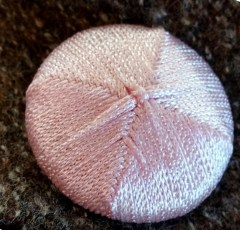
IMG_20160818_205619_1  IMG_20160818_210226

Next I made a 6 section button with a change of thread color.
IMG_20160818_210119  IMG_20160818_210025

These were fun to make but will certainly take some practice!

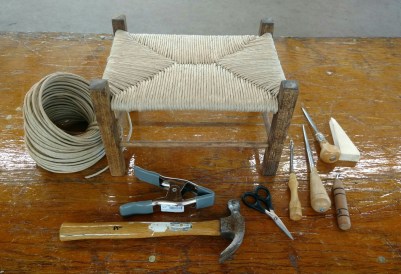
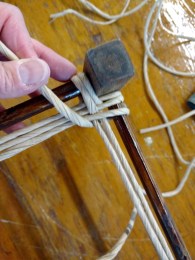
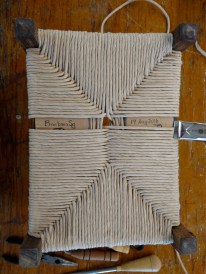
The third day was learning Chair Seat Rushing.  For the purpose of the workshop we used stool frames rather than full chairs.  It took me 3 tries to see and understand the wrapping pattern!  When the side is about 2/3 woven, cardboard filler is added to give support to the center section.
IMG_20160819_102016043  IMG_20160819_124838249

This was a LONG day of hard work making sure I had good tension and rush was packed tightly.
Boy were my hands tired!!
IMG_20160819_150604200  IMG_20160819_222856

For me the best part of the Michigan Fiber Festival is being around the animals. There are competitions for sheep, goats, Angora rabbits, llamas, and alpacas. The animals are from small flocks and herds raised on family farms here in Michigan or neighboring states.  This is where I reconnect to the source of the fiber I use and am in awe of the day in, day out, year round commitment the men, women, and children have who raise them.

This slideshow requires JavaScript.

City Mouse….. Country Mouse….. 
For me it’s not either/or….
It’s definitely both/and!!
Posted by: bschutzgruber | August 23, 2016

City Mouse…. Country Mouse…. part 1

August has been a month of fabulous fiber adventures in two very different settings!
Convergence, the Handweavers Guild of America‘s biennial international fiber arts conference, was held this year at the Wisconsin Center in downtown Milwaukee, Wisconsin.

IMG_20160802_082821222 IMG_20160802_082821222_2

I’ve been to 3 Convergences over the years (in 2000 Cincinnati OH, in 2002 Vancouver BC, and in 2006 Grand Rapids MI).  Each was a feast of creativity and inspiration and this year was no exception.  Even as we walked into the lobby… art was everywhere beginning with HGA’s Ice Age Yardage Exhibit

IMG_20160802_125439181

and the Center’s “security guard” to whom most of us did a double take when first entering the building!

IMG_20160802_171107302  IMG_20160802_171044479

I took a 3 day workshop with Joan Berner – Successful Pattern Design for Handwoven Garments“You have the most beautiful handwoven fabric you could imagine – now turn it into the most perfect garment for you to wear!”

Joan is a fabulous teacher!  She moved smoothly between the 10 of us in the workshop, each of us with a different pattern, sewing experience, and pattern fit issues.  She gave clear explanations of pattern line and design….

IMG_20160802_160746426  IMG_20160802_162842238

how to adjust a pattern you love but your body is no longer the same shape….

IMG_20160803_092035290

what alternations are needed to get that perfect fit, plus amazing ‘tricks of the trade’ sewing techniques to make working with handwoven fabric easier.  (Getting sleeves to fit is NOT an easy task. No wonder vests/waistcoats/sleeveless tunics have been so popular over the centuries across the globe!)

Being in a convention center, our classroom was a typical partitioned ball room so in true fiber artist fashion, we created our own ‘extension campus’ (which we shared with the dyeing workshops) in the ladies restroom using the mirrors there to help with fittings.

IMG_20160804_141356  IMG_20160804_141027358


IMG_20160804_155116075


At the end of the 3 days I now have a muslin jacket pattern that fits me.  Next step will be to take it apart, lay it out, make the pattern incorporating all the alterations, and then figure out what I will weave or felt to make the jacket.


Besides the workshops during the day, there were exhibits to see….

IMG_20160805_130224712 IMG_20160805_132208161 IMG_20160805_132552965

evening activities with the fashion show….

IMG_20160803_200651698

and the opportunity to see the garments up close afterward (Diamond Leggings by Carol James were made using an ancient fiber technique called sprang)….

IMG_20160805_131121137   IMG_20160805_131042533

the Shuttle Race sponsored by Schacht Spindle Company complete with weight and measurement checks…..

IMG_20160804_193723969_HDR  IMG_20160804_194400585_HDR  IMG_20160804_193000540 IMG_20160804_192819

as well as a fascinating keynote presentation by Dr. Juan Hinestroza from Cornell University on his pioneering work creating multifunctioning fibers using nanoscale technology.

Members of the Ann Arbor Fiberarts Guild were well represented in the Mixed Bag Exhibit (multi media using any fiber arts technique) with art work by Bonnie Kay (High-row Glyphics), Kathleen Zasuwa (Ancient Graffiti: First Exhibition and Ancient Graffiti: Lines to Letters), and Jenny Schu (Uprooted 2).  Jenny also had a piece (Gypsy Leaf) in the Small Expressions Exhibit (small scale not exceeding 15 by 15 inches) which won the Edith Whiteman Award.

Early in the week, we had the added excitement of being evacuated for an hour due to electrical issues….

IMG_20160802_125945455_HDR  IMG_20160802_135702897

but this gave the opportunity to see the Tapestry Exhibit a few blocks away at the Milwaukee Public Library, a building with inspiring architectural detail!

IMG_20160802_140152841  IMG_20160802_140312480

From clear evenings with city skylines and dinner by the river…

IMG_20160801_184553286_HDR IMG_20160801_205322360

to funky street art….

IMG_20160802_195228972

This was an awesome urban fiber experience!
IMG_20160805_140443


« Newer Posts - Older Posts »

Categories

Barbara Schutzgruber - Storyteller & Weaver

Every weaving tells a story.......

handwovenharmony

adventures in fiber

A Little Cloth

a little stitching, weaving, writing & hiking

StillWalks

Bringing the outside in

Fairy Tale Lobby

a dialogue for storytellers and story lovers

BUSY BRUSH CAFE

a self-taught artist discusses acrylic painting, photoshop and the creative process.

MaryGwyn's Art

Artist | RN | Art Educator

Barb-e Designs

Follow me as I weave along the way