Posted by: bschutzgruber | February 4, 2014

The Saga of the Green Man comes to an end

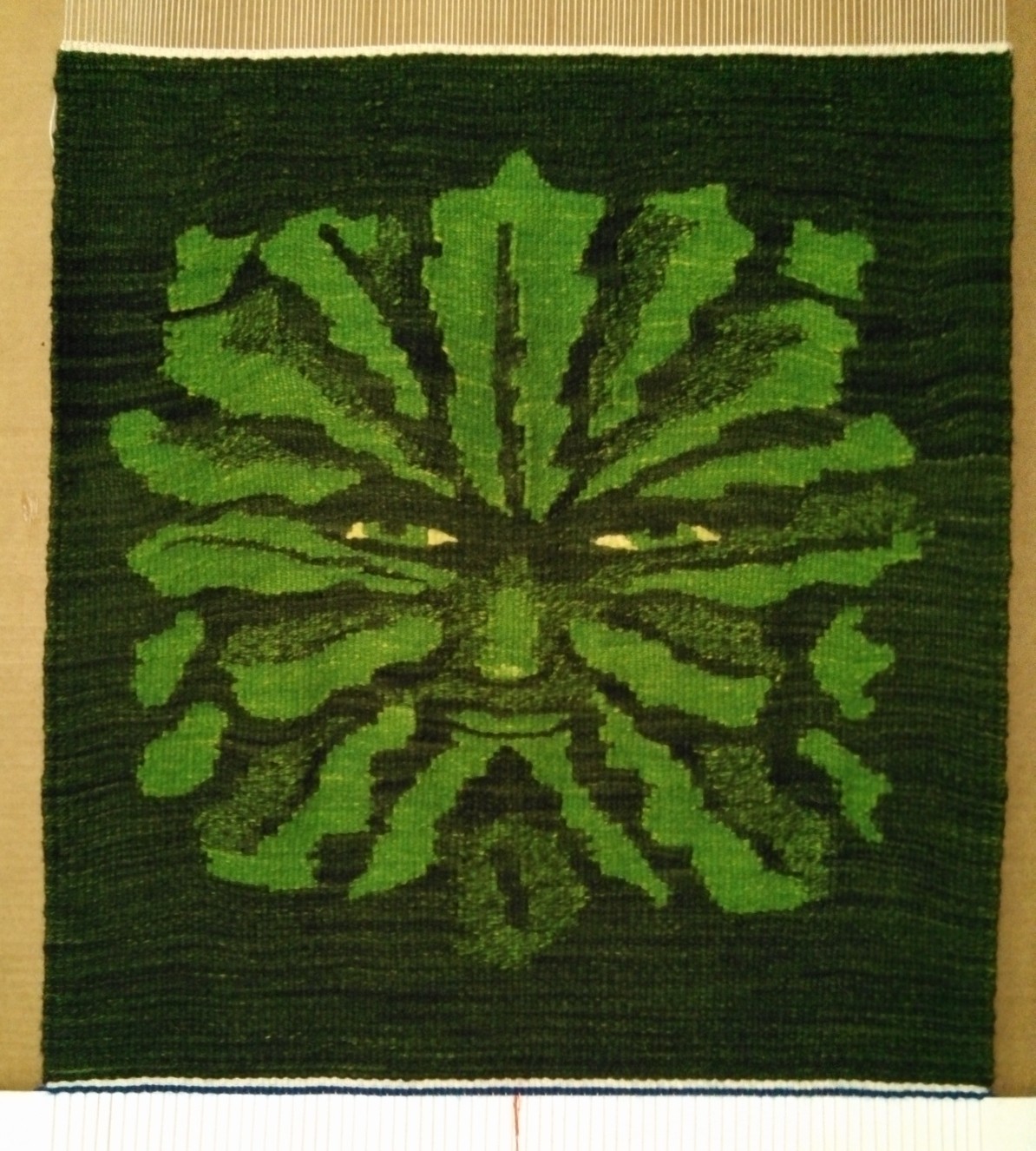
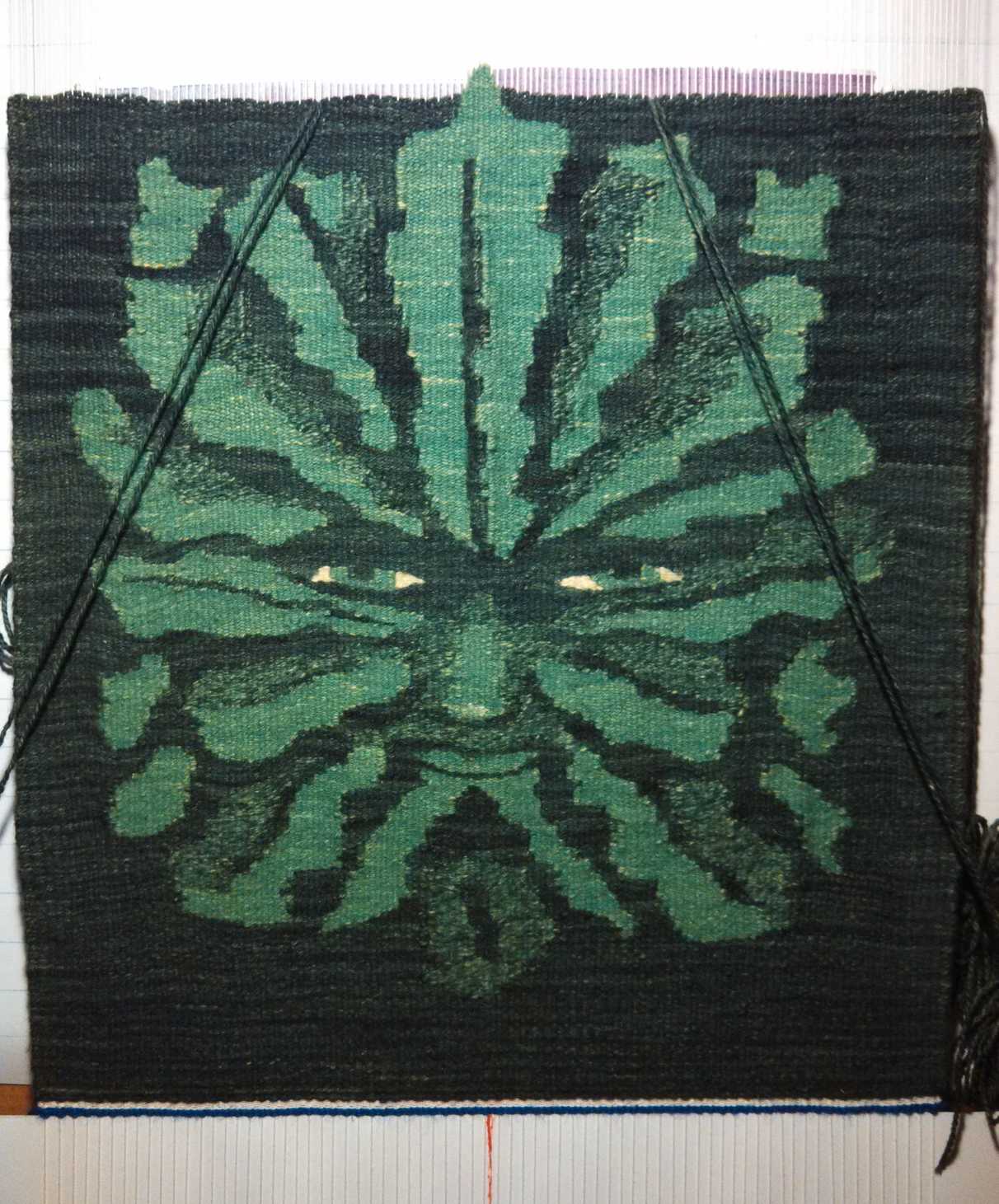
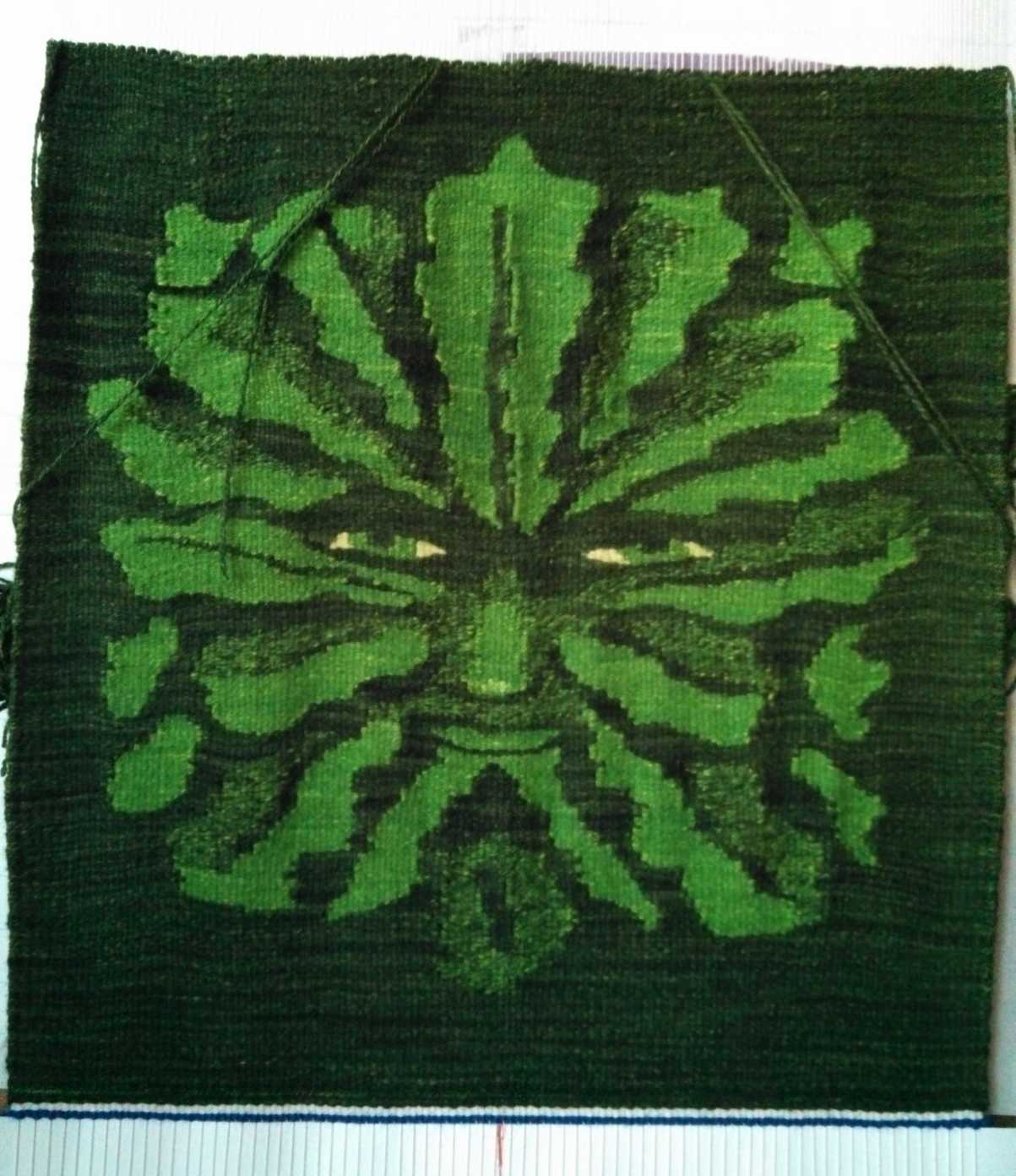
The weaving completed, I cut the Green Man off the loom on January 13, 2014
…only 1 year later than planned.

14_final

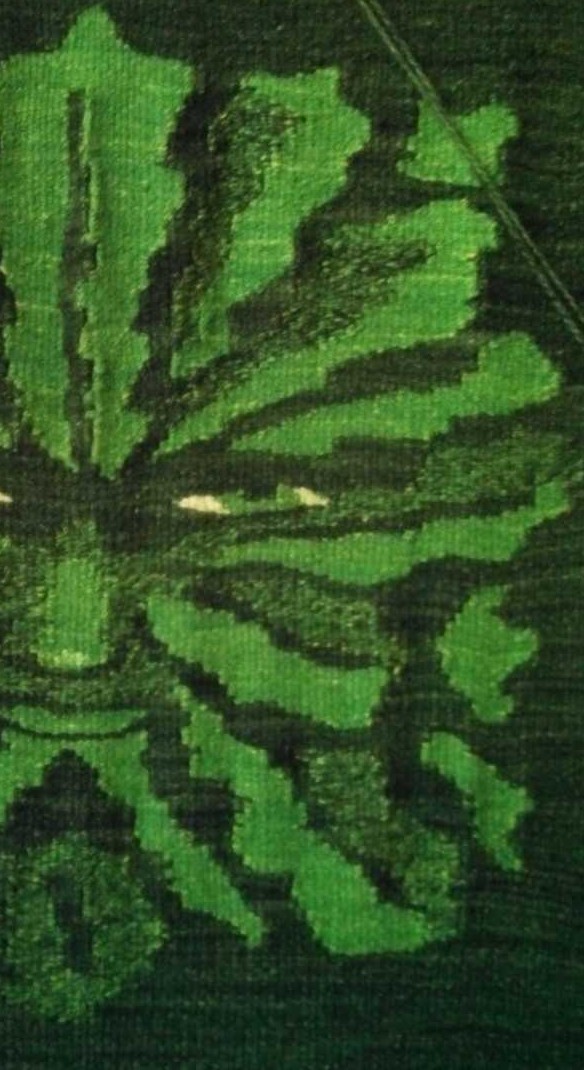
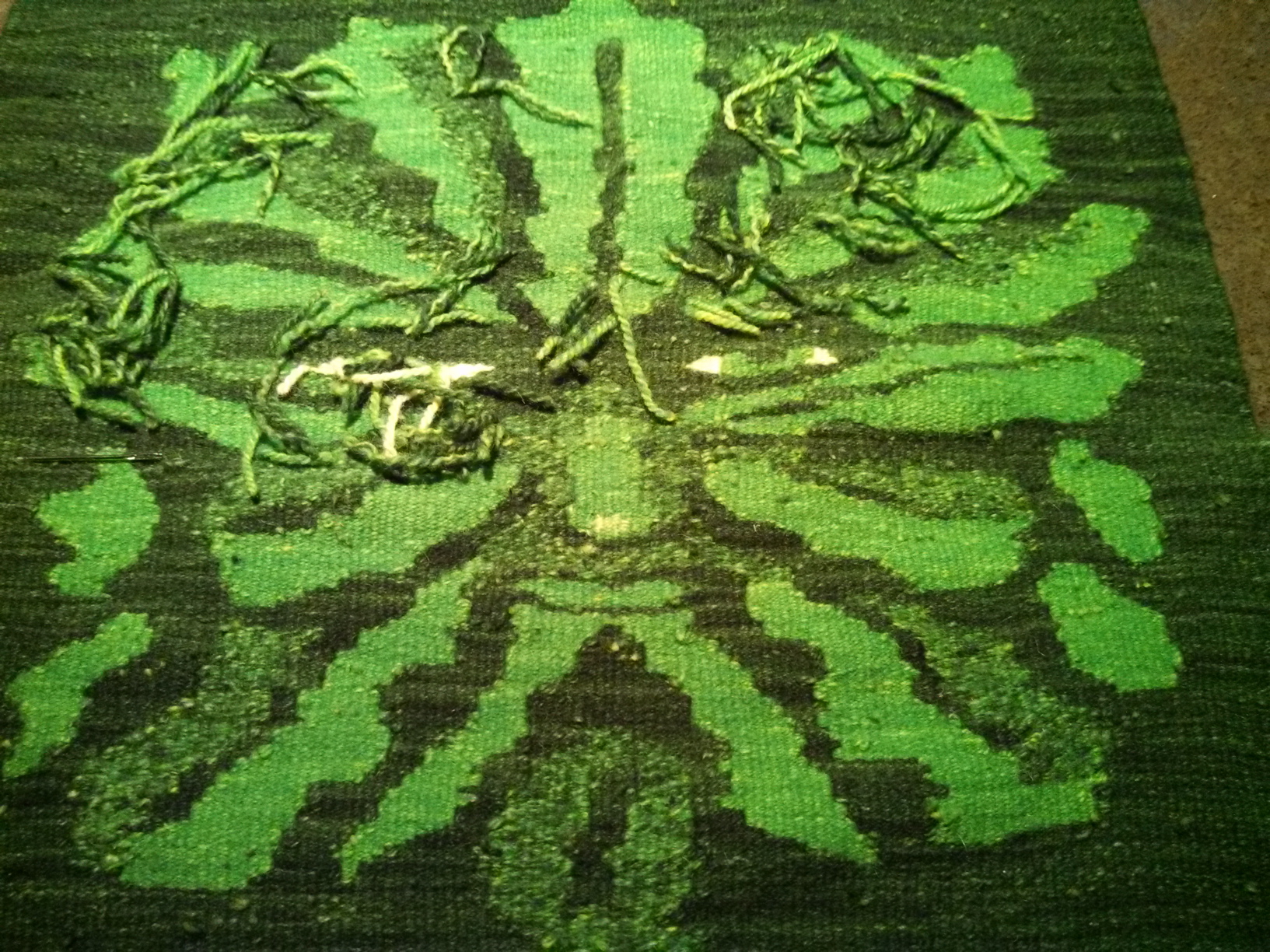
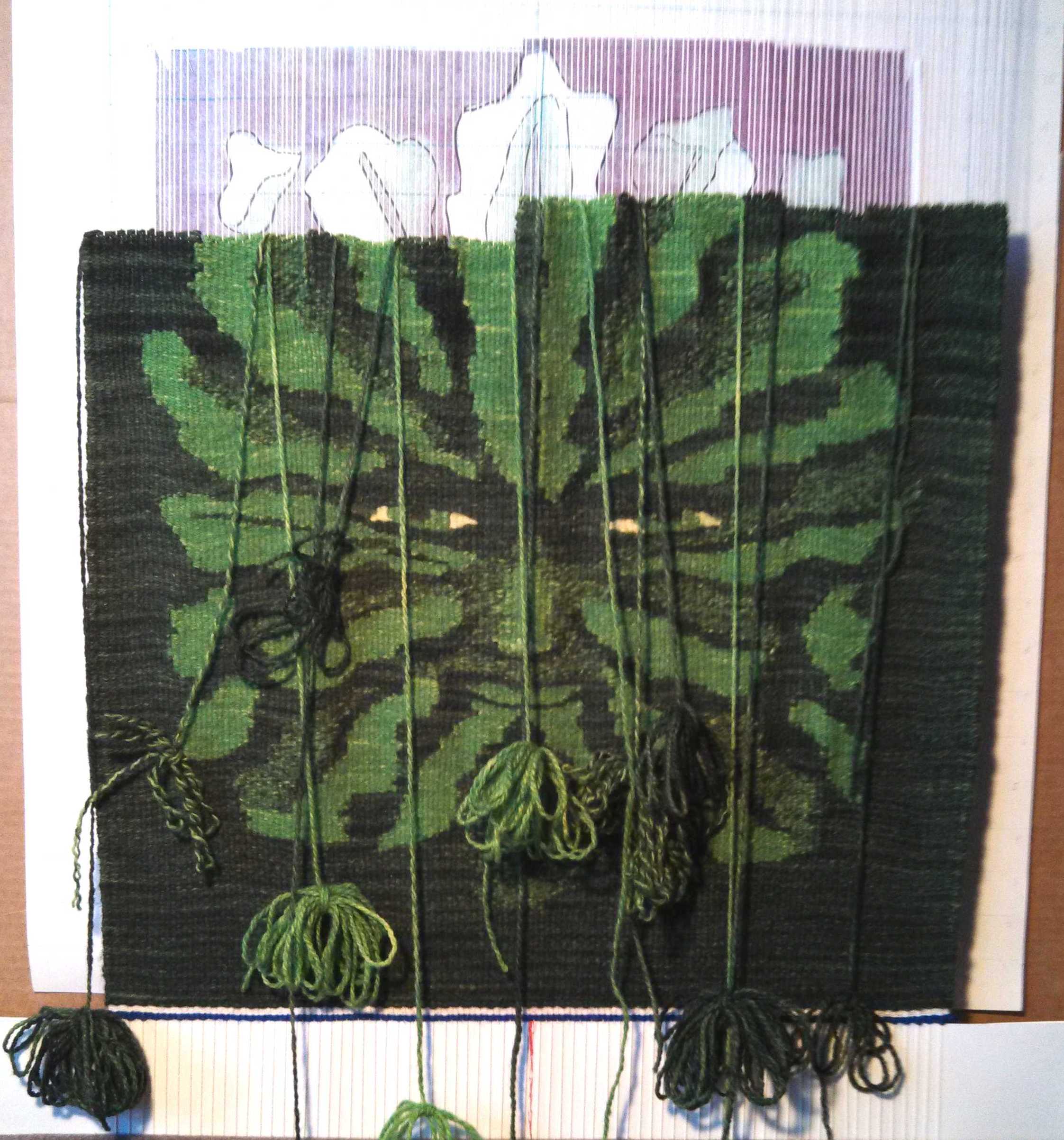
Now the finishing work began: all the warp threads knotted and secured, the long gap in the center forehead leaf sewn shut, clean up the back (weave in/sink the weft ends), plus there was a lot of rippling in the tapestry because my warp tension had become very uneven.

gaps and ripples  15_sewing loose ends

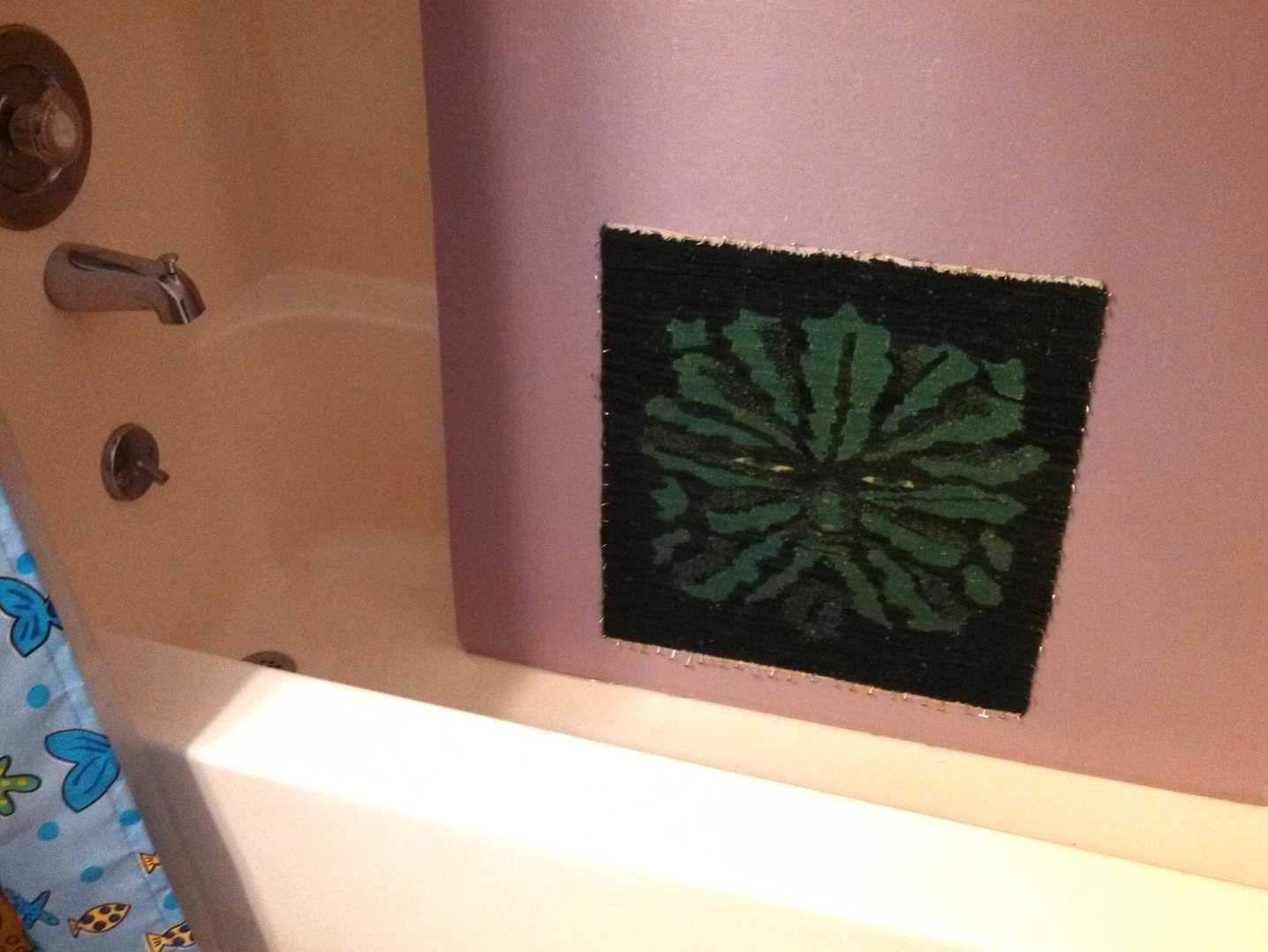
Crossing my fingers that blocking would eliminate the rippling, I put him onto the shower floor to wet down then I pinned him facedown onto a piece of foam board to block, squaring up the 4 sides.  I stood him up in the bathtub to drain over night then moved the board near the floor register for the next 4 days to dry.

16_blocking

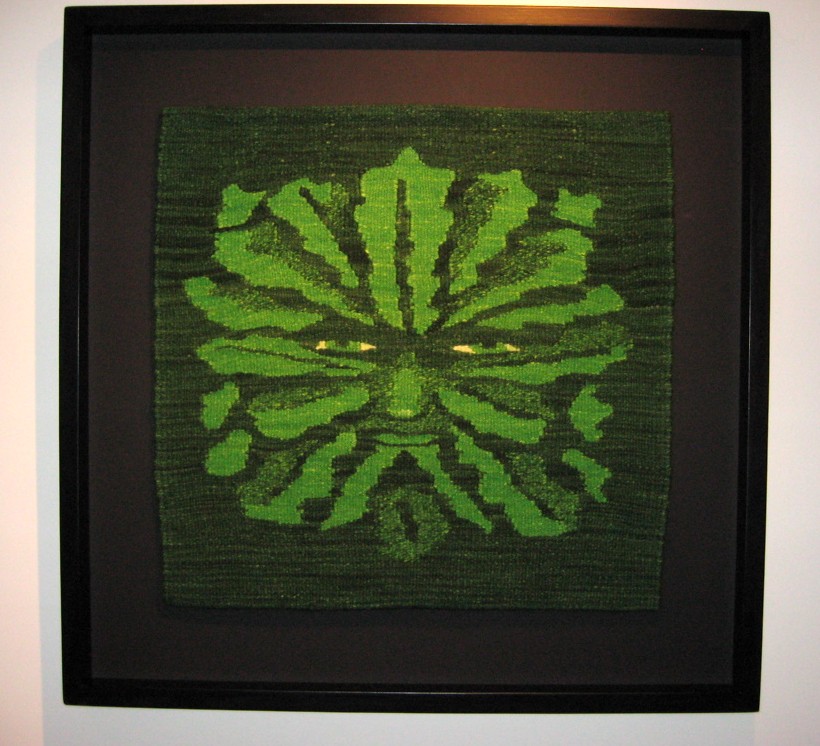
Once he was throughly dry, I unpinned him and turned him over.  To my joy…. the blocking had eliminated the rippling = whew!!!  Twill tape was sewn to the top and bottom, turned to the back and sewn down.  Finished tapestry dimensions: 18″ x 18″.  I used velcro to mount him onto black matboard and made a simple black frame.  Final dimensions: 25″ x 25″.  I packed him up and dropped him off to be juried.

Green Man_Barbara Schutzgruber

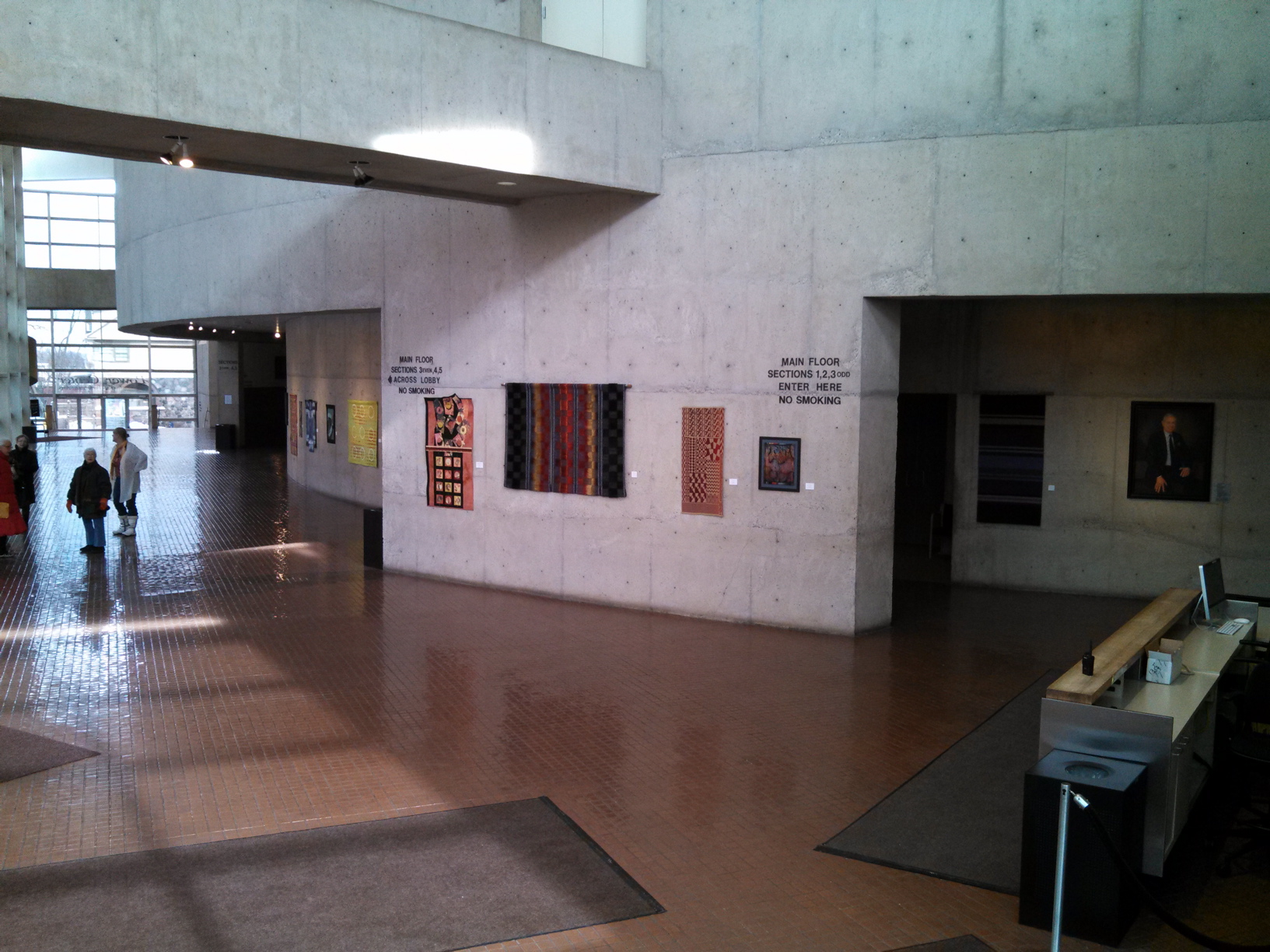
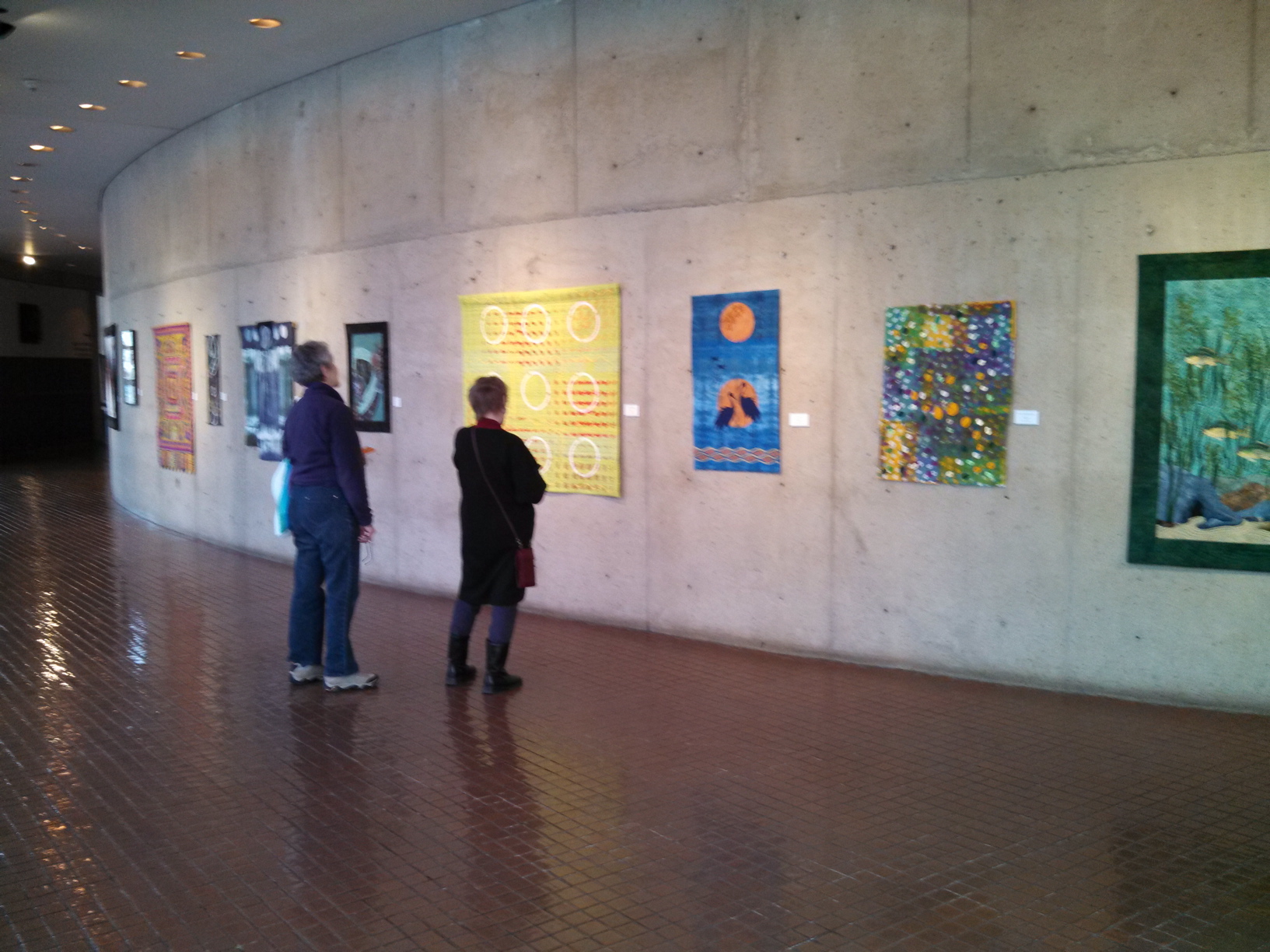
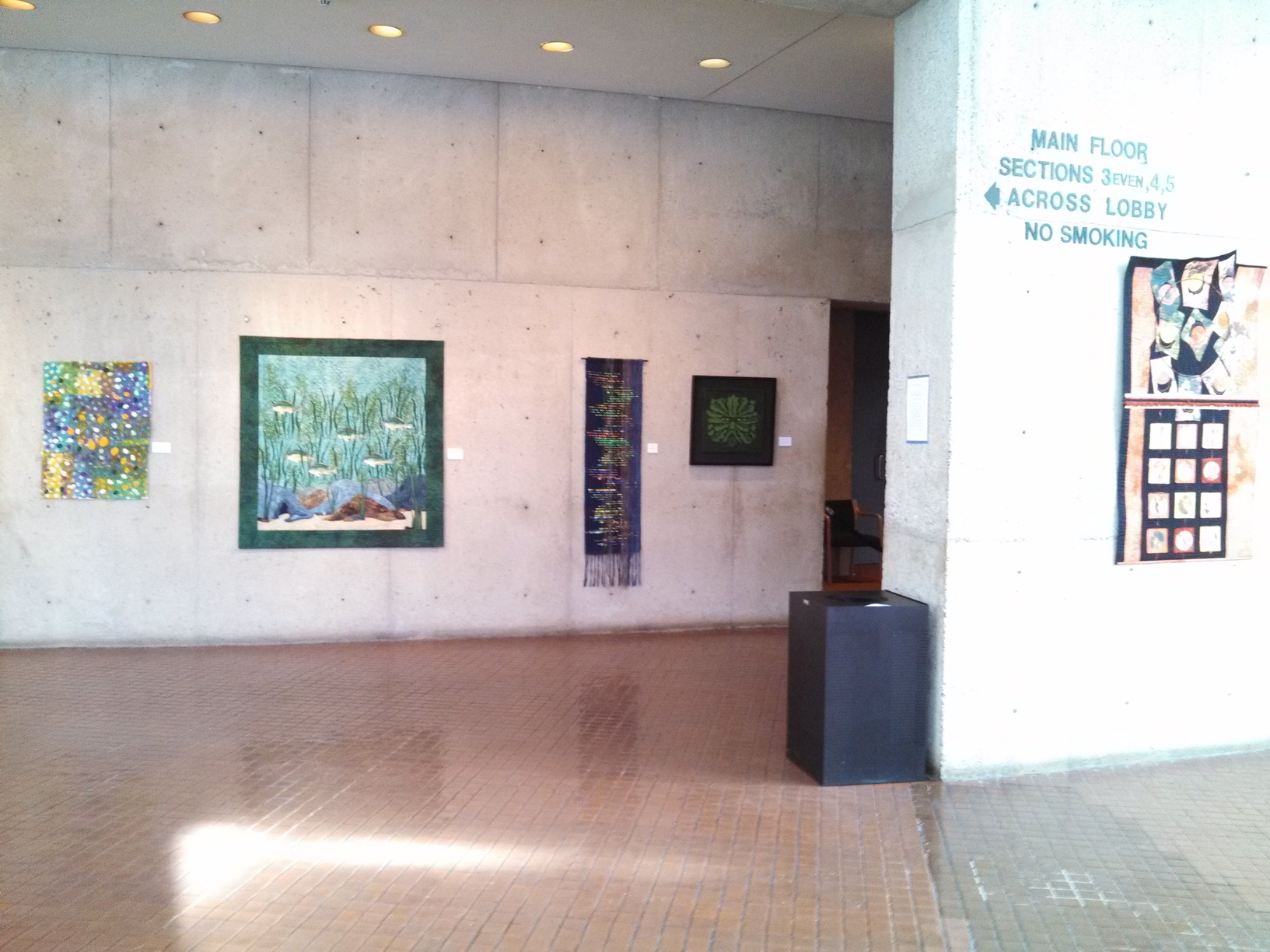
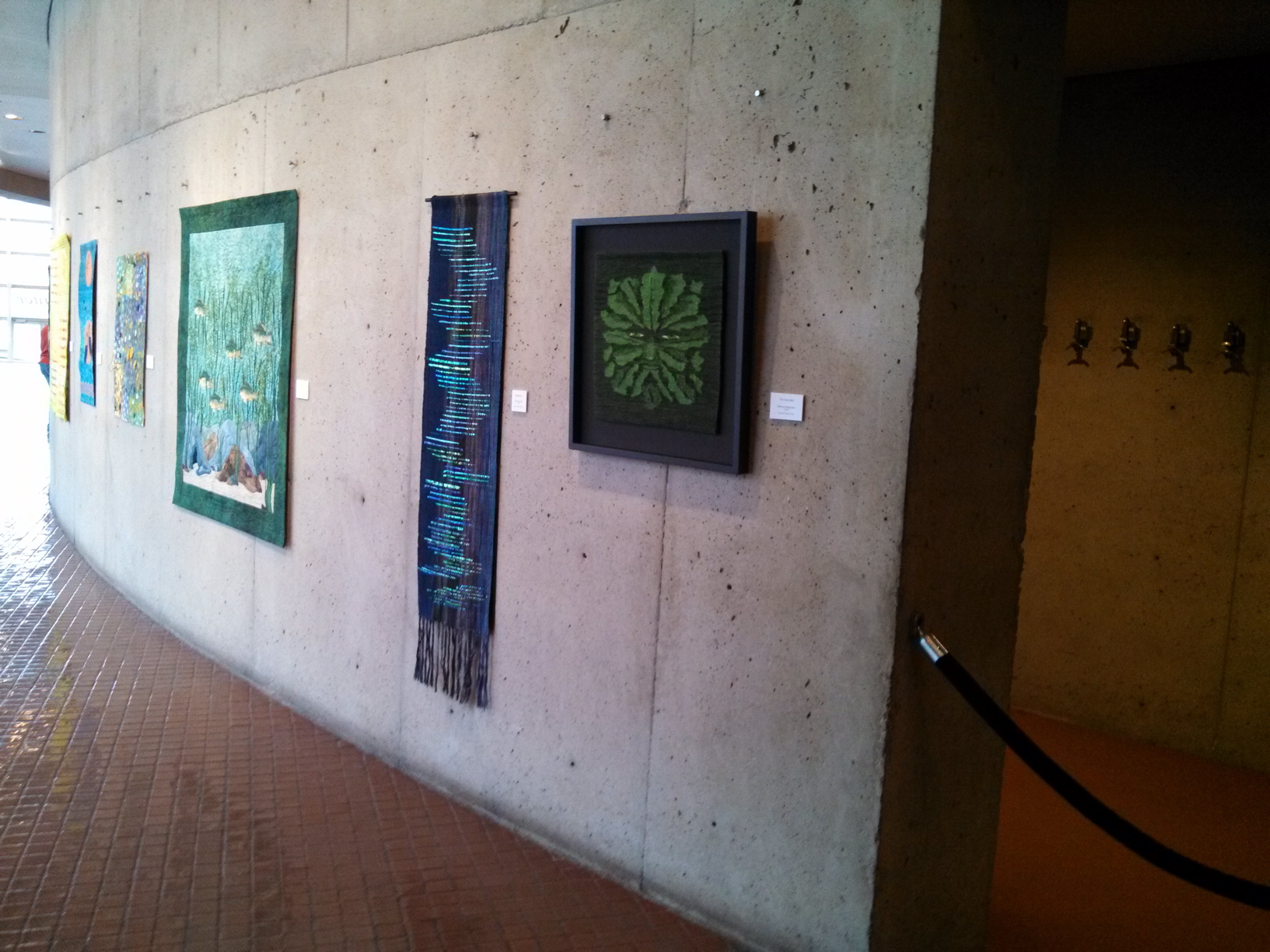
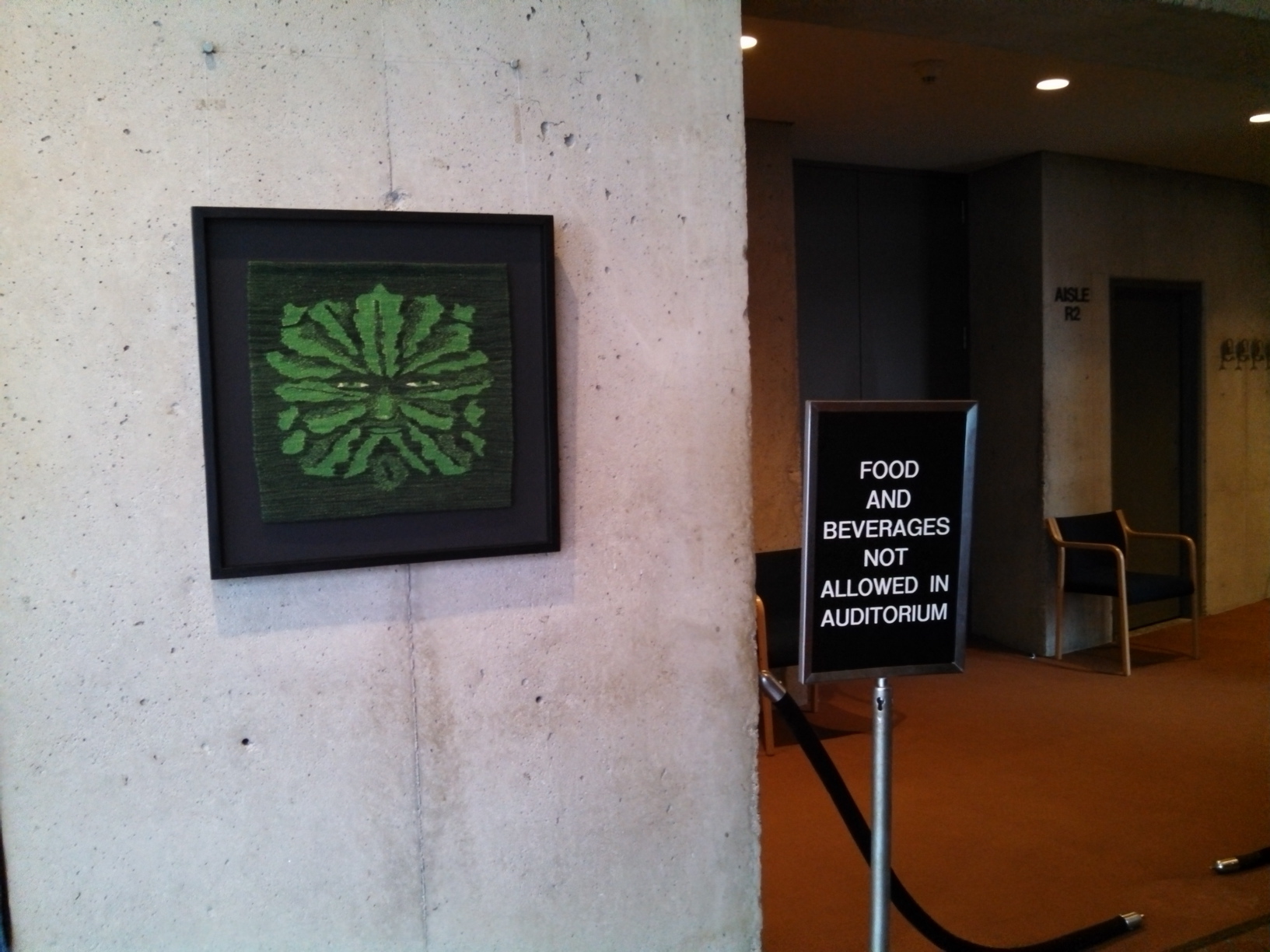
The Green Man was accepted for the AAFG 2014 exhibit at the Power Center for the Performing Arts in Ann Arbor, MI.  We hung the exhibit on Tuesday, February 4th and it runs through the month of February.

Library - 6219  Library - 6216  Library - 6218  Library - 6213  Library - 6211

He is nicely positioned so he can check out everyone as they enter the theater from the lobby…. and is watching to make sure no food or drink is brought inside!

My daughter Andrea, who did the orignal painting, announced the other day, “Hey, Mom…. I’ve got an idea for our next painting/tapestry collaboration….. “
Posted by: bschutzgruber | February 2, 2014

The Saga of the Green Man (pt2)

When we last left our hero…. he was awaiting my decision:
Do I chuck all that I’ve done so far… cutting my losses (literally!)
and start over?

Or do I continue on and see what happens?

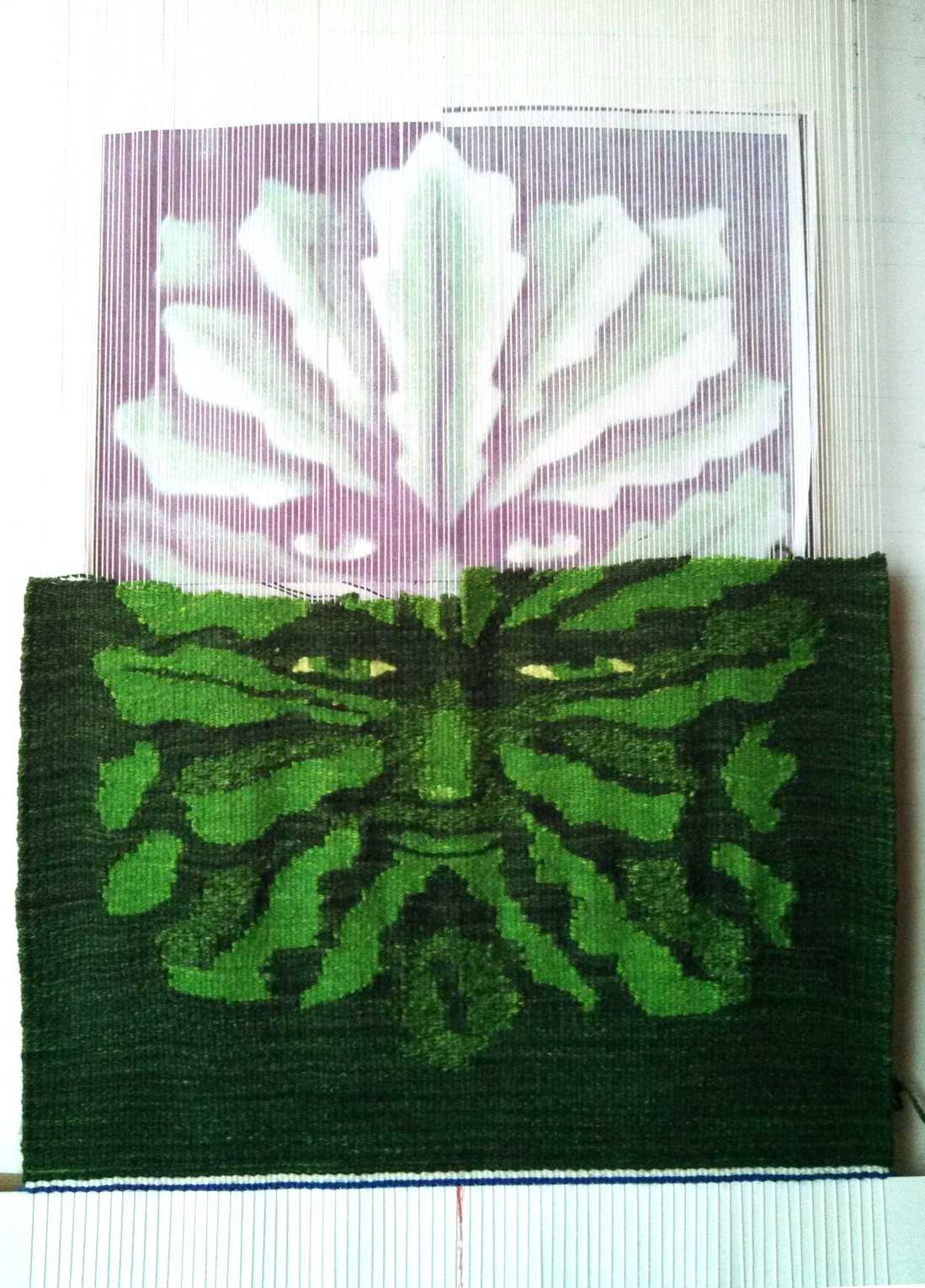
I am a ‘process’ artist rather than a ‘project’ artist which means I am more interested in the journey than I am in reaching the original destination.  So of course…. my decision was to move the cartoon lower, realigning the eyes, and continued on!!

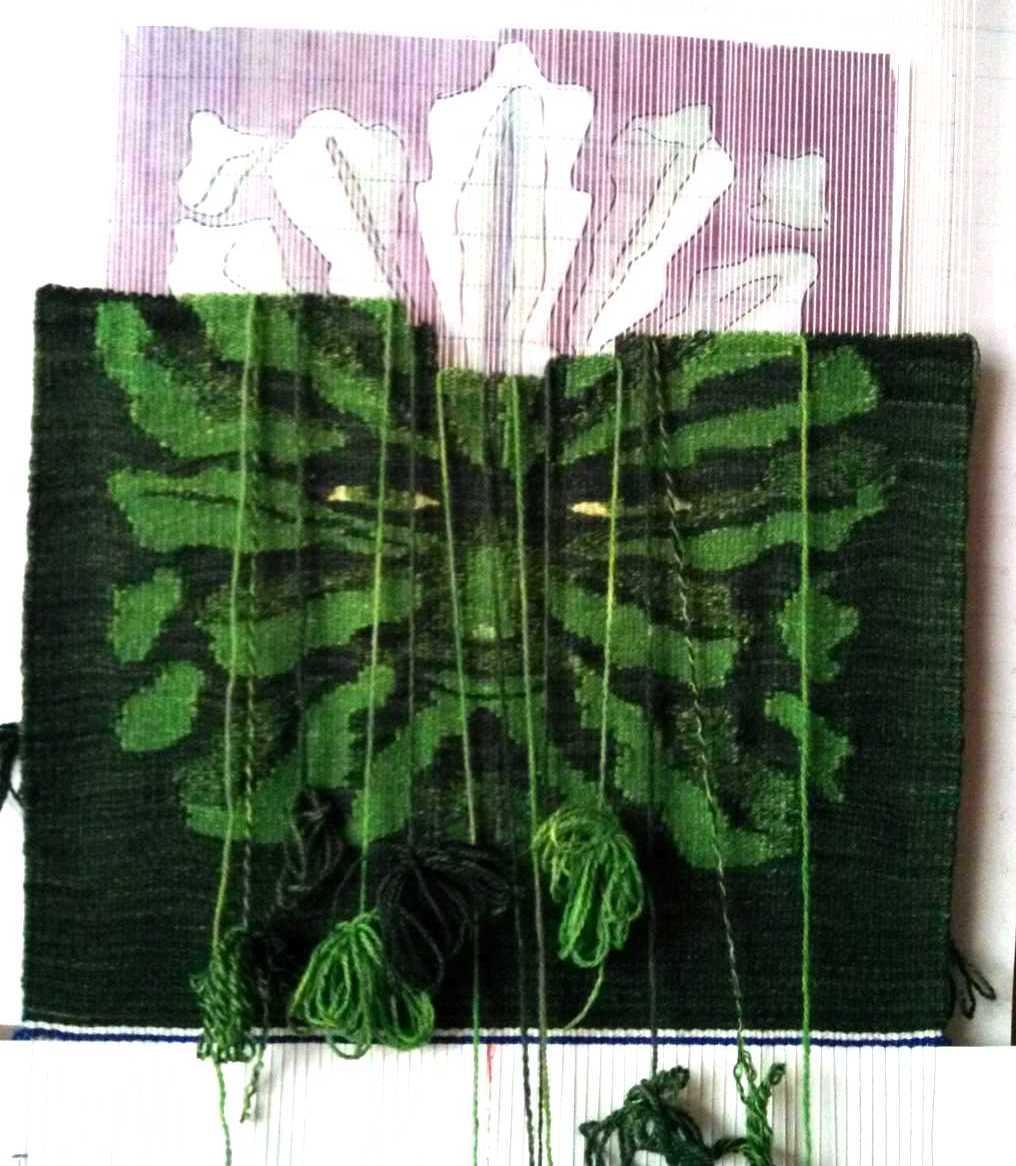
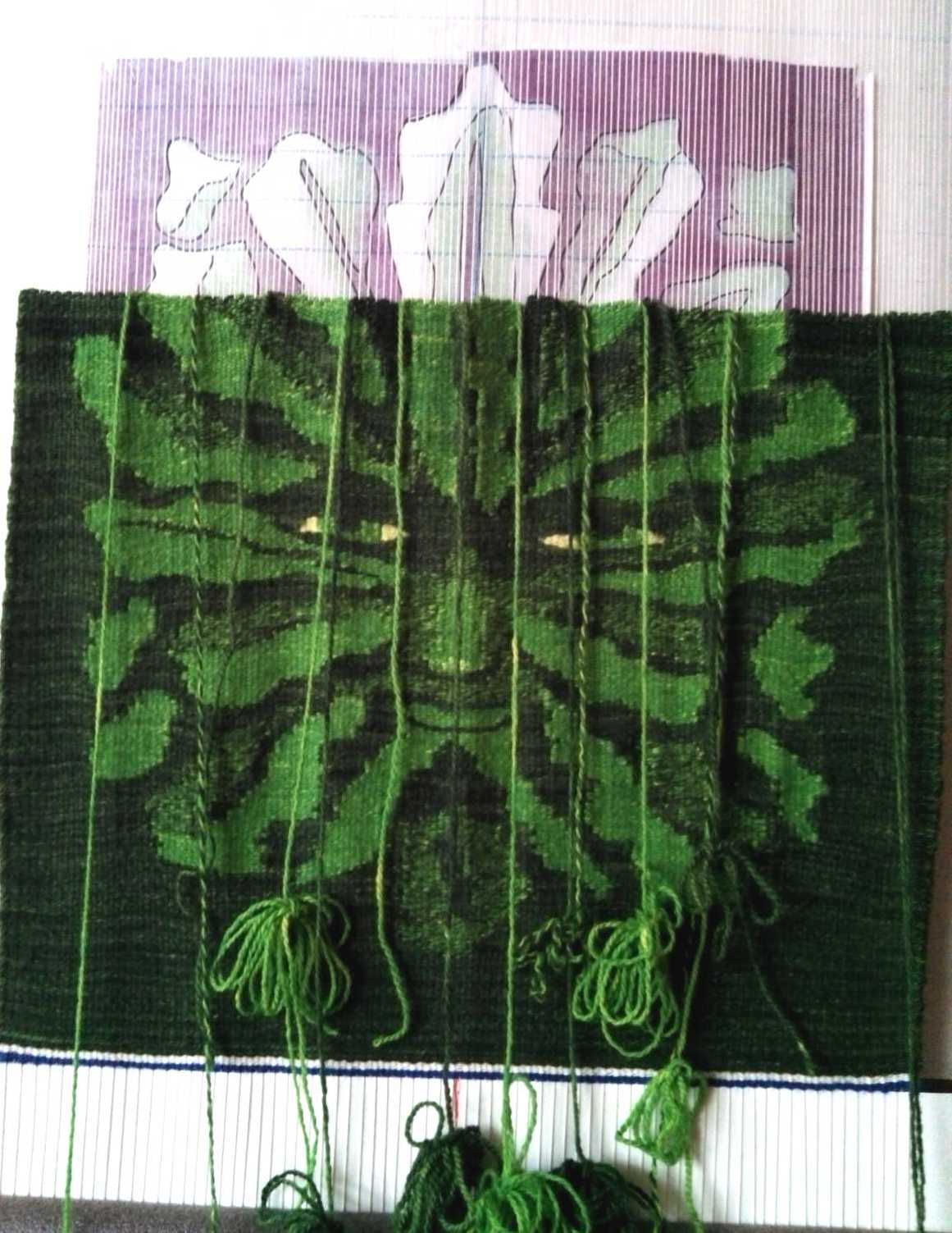
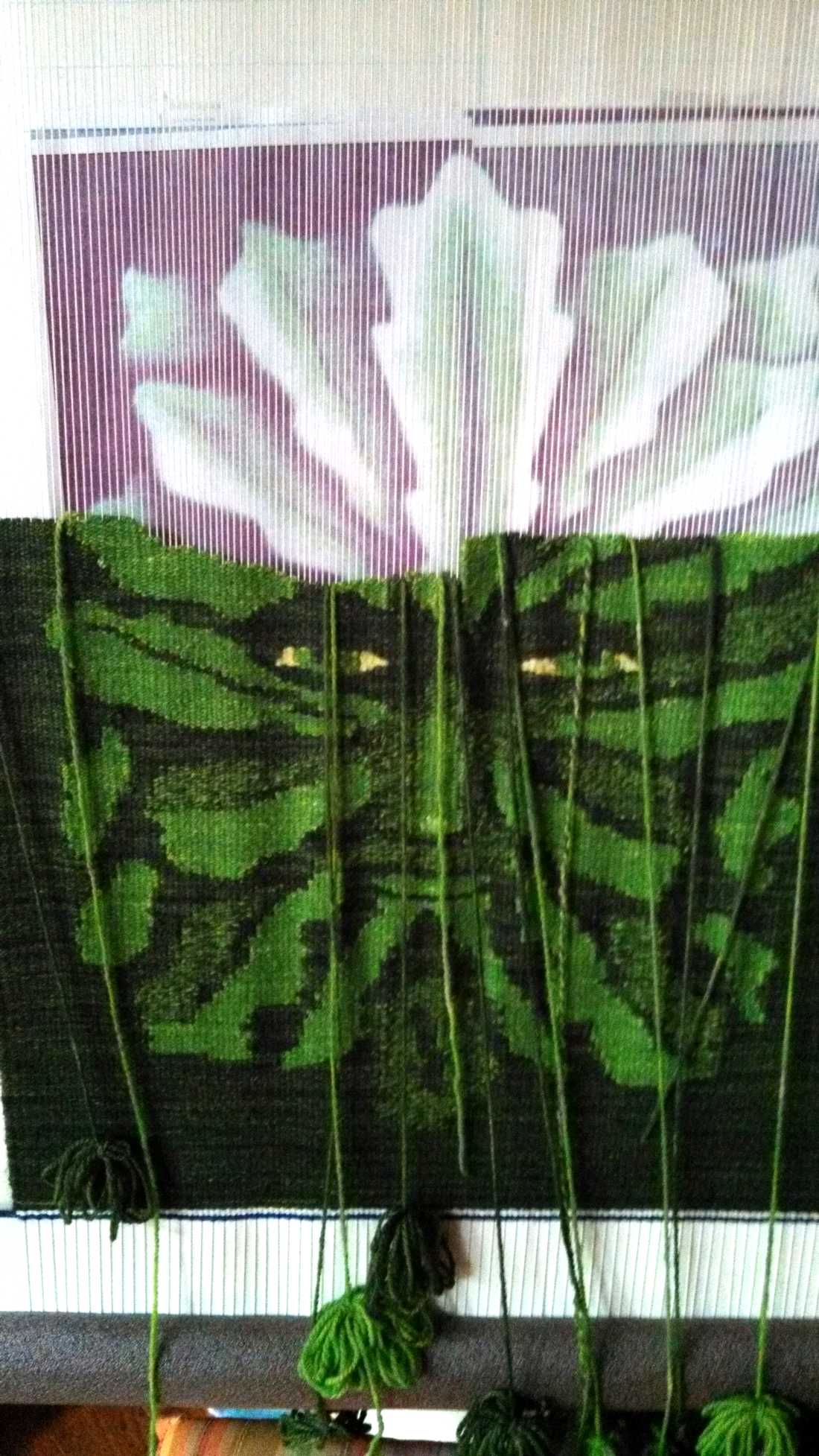
The Green Man’s features were now more square than the original design.  The good thing about choosing a Green Man for my first attempt to weave a face is that a Green Man is not “human”.  As long as I kept his eyes focused, the rest of his face was open to interpretation.  Not wanting to redo the cartoon, I continued to follow the original, trying to keep my beating pressure the same as I had used the year before.

9_continue weaving  10_15inches  11_16 to 17 inches

Once his forehead was finished…
12_19.5 inches   

I packed down the new weaving to match the new proportions of his lower face.

13_19.75 inches

I was VERY pleased with how he came out but there was still more to do…..
Posted by: bschutzgruber | February 2, 2014

The Saga of the Green Man (pt1)

Some projects just take time.  They are never going to fulfill any need I might have for instant gratification.  The Green Man tapestry has been one of those.
I started this project back in August 2012.  My goal at the time was to have him completed for the February 2013 Ann Arbor Fiberarts Guild annual wall hangings exhibit at the University of Michigan’s Power Center for the Performing Arts.
Click on the links to read about the process:
designing – preparing the loom – the cartoon – weaving –  the face – the eyes –  taking longer than anticipated.  

By mid January it was clear that I would not be able to have him ready.  And so it was…. the Green Man looked on as other projects, deadlines, commissions, and life events took center stage.  [see the blog archives]  For 9 months he patiently watched and waited.

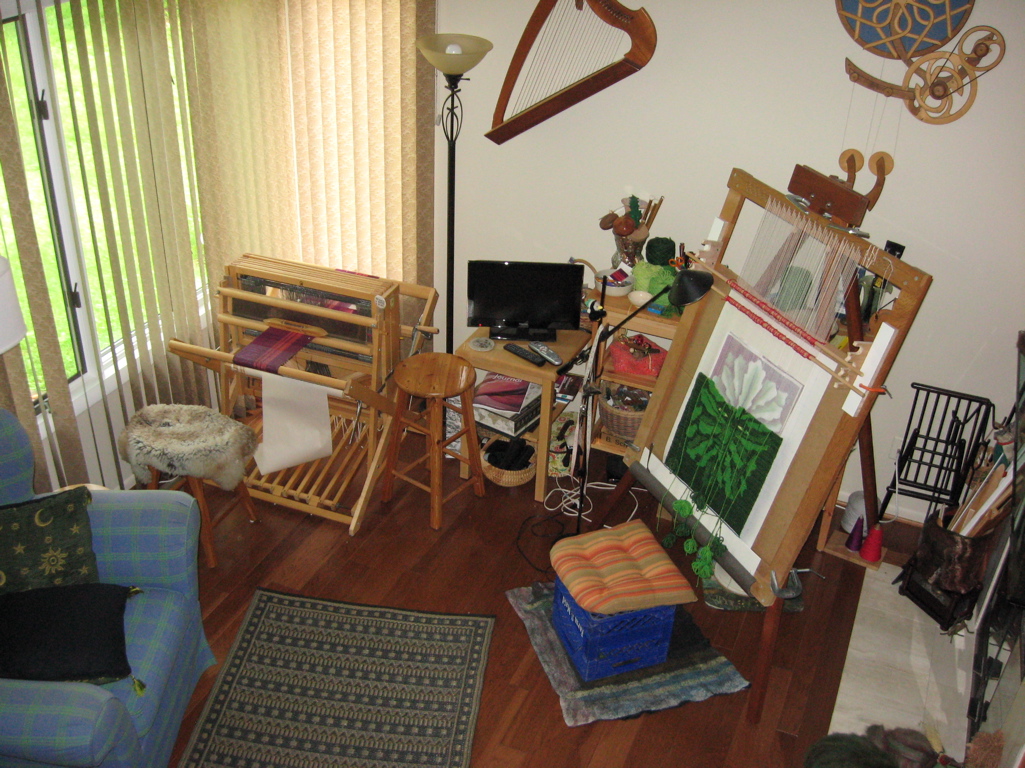
weaving room

FINALLY… 1 year after I started him, I was able to once again turn my attention to the Green Man.  One of the skills I worked on during the AWSD summer school tapestry course in Carmarthen, Wales [see September 2013 blog postings] was beating/packing down the weaving.  Looking at it now, I could see that yup…. my packing was pretty loose so I began to compress.

before

before

The result = the tapestry was now 3″ shorter!

after

after

Also at this point I could see that my warp tension was pretty wonky and I would not be able to easily correct this = OOPS!!!  I now had major decision to make:
Do I chuck all that I’ve done so far… cutting my losses (literally!) and start over?
Or do I continue on and see what happens?

Posted by: bschutzgruber | January 5, 2014

Modern Medicine and the Ancient Art of Weaving

Weaver Janet Phillips in the UK has been involved in the project to weave shoulder tendon patches. There is a short news item on the BBC website at the moment. http://www.bbc.co.uk/news/health-25573341

“I have been doing ongoing research with this team of scientists from Oxford University for five years now developing an internal woven bandage. It has been fascinating and it is great to see the research come to the point were a bandage has actually been made and is about to be used in surgery. The project with Oxford University has been really interesting. It started when I was still living in Oxfordshire. We started weaving 1 cm square, plain weave pieces on tiny nail tapestry frames. It seemed important then to have finished edges on all four sides. Everything went quiet for three years while the scientist looked at other textile methods of producing the patches, but they finally came back to weaving because the textured surfaces helped the tendon cells to adhere to the fabric better than other textile structures.

We then spent quite a bit of time experimenting with different weaves. Plain, 4/4 twill, Satin and Sateen, Huck Lace and Leno were all tried. It was important that the patch should stretch in all directions. It seems that 4 and 4 twill has won the day. Sett also became an important issue. They ended up buying an 100 dent to the inch reed!

It has been great working with these young, energetic, and dedicated scientist on such an important project. It never ceases to amaze me how dependent all mankind is on weaving.”

Posted by: bschutzgruber | December 2, 2013

Riverbend – building the studio [part 4]

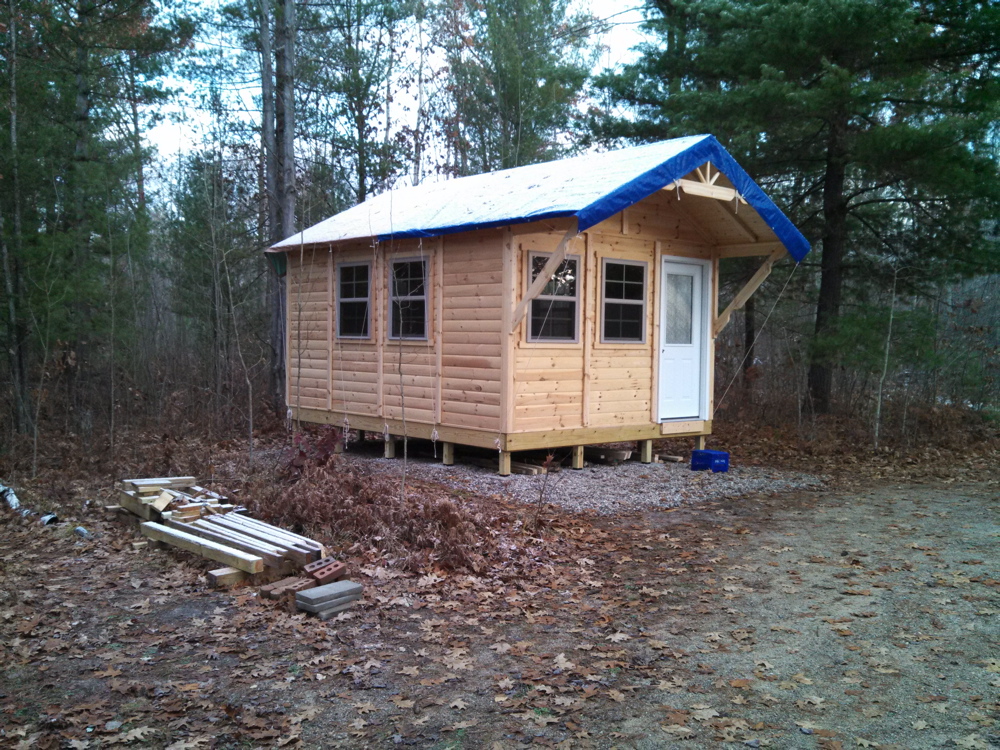
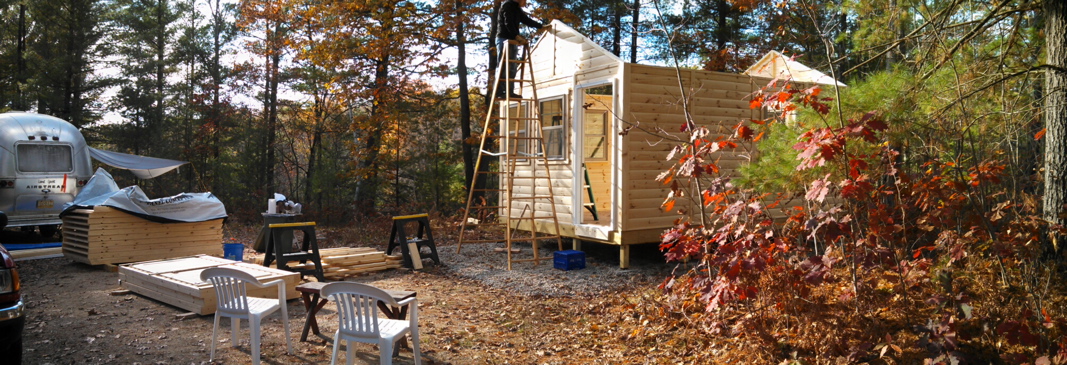
With the studio completely enclosed….

1_studio

cold weather setting in with snow outside…

2_snow

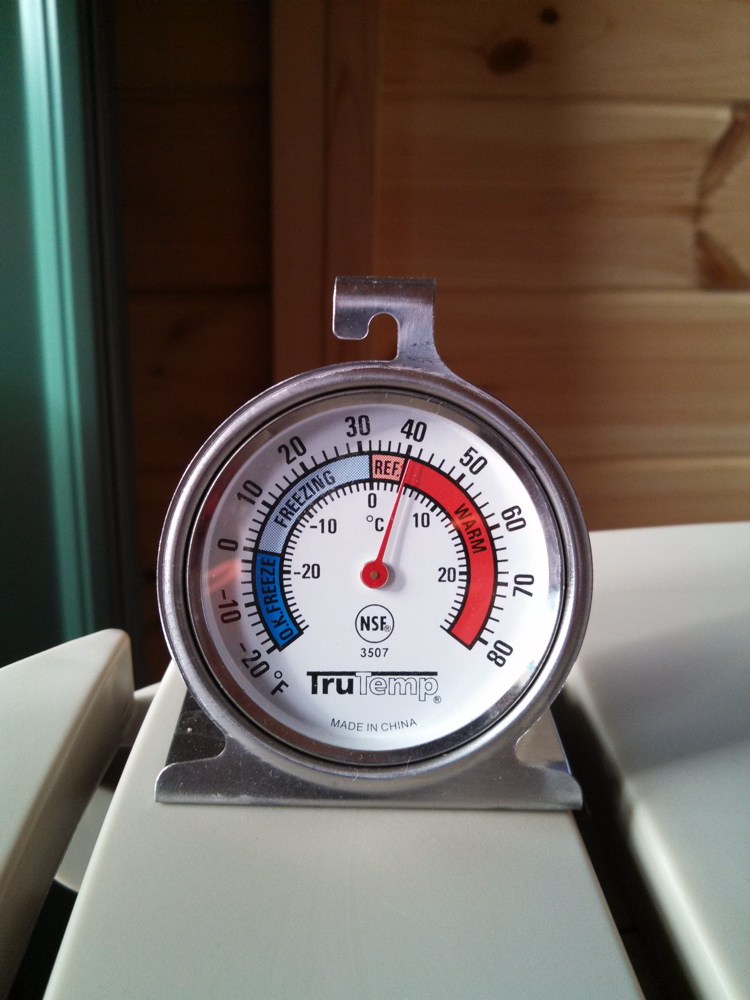
and only 40F inside…

3_cold

it was time for one last weekend to complete this building project.

The trim was added to the exterior walls…

4_outside trim

hurricane ties were attached to the roof and walls…

5_hurricane clips

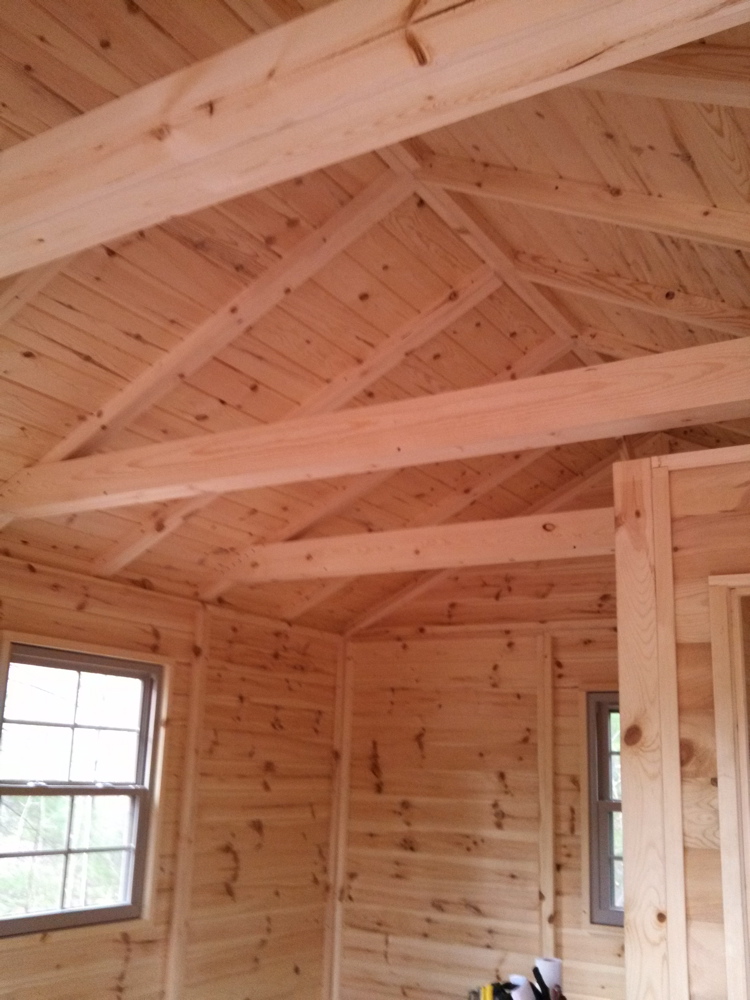
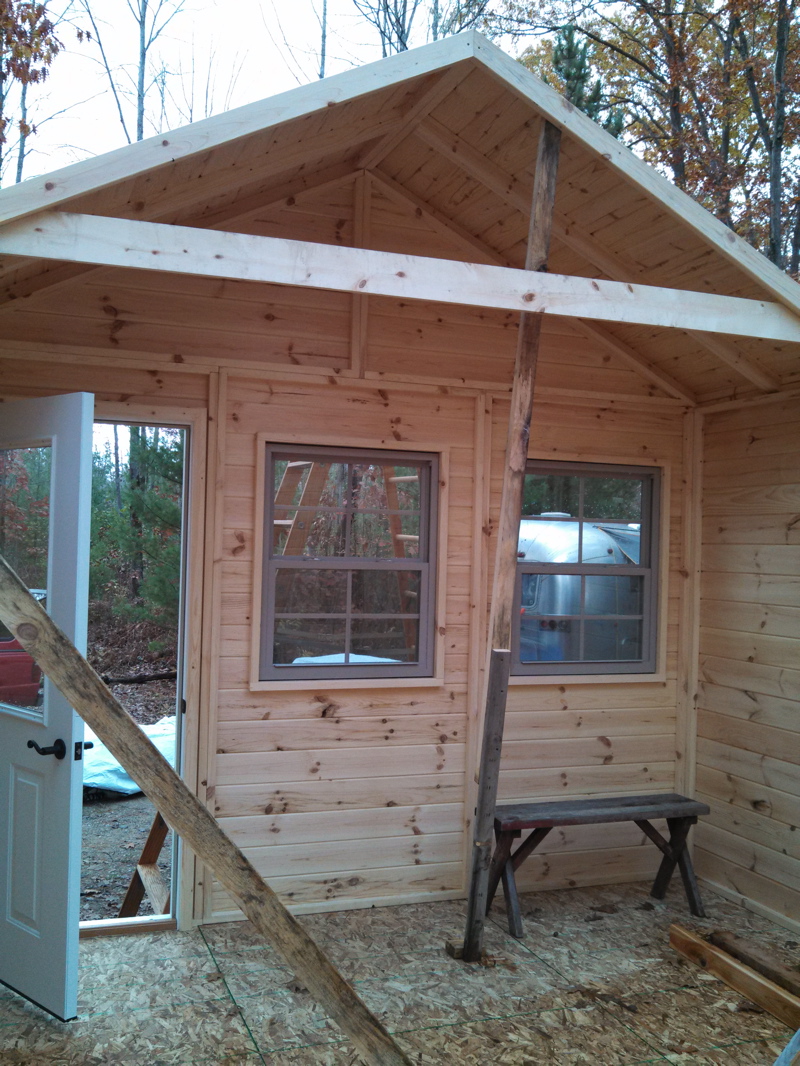
and trim was added to the rafters.

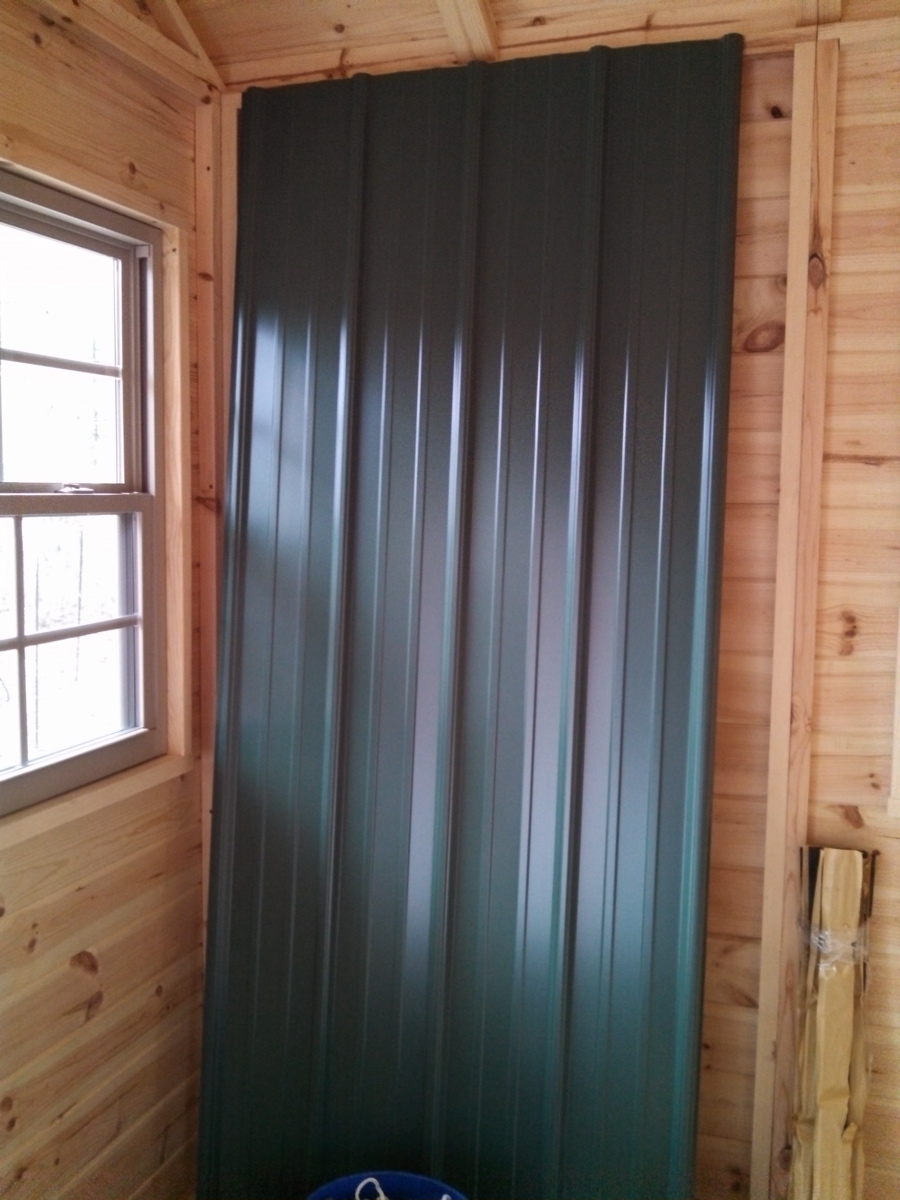
8_ceiling

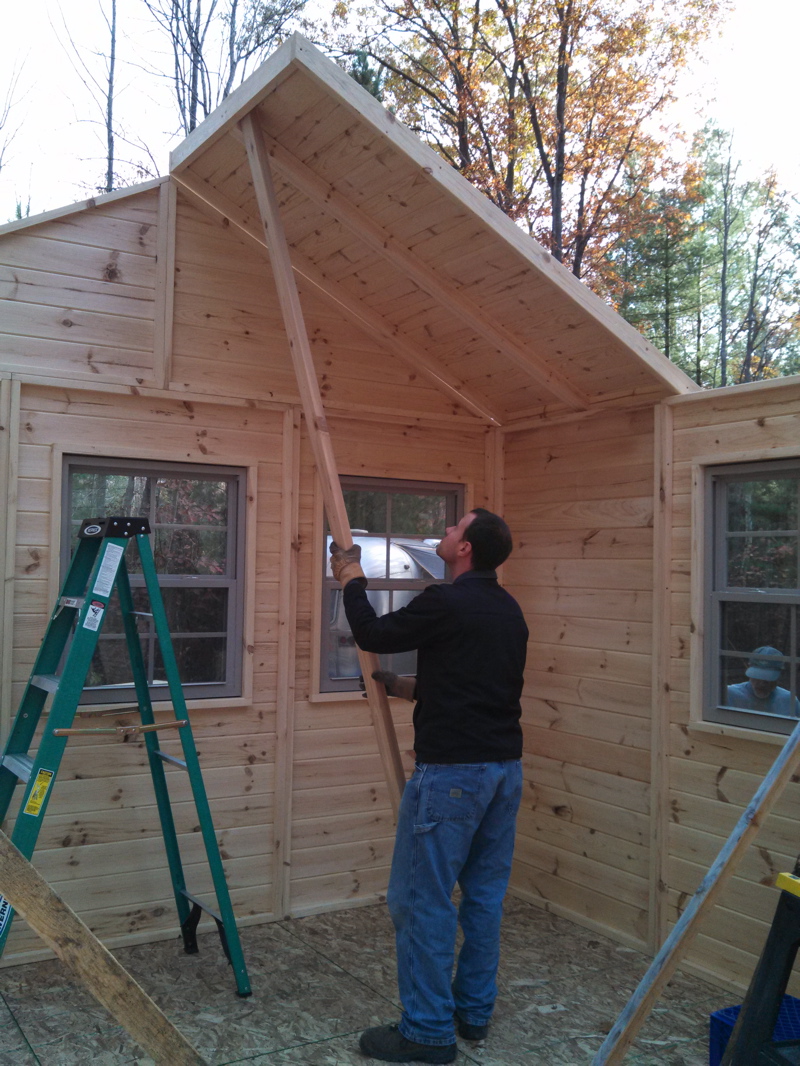
The interior walls went up to enclose what will be the bathroom area…

7_sleeping area

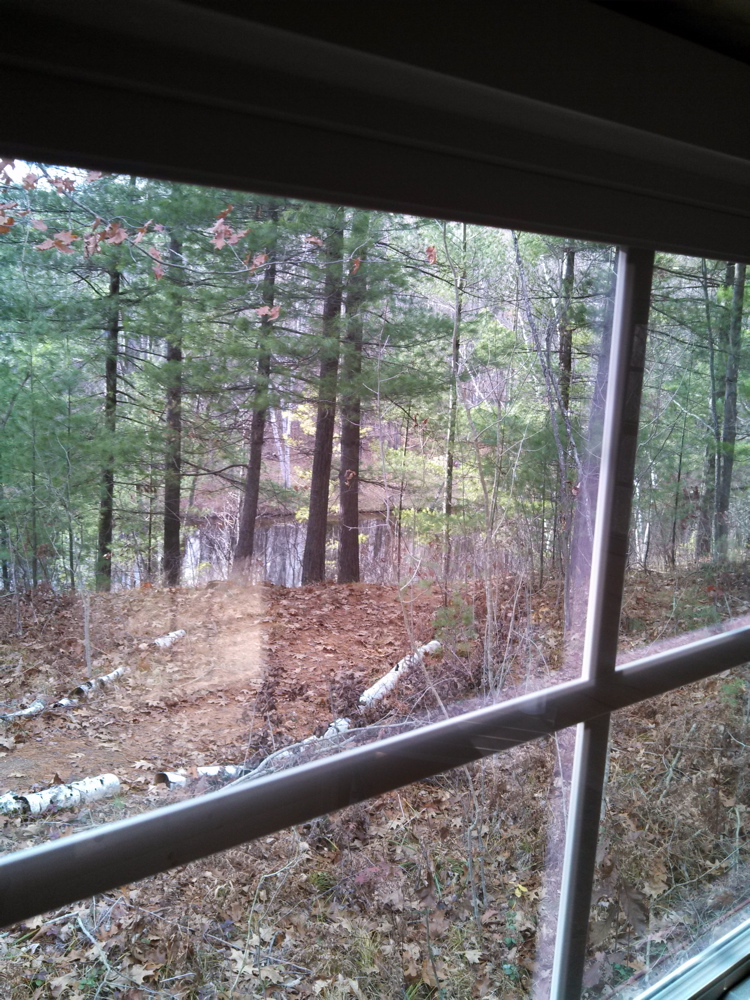
and this is the view I’ll have waking up in the morning.

9_view from inside

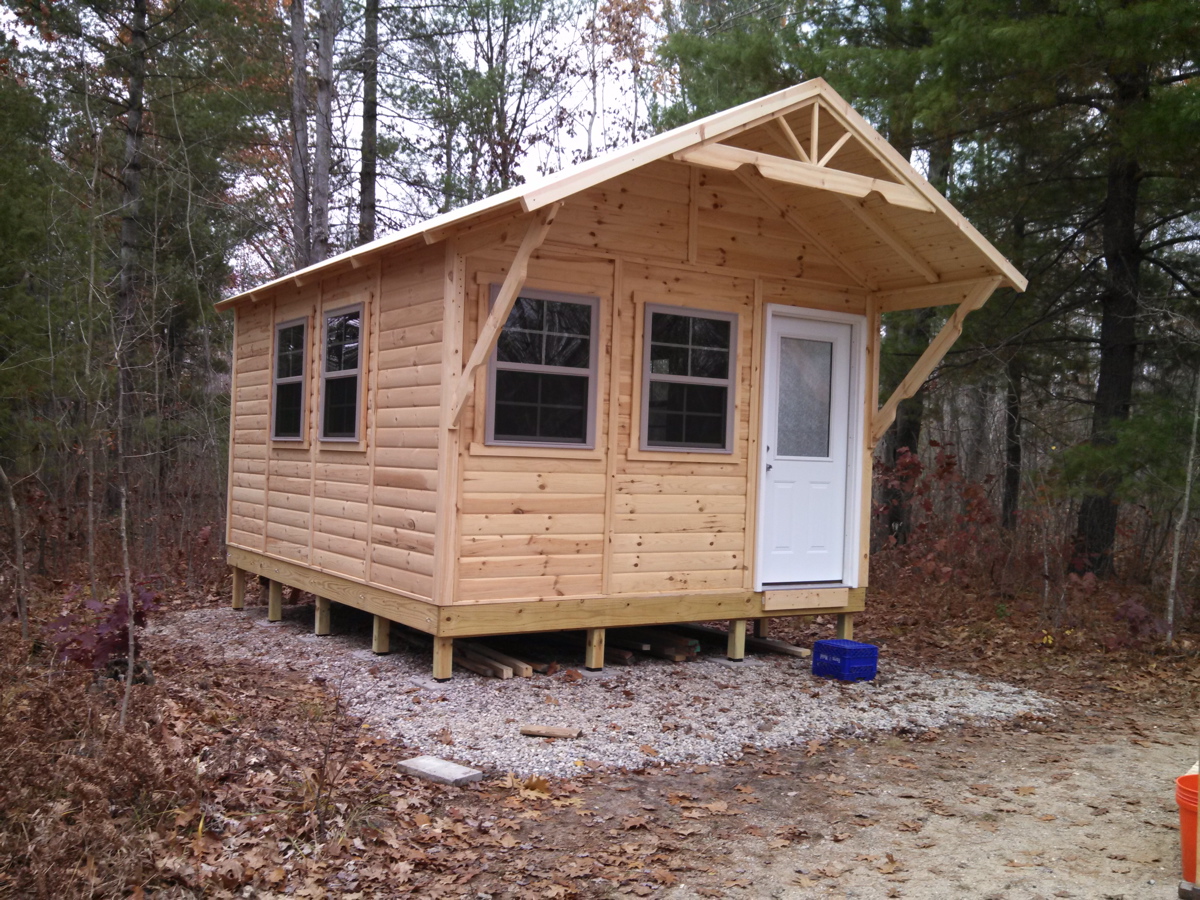
In the Russian folktales, Baba Yaga lives deep in the forest in a tiny house that stands on chicken legs.  Well… this may not be as unique at hers…. but it is MY ‘house in the forest’.

10_studio front

Posted by: bschutzgruber | December 2, 2013

Riverbend – building the studio [part 3]

Putting on the roof… cont.

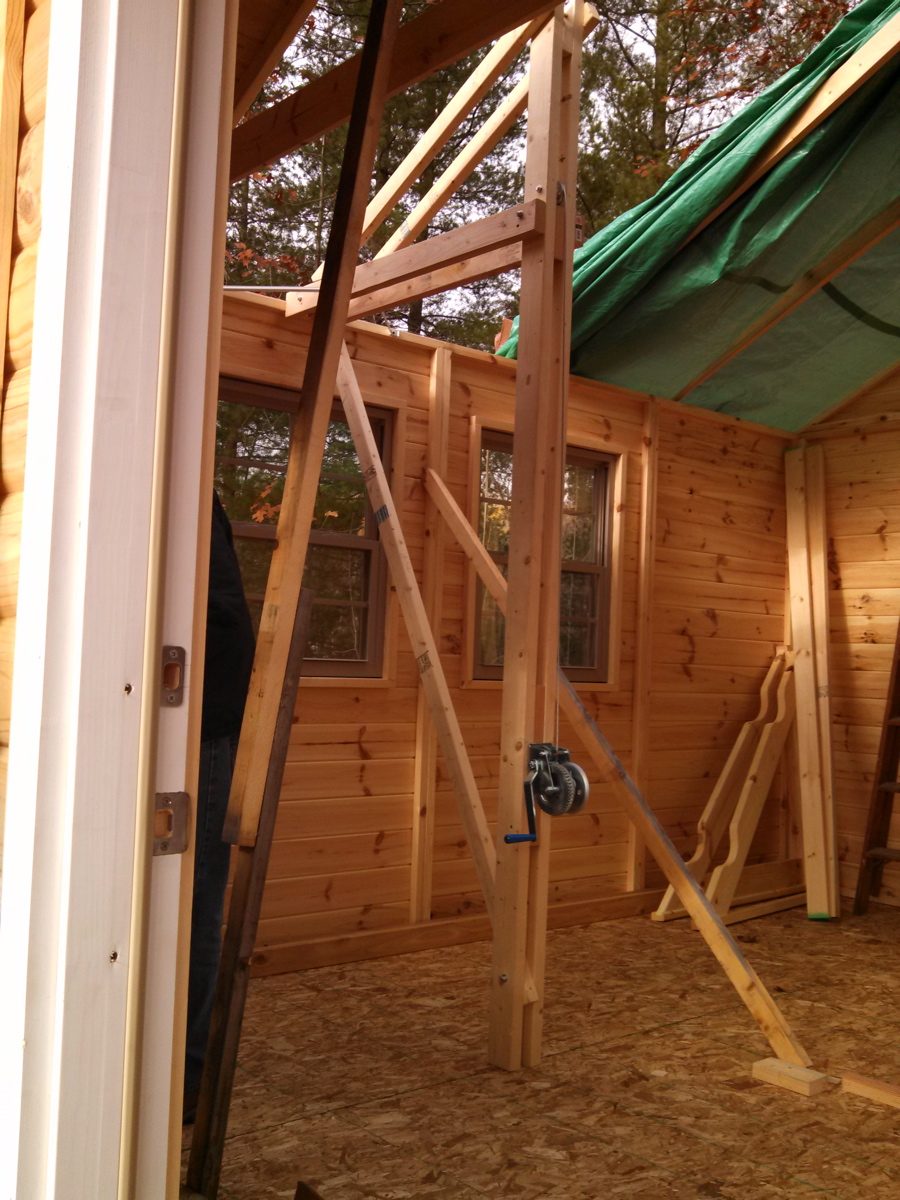
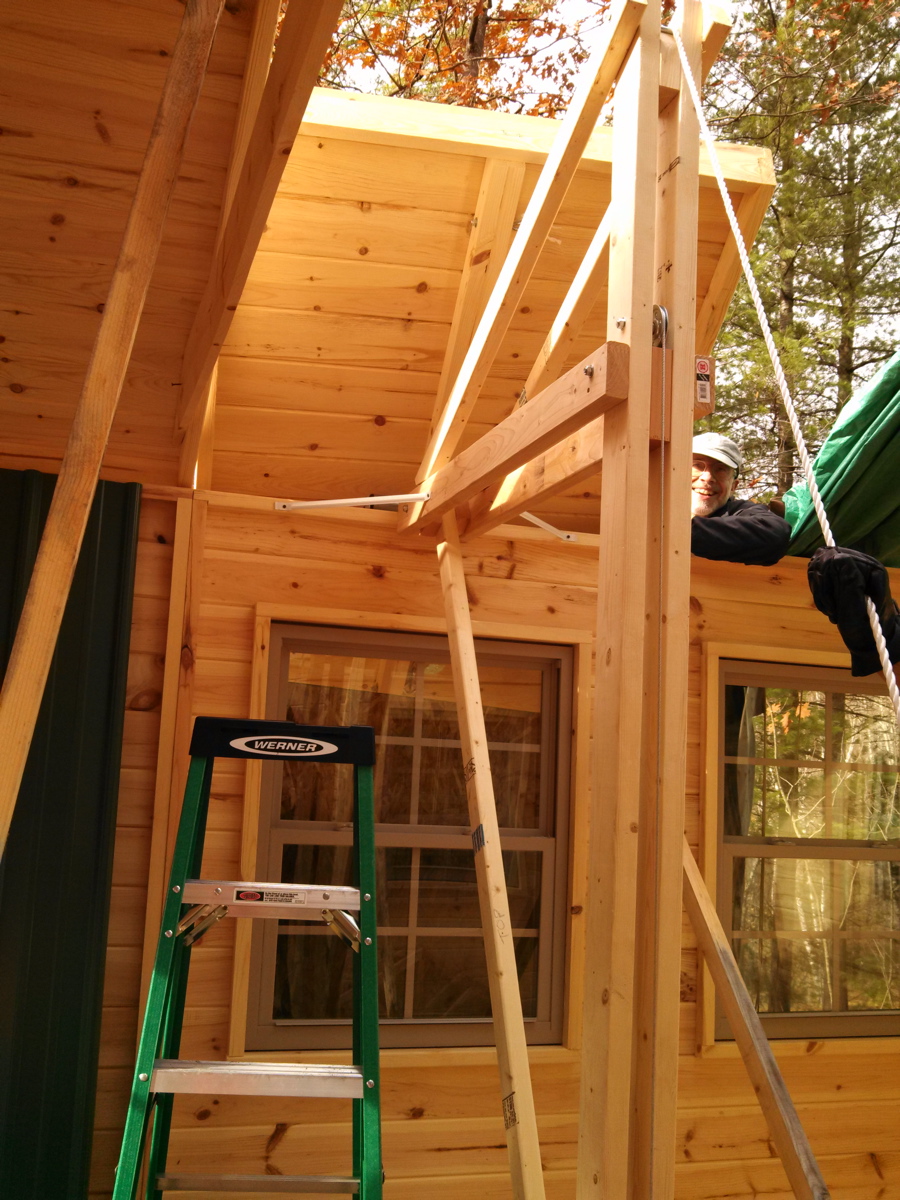
2 weeks later we were back at Riverbend with a spiffy machine that Terry designed to lift the panels.
1_winch  2_lifting roof panel

This was a LOT easier than hoisting them up the 12 feet using only brute force.  Let’s hear it for machines and the engineers who build them! 

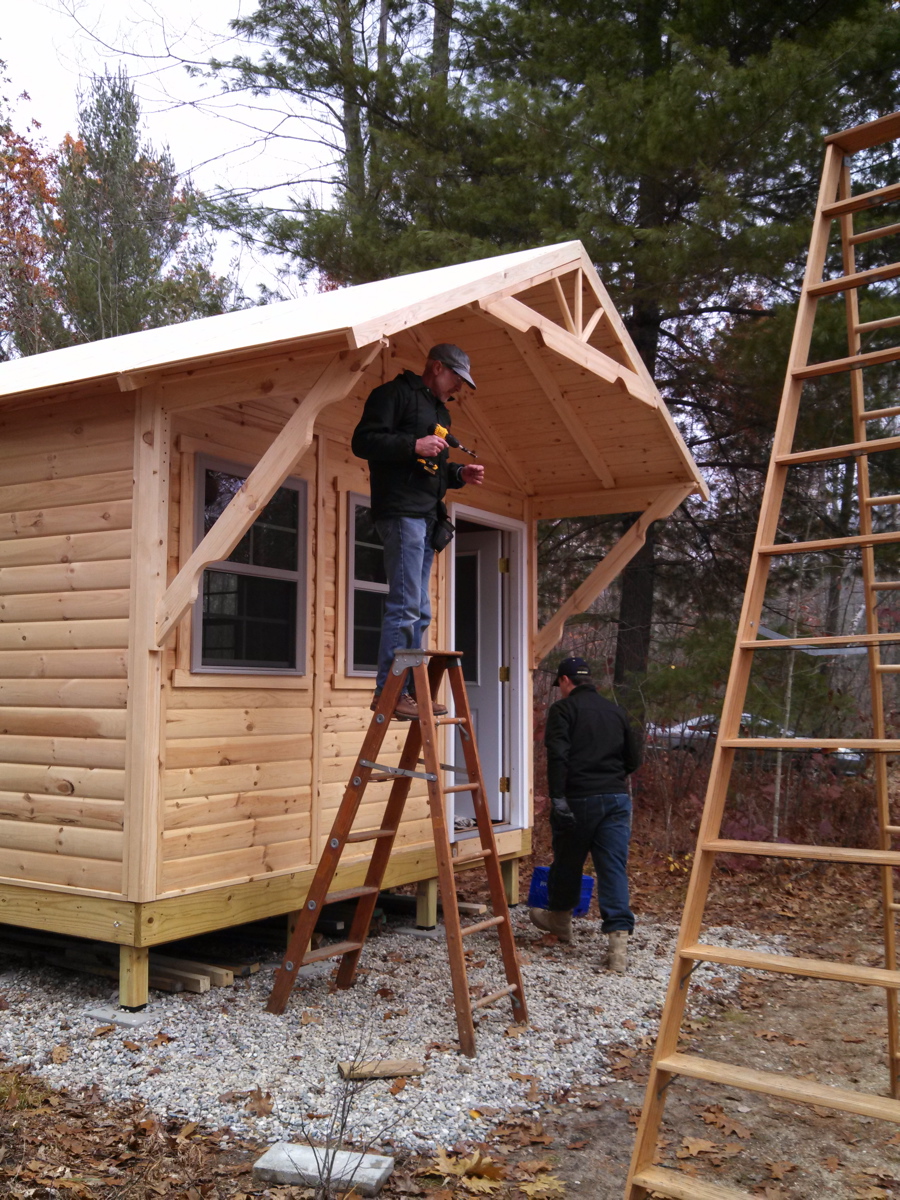
With the porch on, the roof was complete!

7_roof front    

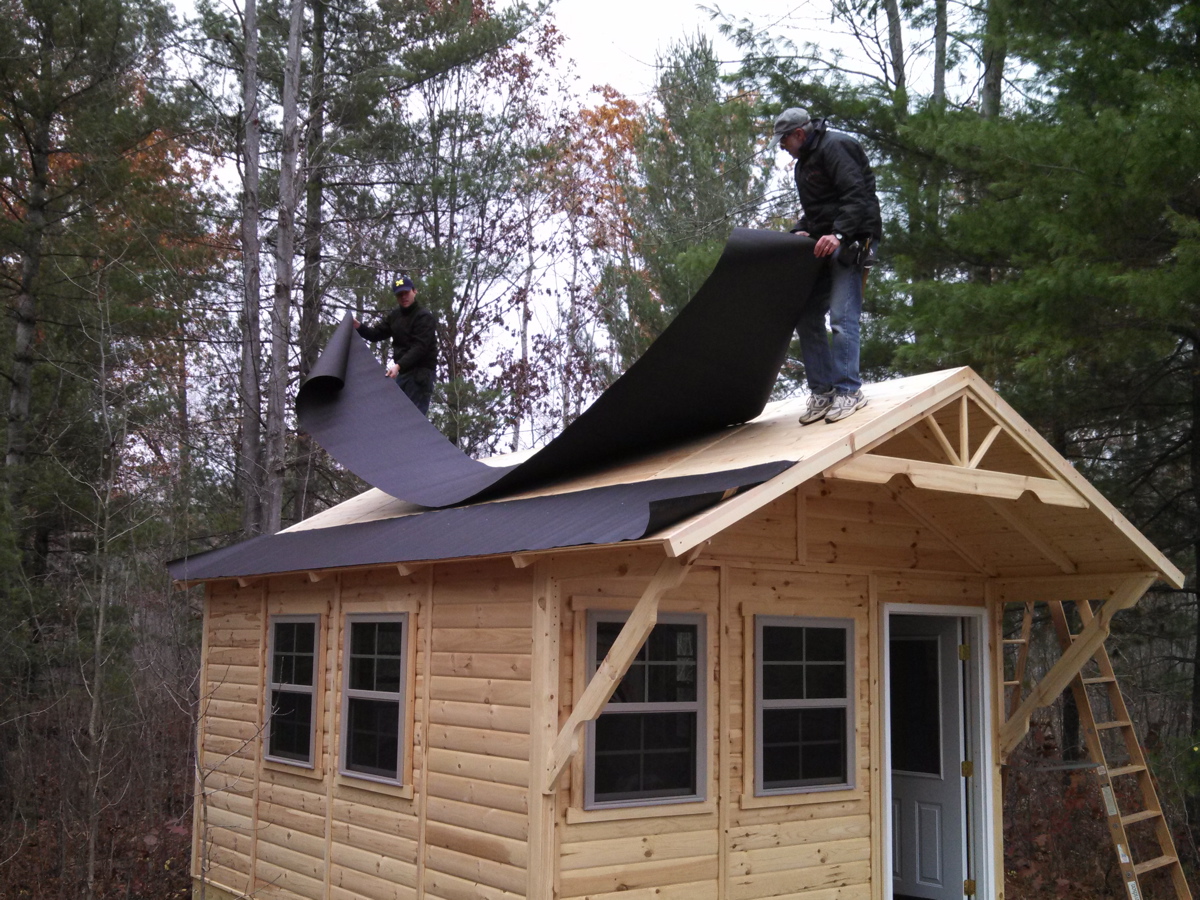
Next came the tar paper
8_laying tarpaper  

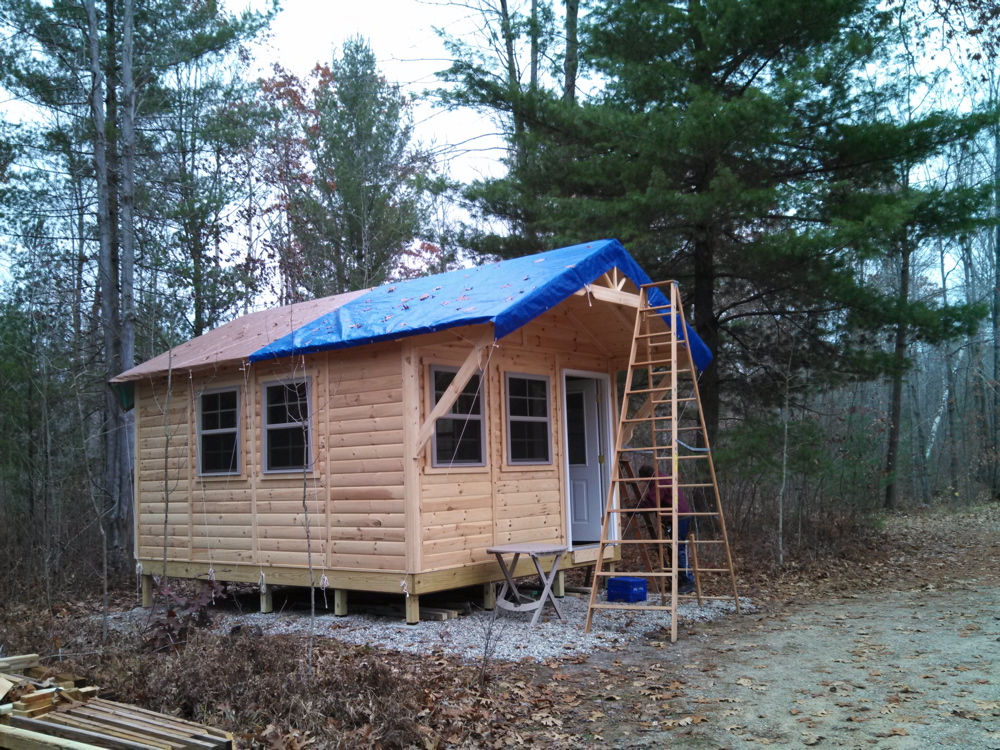
but we won’t put the metal roof panels on until warmer weather in the spring so on went another set of tarps for the winter.
9_metal roof panel  10_winter tarp

10_TAG team
I could not have gotten my dream of a studio built without this amazing ‘TAG team’= Terry A Gruber & Tristan A Gruber!!  Well done, Gentlemen!

Posted by: bschutzgruber | December 1, 2013

Riverbend – building the studio [part 2]

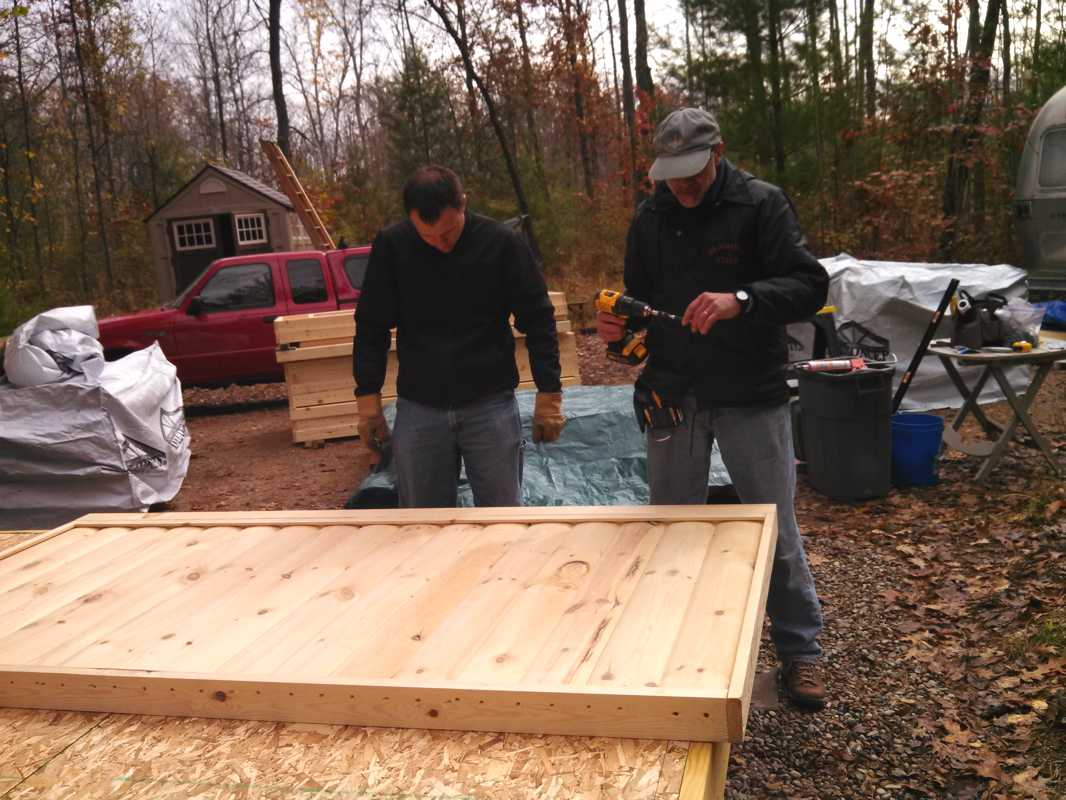
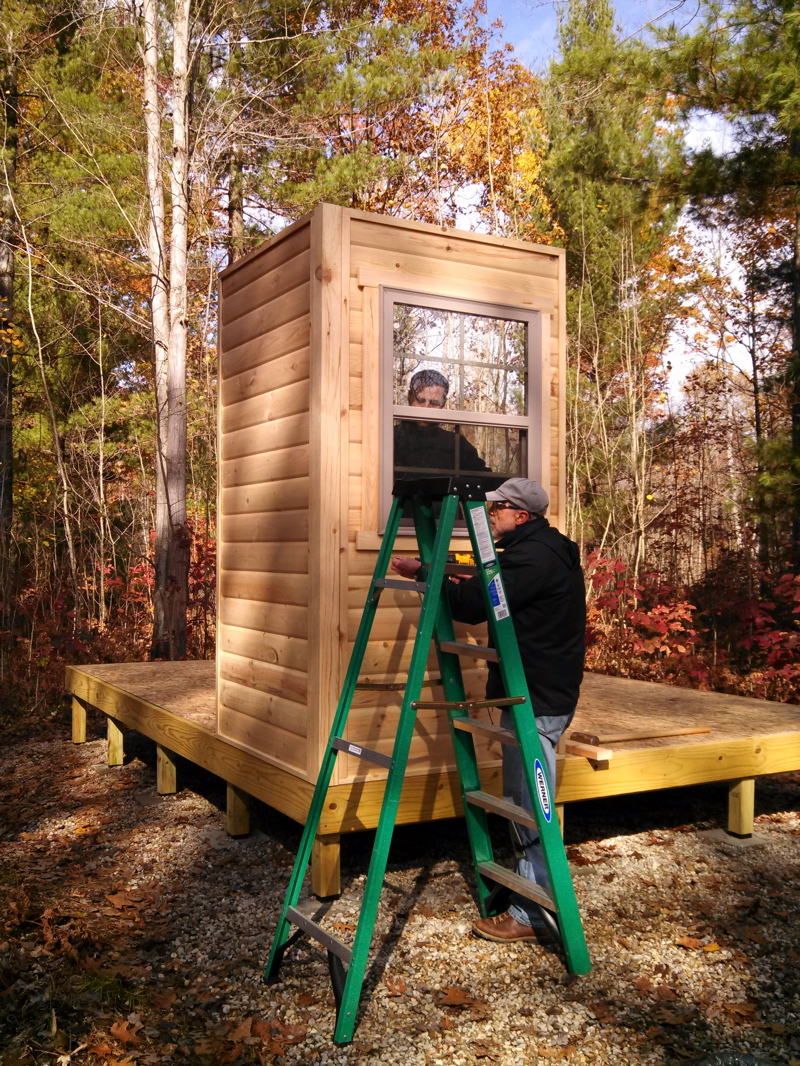
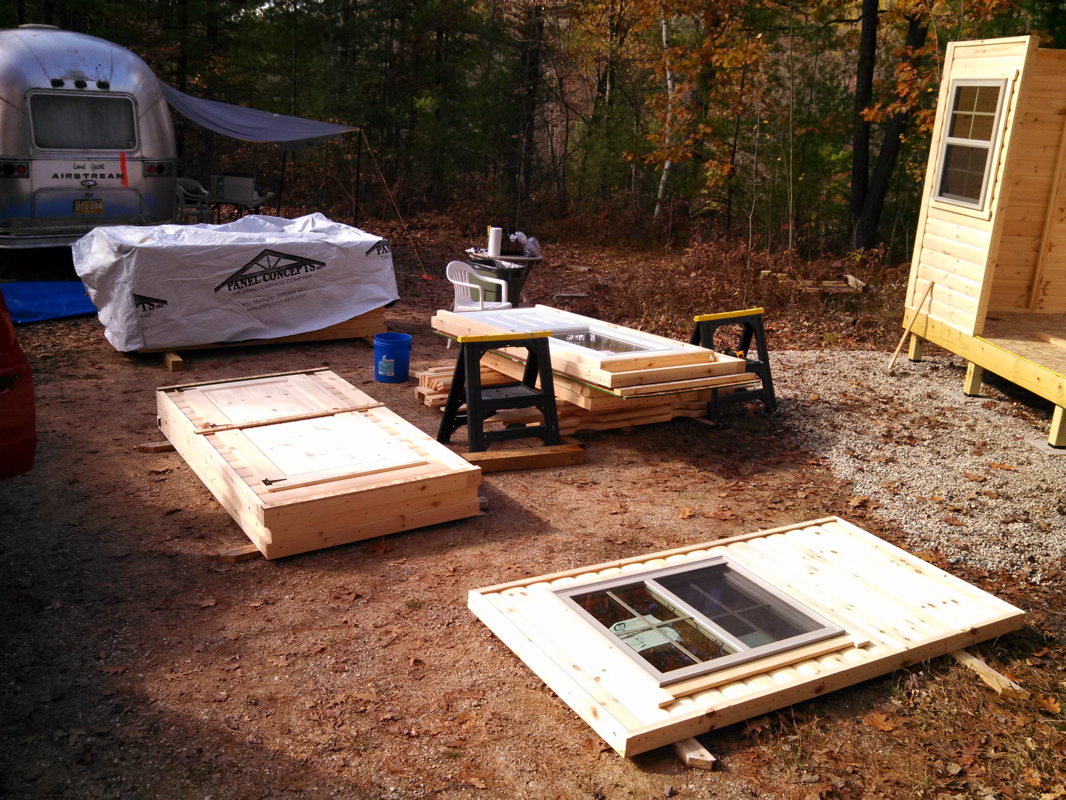
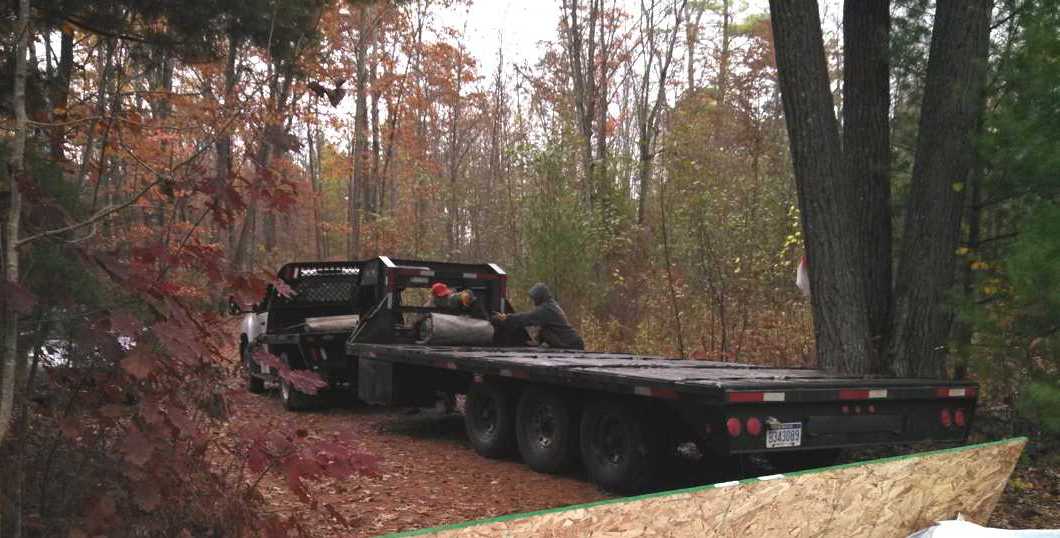
The call came in mid October that the studio was ready to be delivered.   With the 25 panels, 4ft x 8ft and weight in at about 120 lbs each, coordinating some extra ‘muscle’ to help was necessary – which meant building on the weekends.   The clock was ticking to get the structure up as quickly as possible because once November hits in Michigan, the weather becomes unpredictable.  It could be warm & sunny…. or warm & rainy…. or cold & sunny….. or cold & snow… you never know!  Our daughter, Andrea, was not available but luckily we were able to enlist our son, Tristan, making this a ‘everyone in the family helped’ project.

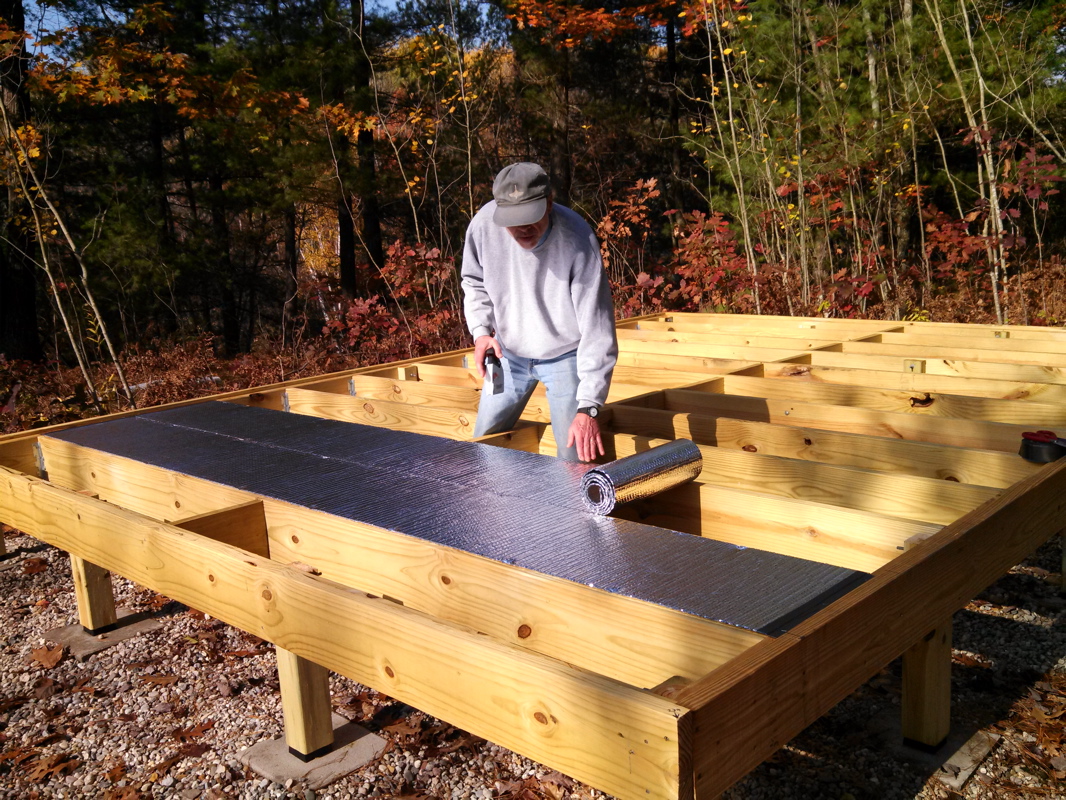
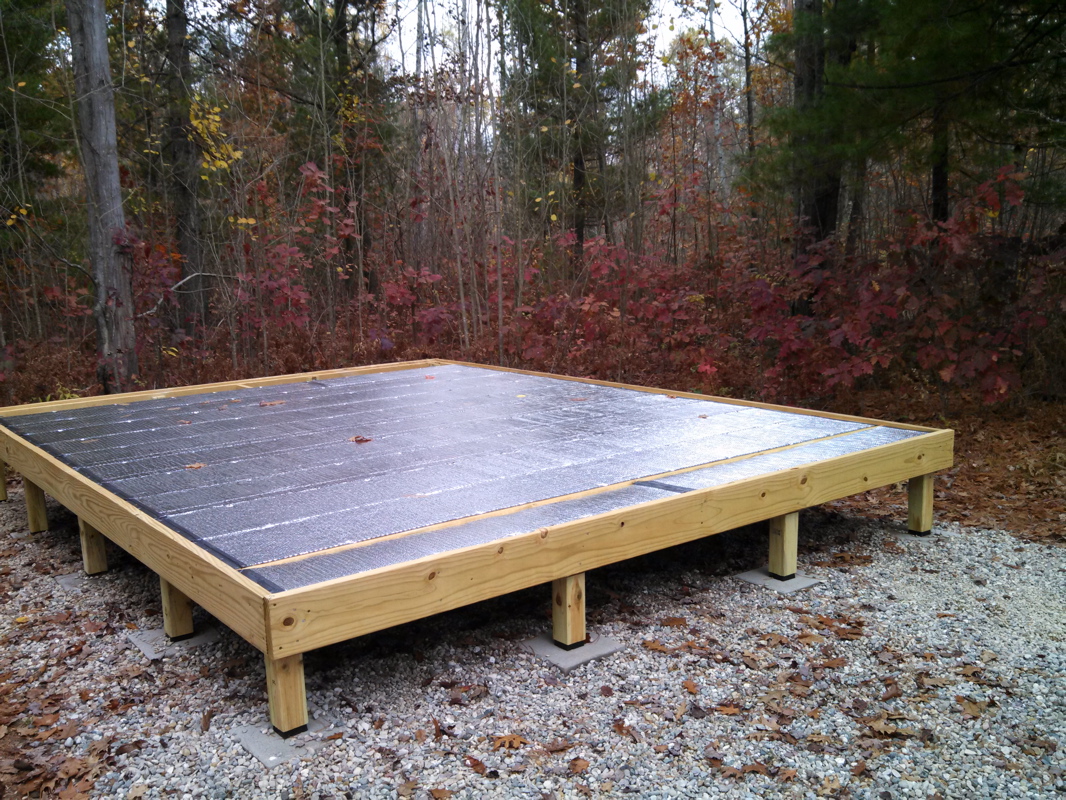
Step 3 : The insulation/moisture barrier went down
1_insulation   2_insulation 

then the subfloor.
3_subfloor

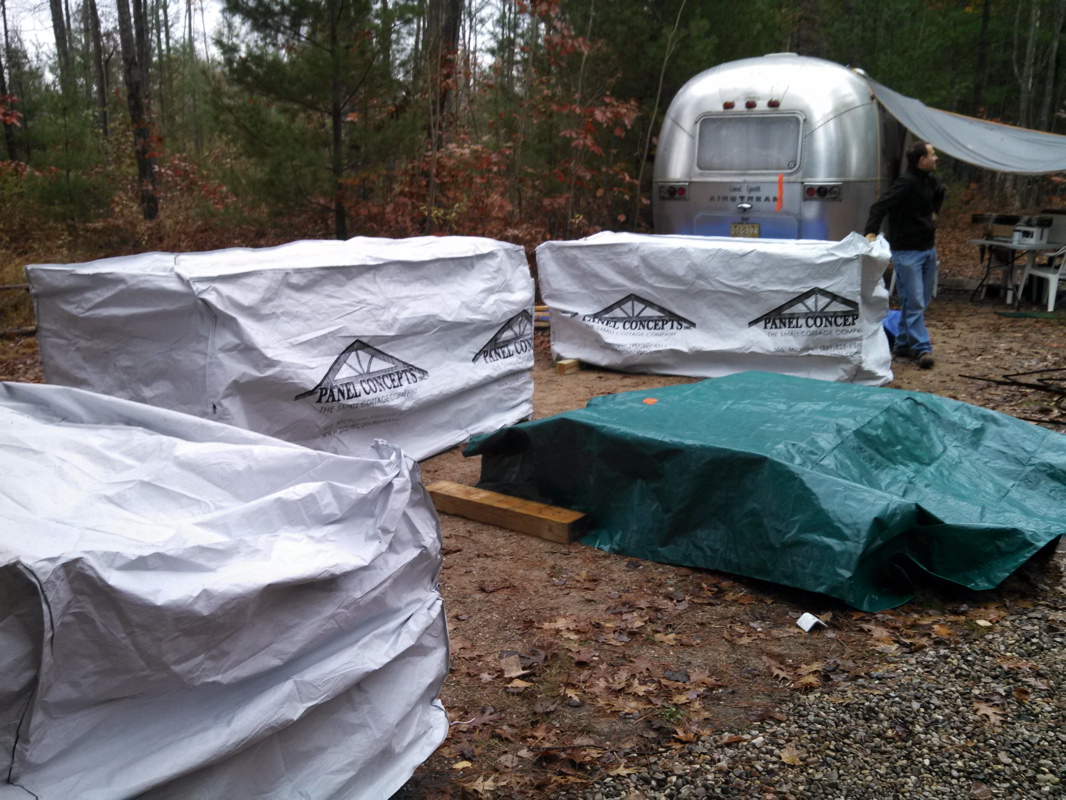
Delivery the next morning brought another ‘impressively large’ truck…
4_truck

leaving 4 stacks of panels with directions for ‘some assembly required’.
4_the delivery  5_some assembly required

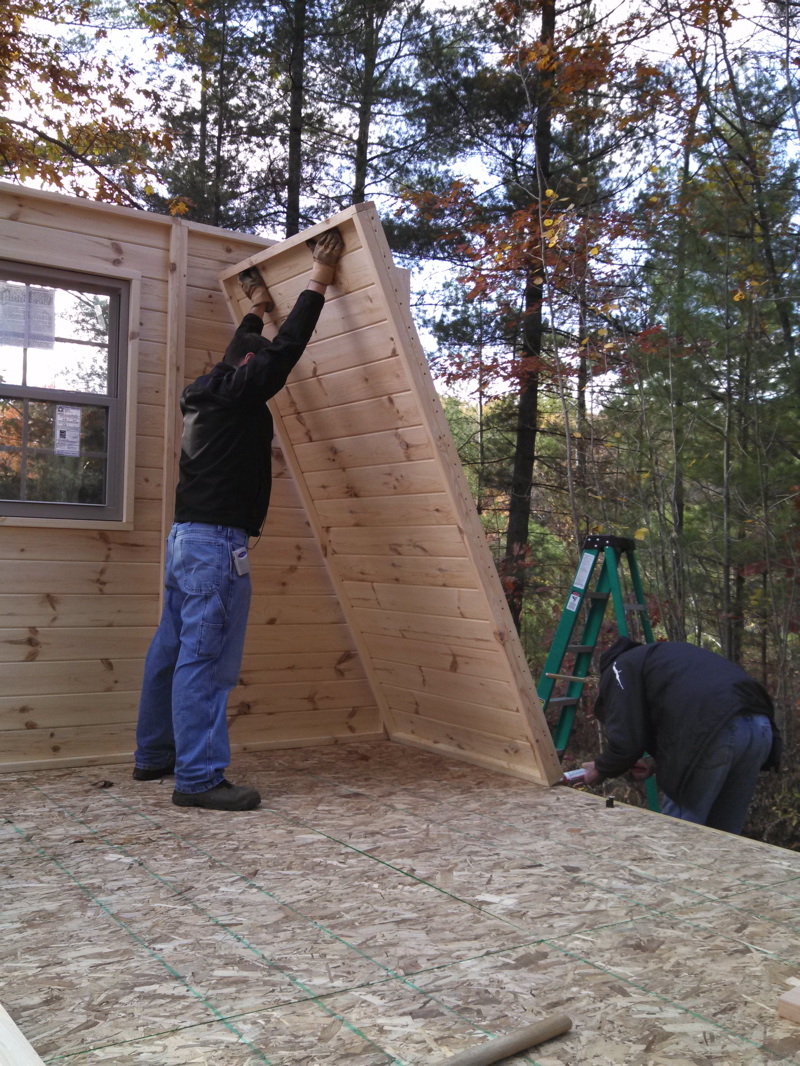
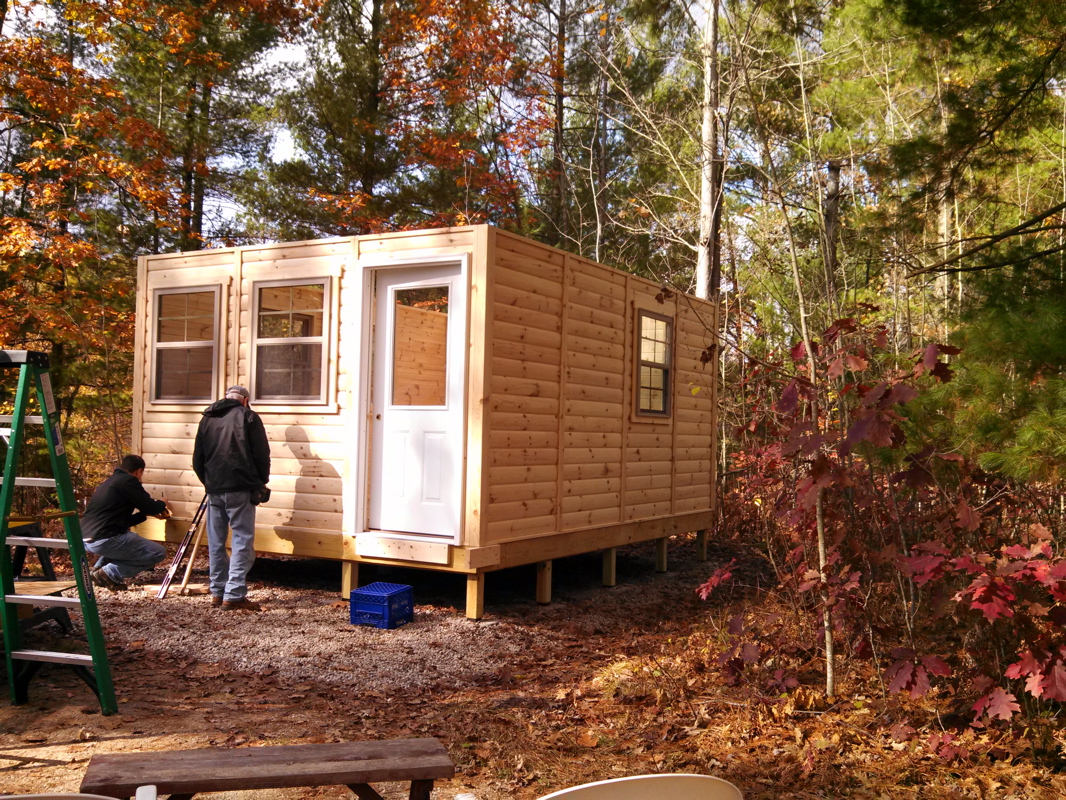
Step 4: building the walls
Yup… all we needed was a screwdriver & a caulk gun.
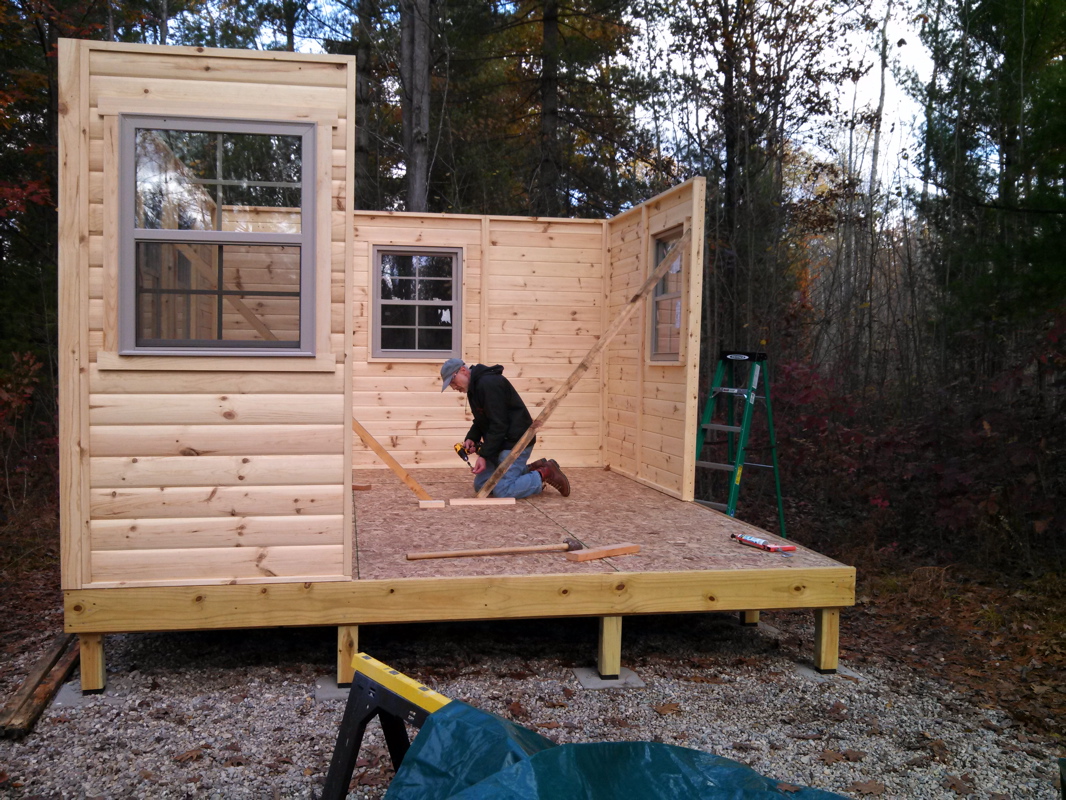
6_corner  7_walls  8_walls  9_end of day 1  10_piles
By the end of the day, 1/2 the walls were up and the piles were getting smaller!

The second day of assembly we finished the walls
11_all walls up

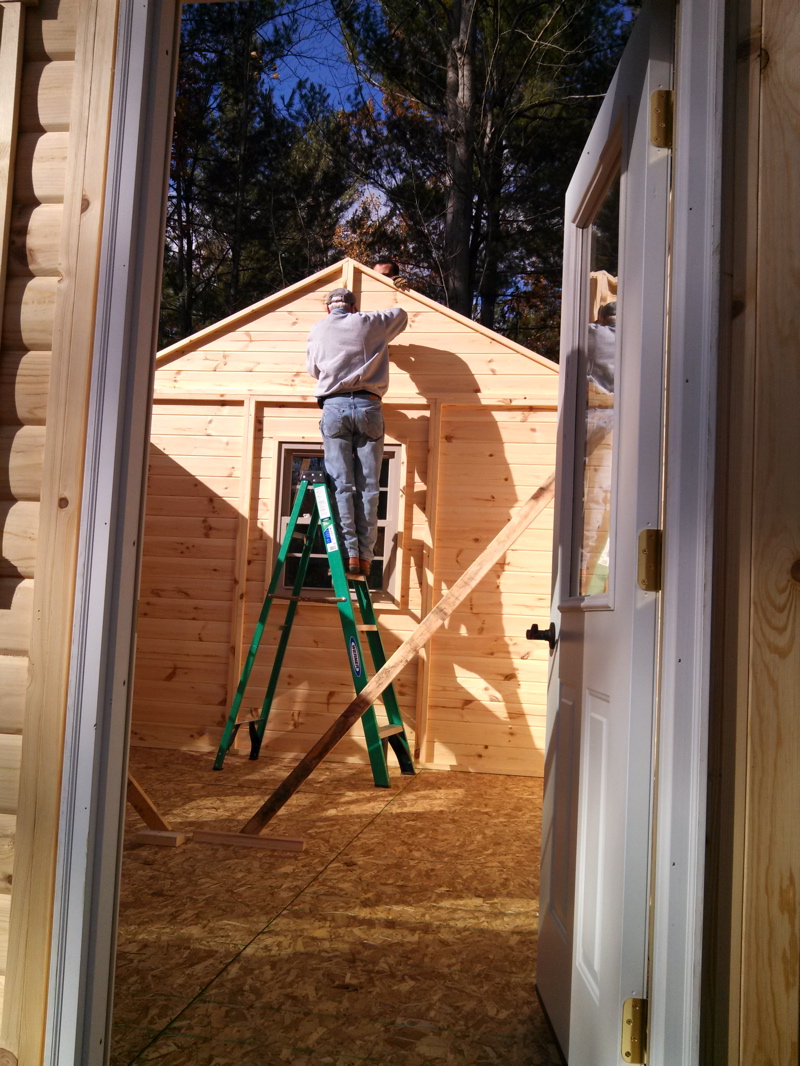
and moved on to preparing for the roof panels.
14_roof  13_roof  15_roof

Part 5 : putting on the roof
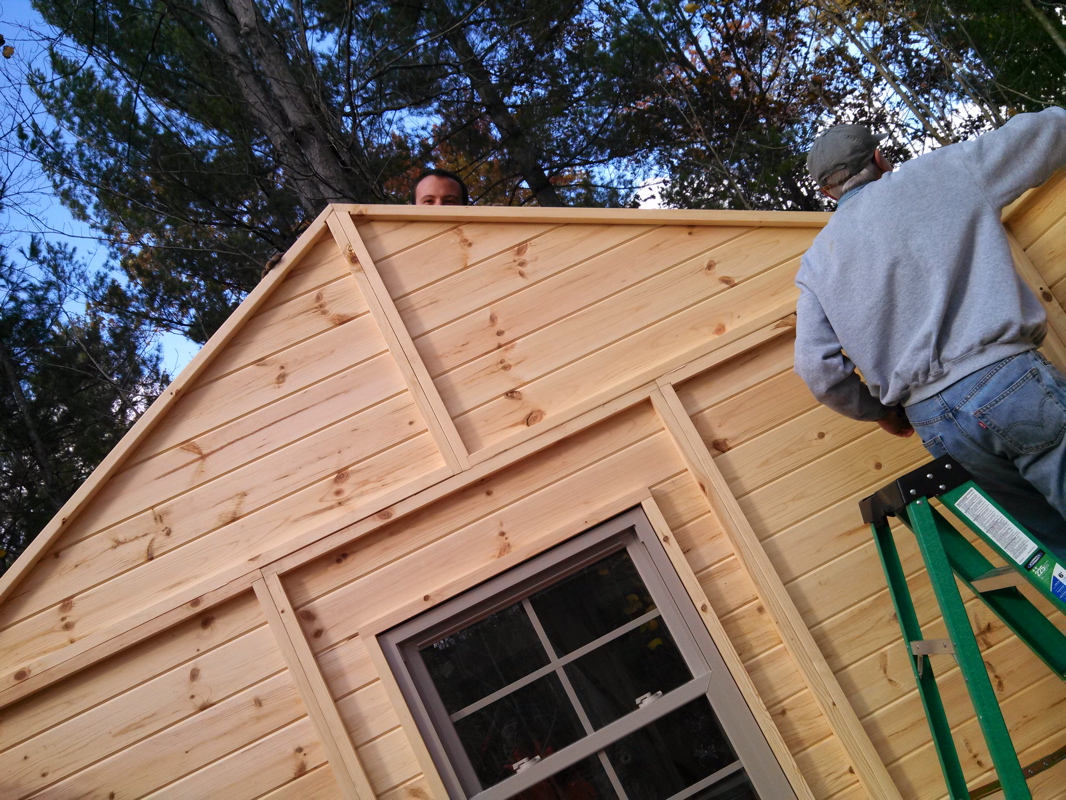
Using brute force we hoisted the roof panels from the outside and over the wall,
supported them from below, and secure them into place.

16_roof panel  18_end of day 2

The ‘brute force’ part of this was turning out to be way more intense than expected – there had to be an easier way.

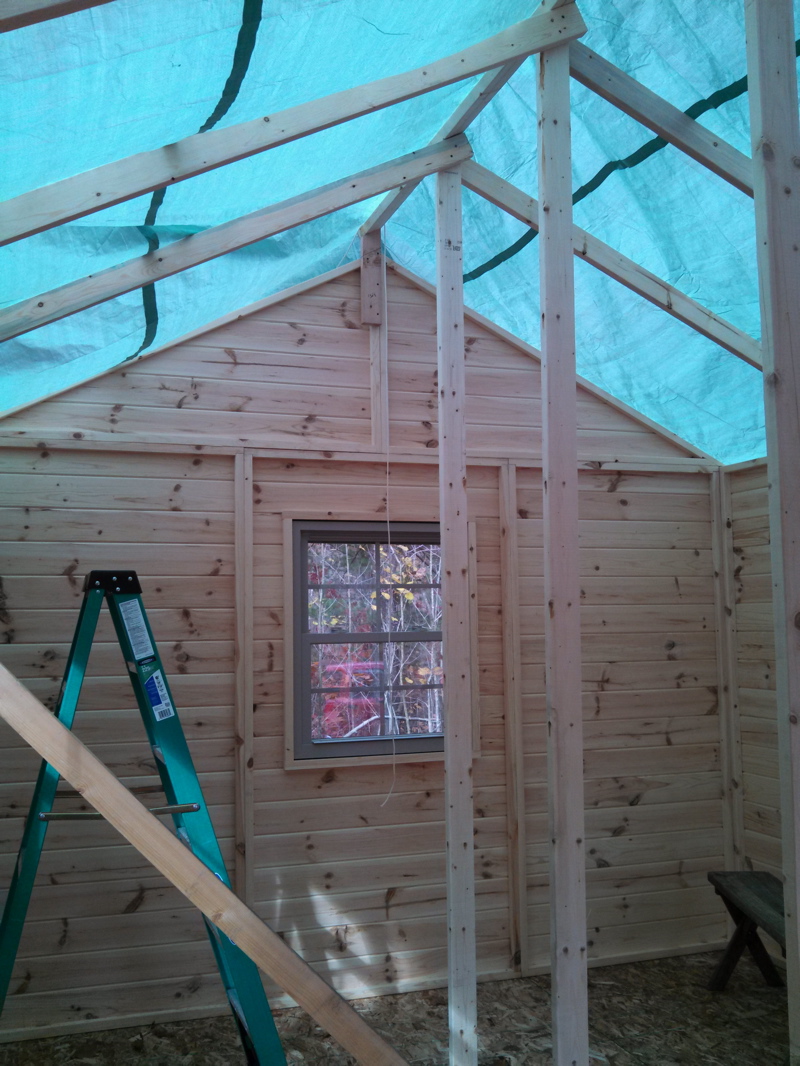
So… the third day we built a temporary rafter system and covered with a tarp.
18_rafters  19_tarp  20_end day 3  

Engineers build machines to make work easier… my husband Terry had new puzzle to solve!

Posted by: bschutzgruber | December 1, 2013

Riverbend – building the studio [part 1]

In researching different options for building my studio I came across Panel Concepts – a Michigan company that manufactures ‘kits’ using 4ft x 8ft panels.  We met in March to see a model and I liked what I saw.

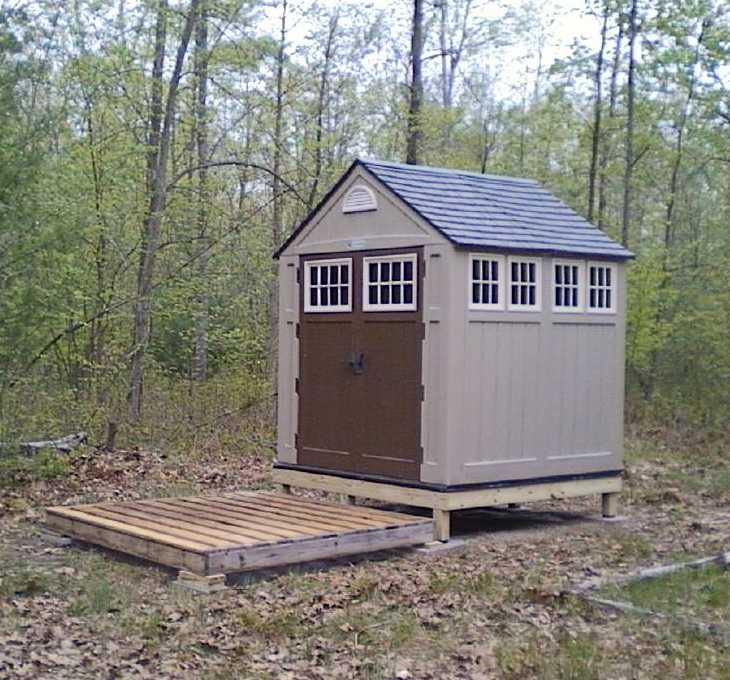
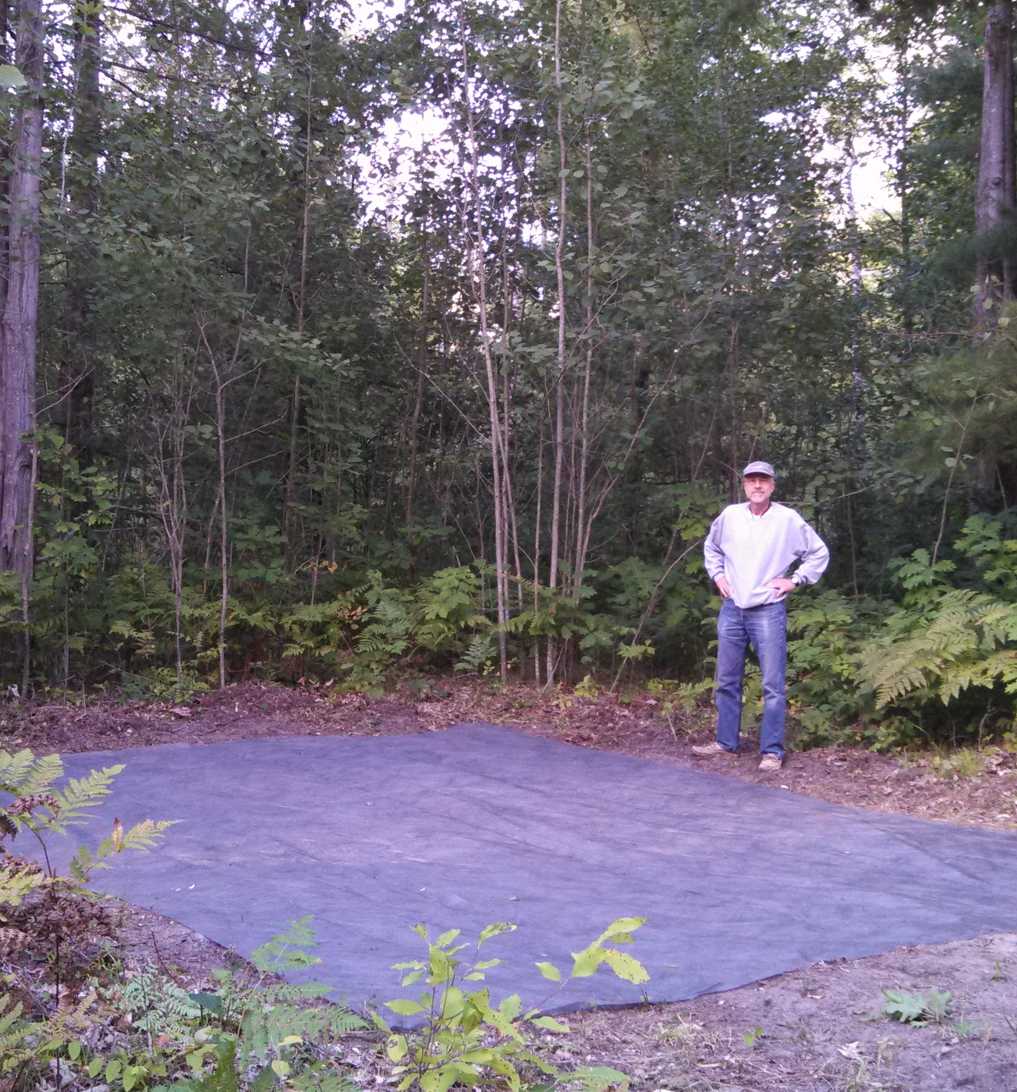
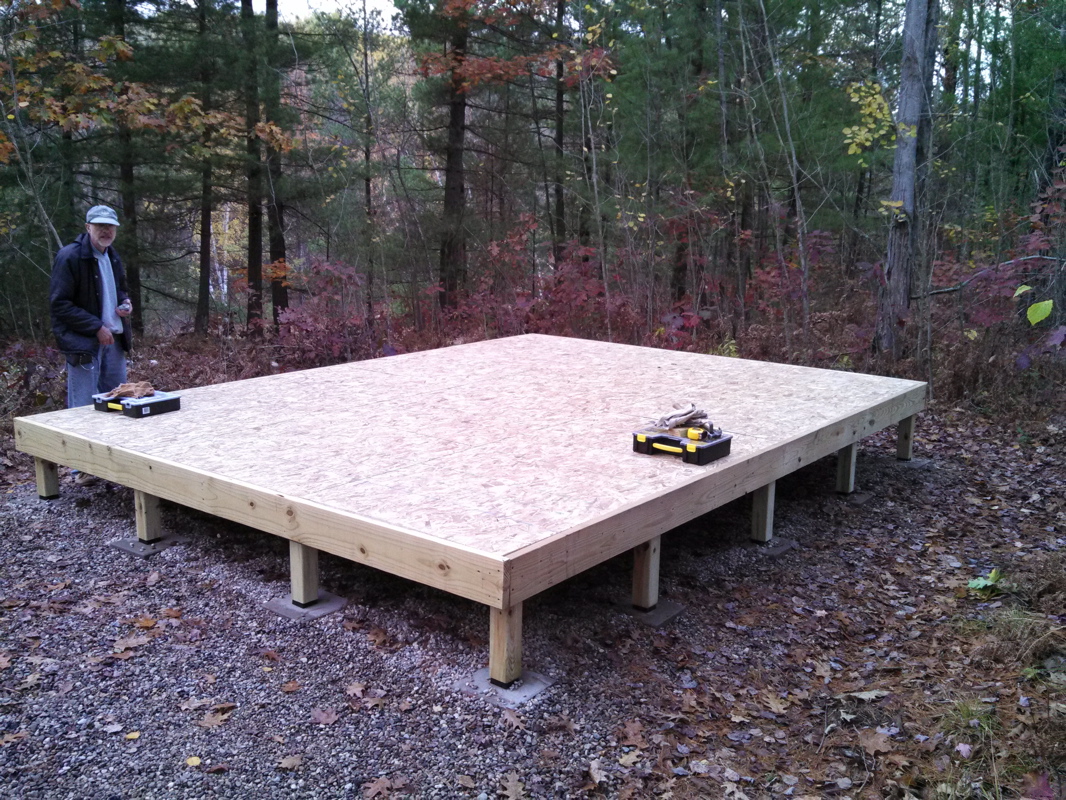
Summer was busy but we were able to test a floating foundation system (using the shed) and cleared a 16ft x 20ft area for the studio.
shed  gravel prep

In September I was ready to discuss ordering a kit – only to discover that the owner was retiring, the business was being sold and would move to Wyoming as of December 1st.  BUT… they were still taking orders for another week.  Checking the details of exactly what options I wanted… I placed an order for a 12ft x 16ft unit.

With only 4 weeks to get the foundation sorted and floor built… having a husband who is a ‘newly retired engineer looking for a challenging project’ REALLY came in handy for all the design work and calculations.

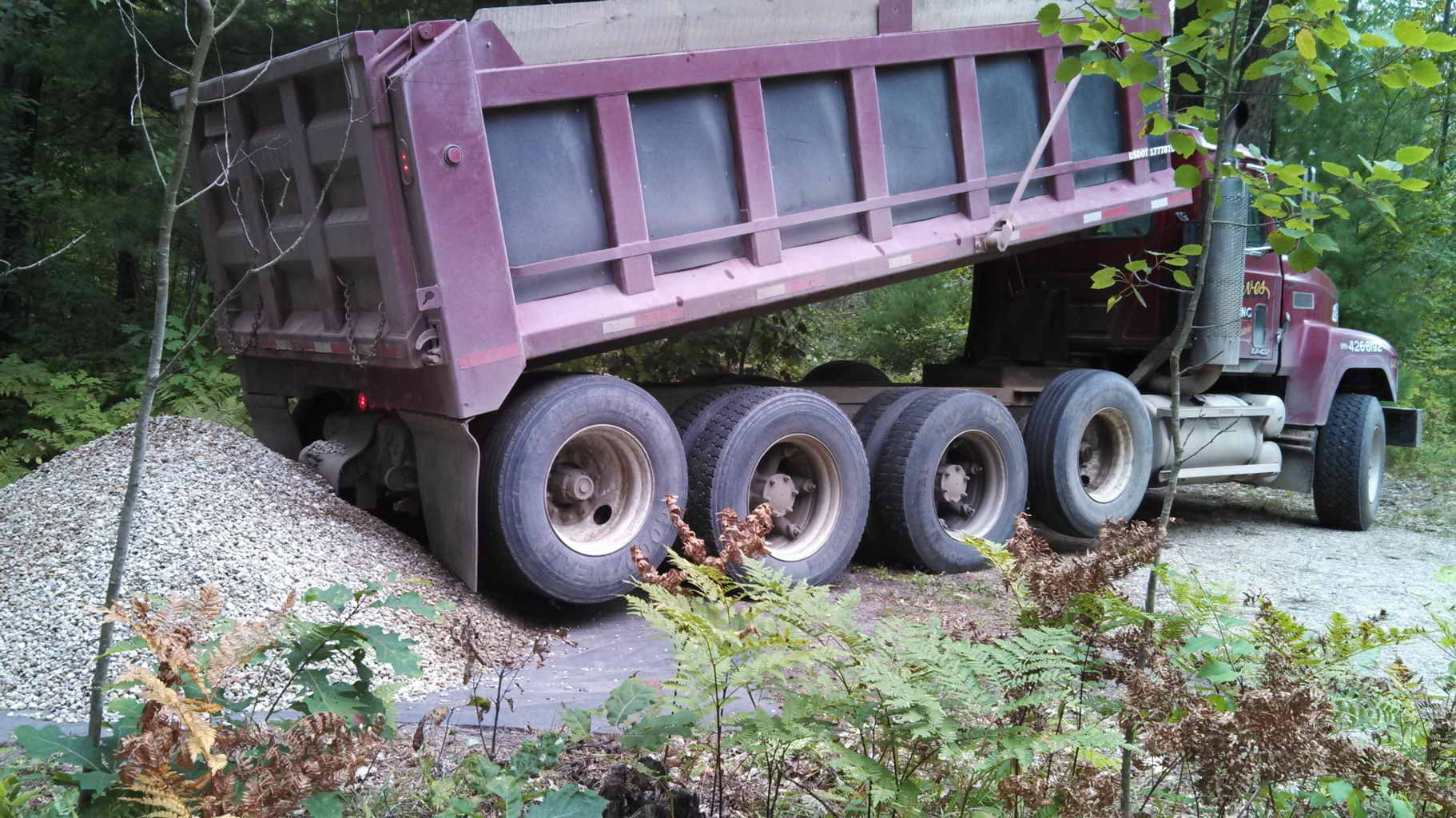
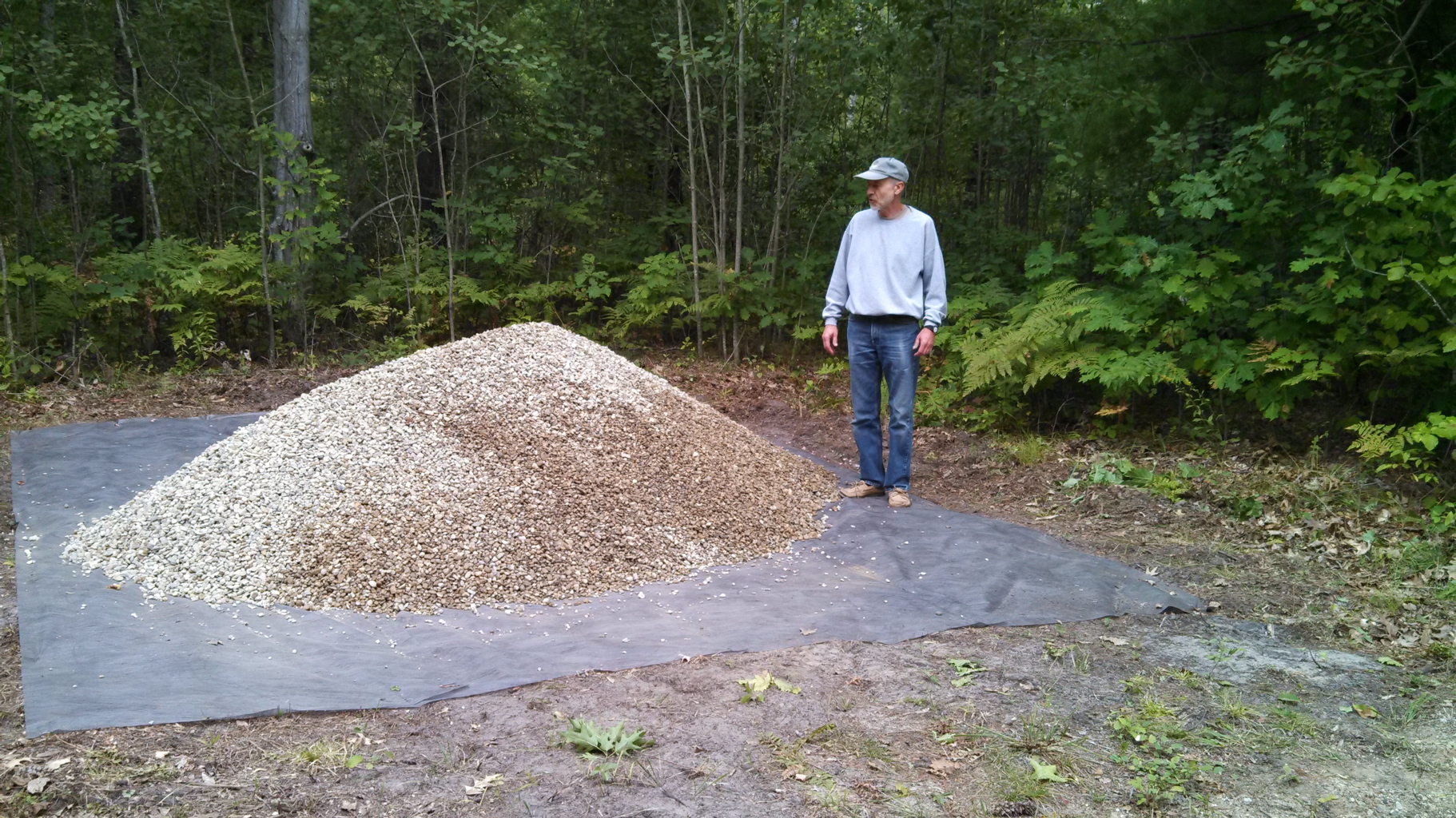
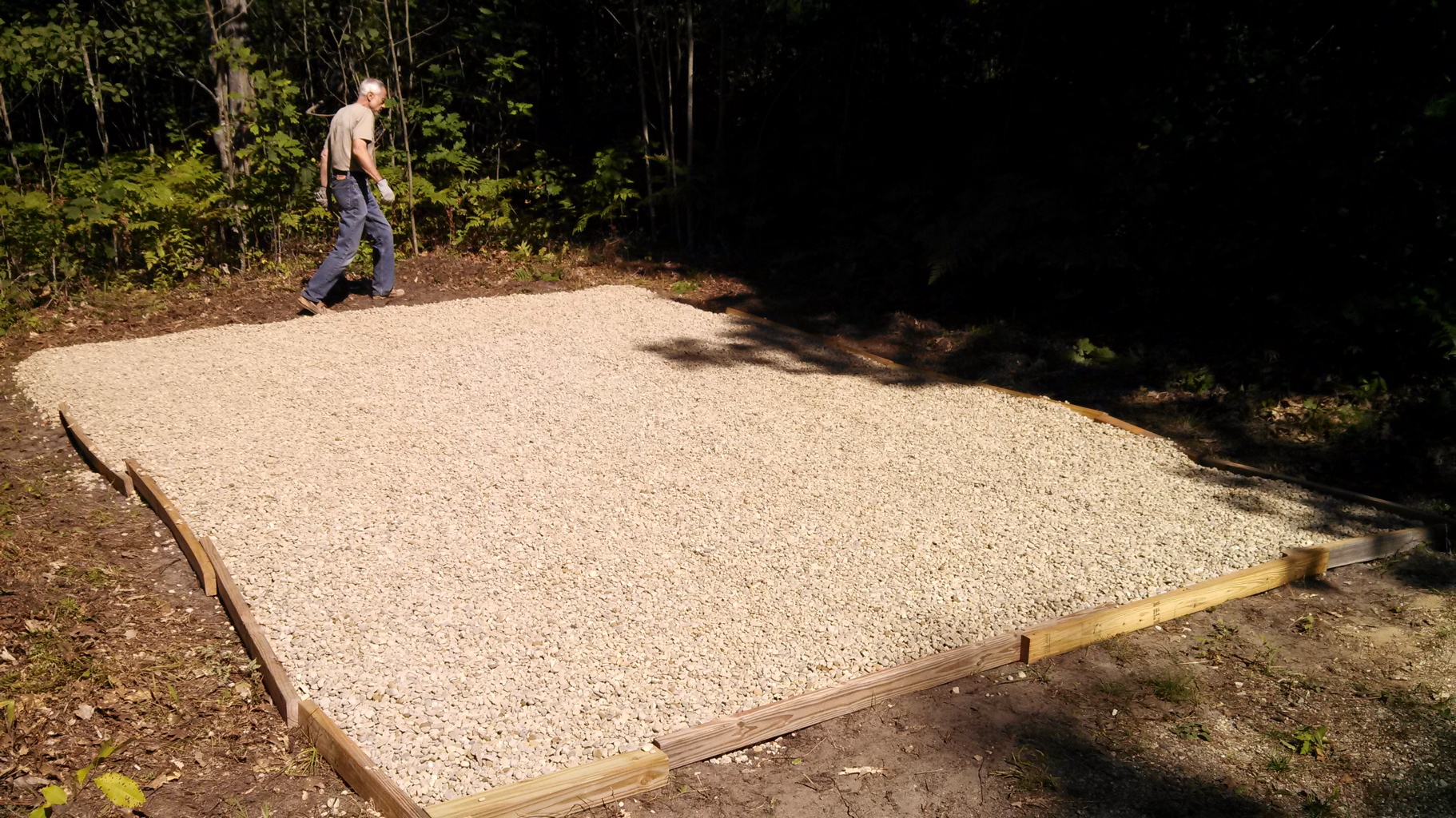
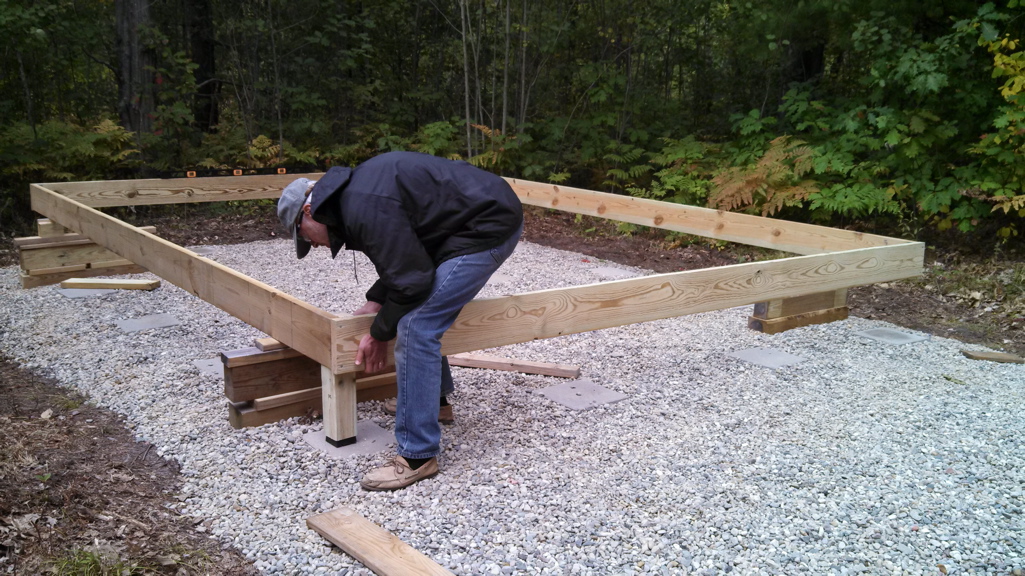
Step 1 : delivery of 3 cubic yards of small stone/pea gravel
gravel delivery_1  gravel delivery_2

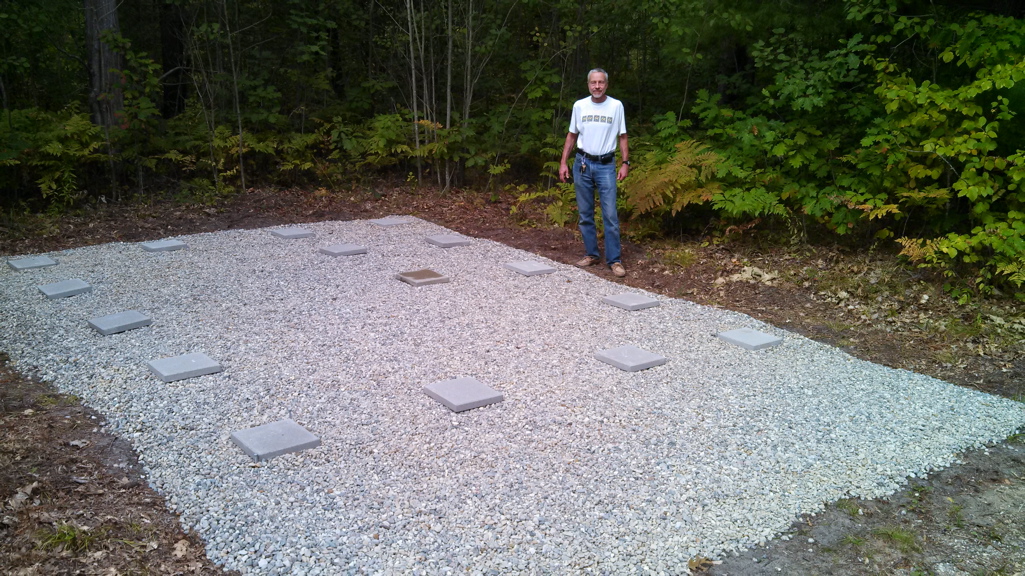
Spread 4″ deep and layout the footing supports
gravel delivery_3  footing layout

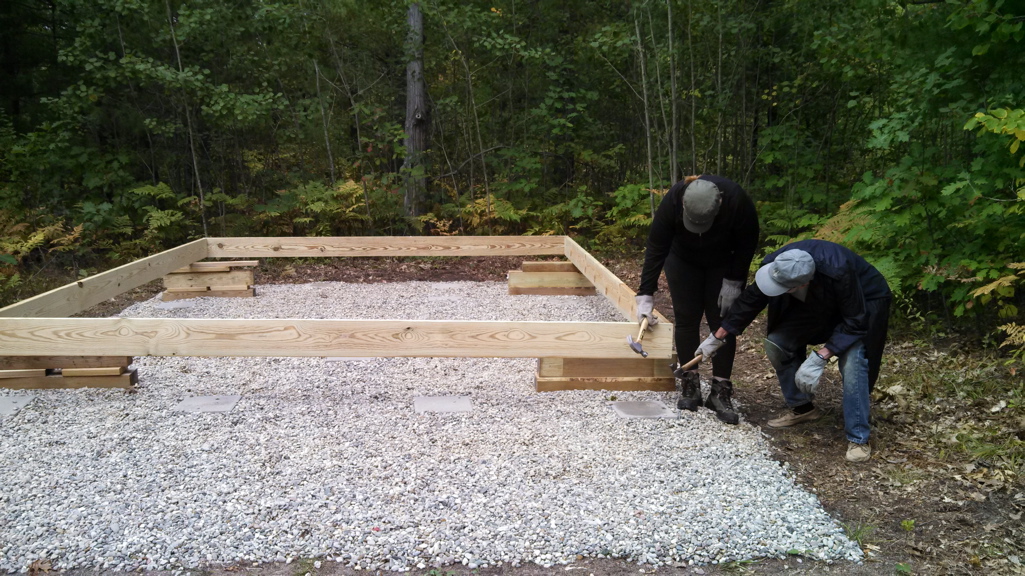
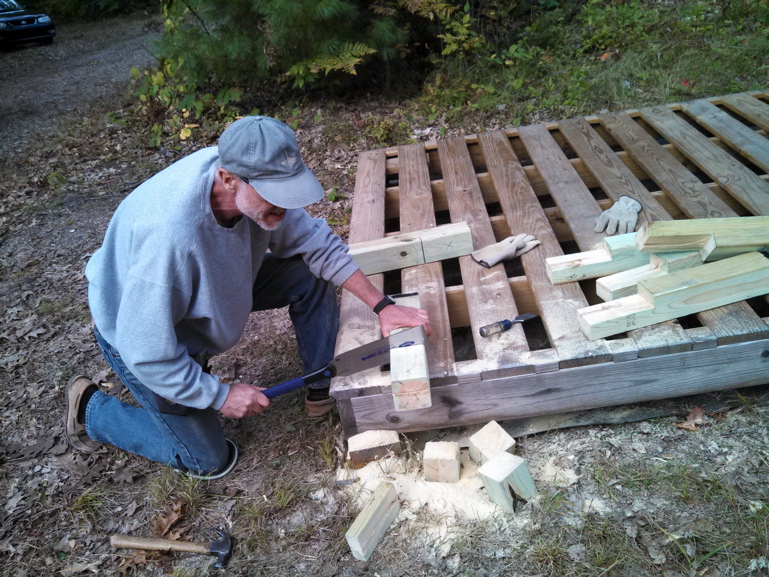
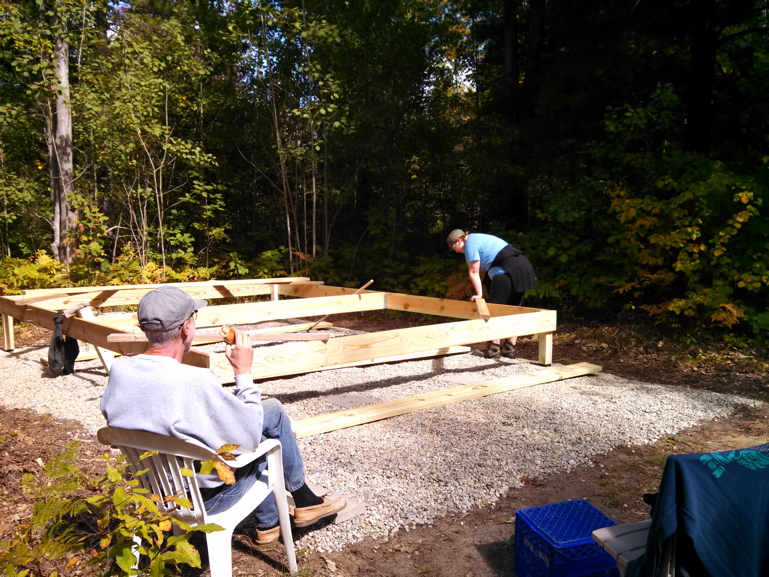
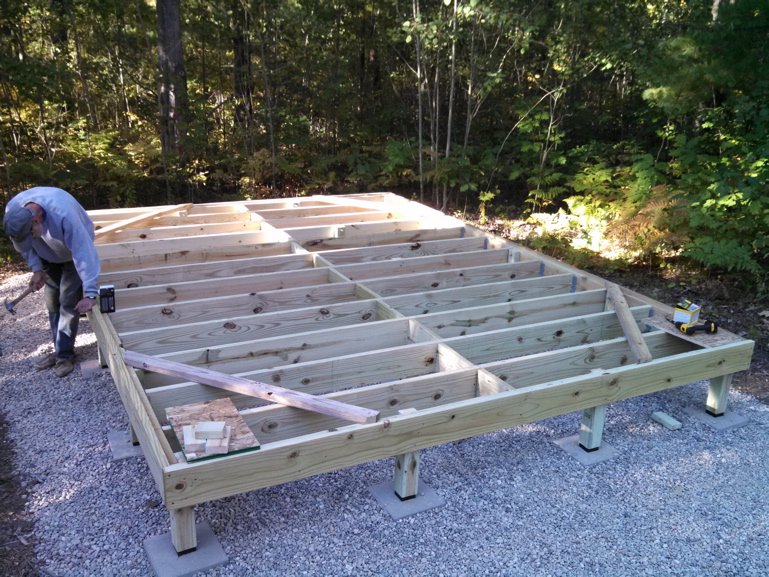
Step 2 : Laying out the frame then a LOT of ‘measure twice…. cut once’ for the 16 supporting legs and 11 floor joists!  With the help of our daughter Andrea (an amazing woodworker in her own right!) we set to work….
frame   cutting footing  footings  why you have children

…and 3 days later we had the base completed.
floor joists_outer frame

In mid October I got the phone call that my order was ready = on to the next step!

Posted by: bschutzgruber | November 10, 2013

Riverbend – rustic beginnings

Working out of my house is a good news/bad news sort of thing.  The good news… I don’t have to pay extra rent for studio space.  The bad news… it’s not always easy to shut out the distractions of everyday life.

(2008)
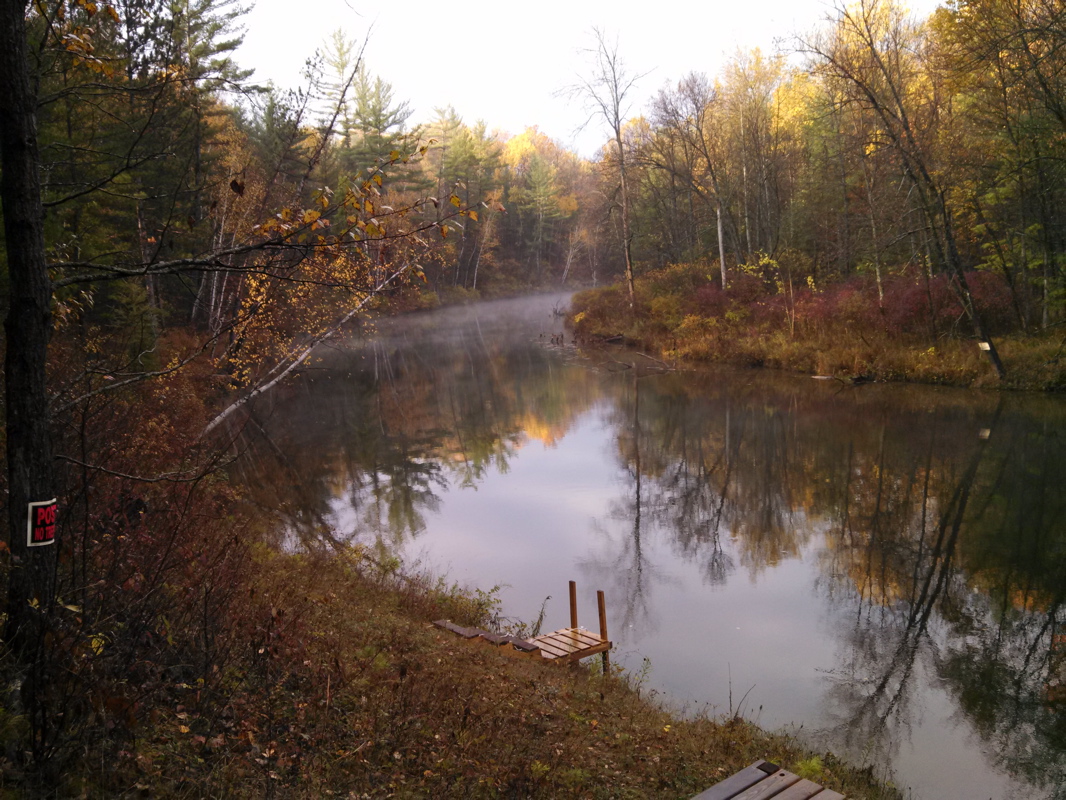
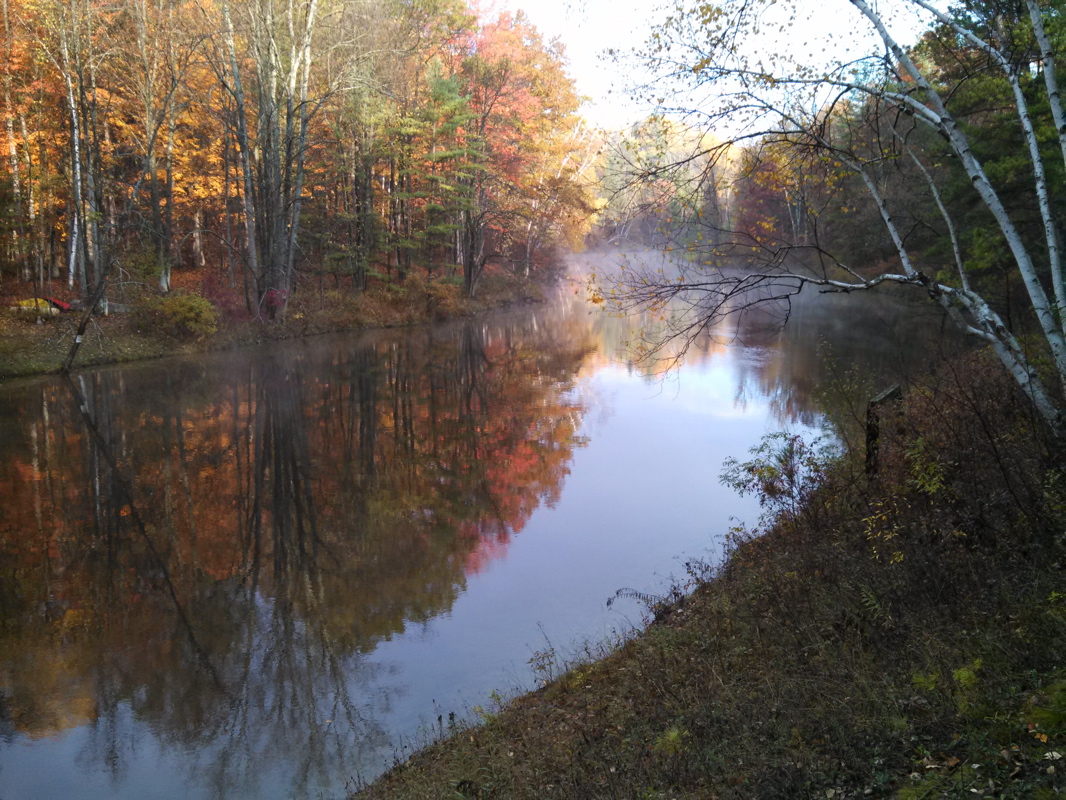
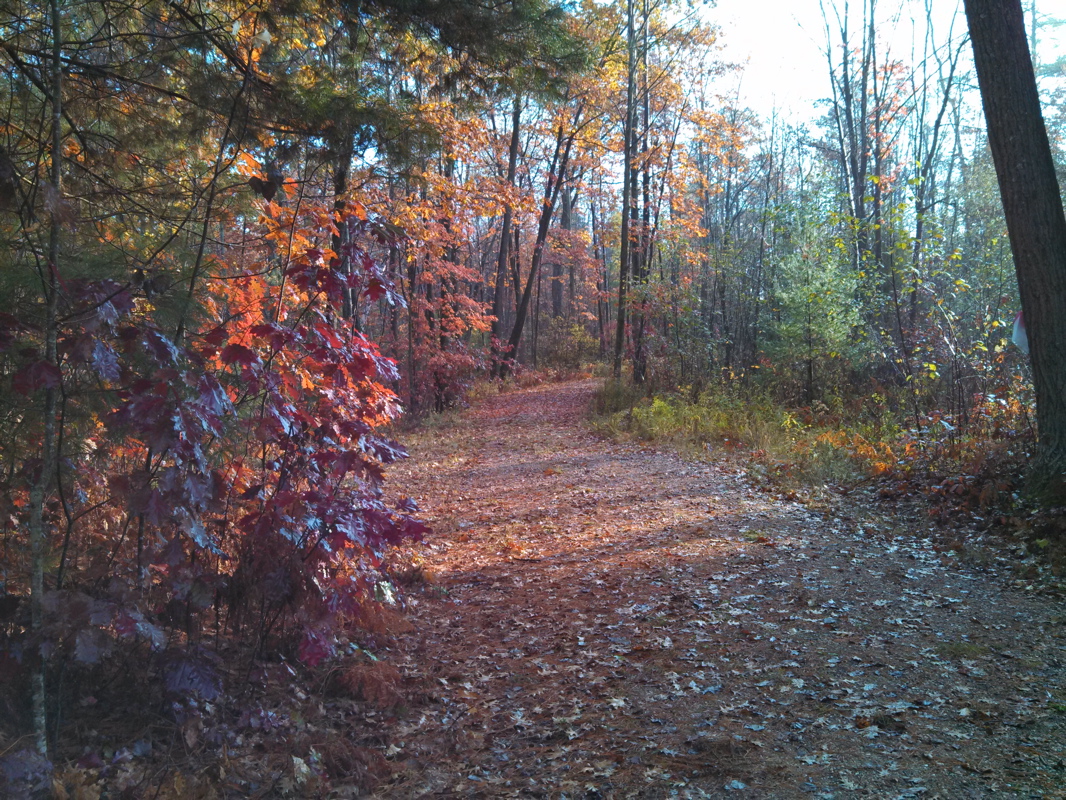
5 years ago this month, I was able to purchase 5 acres of beautiful undeveloped central Michigan woodland on the Tittabawassee River.  This was my chance to have a place away from distractions – where I could go to be inspired, to rejuvenate and recharge the ‘creative batteries’.

Library - 5881

Library - 5882 Library - 5883

Now when I say undeveloped…. I mean undeveloped.  Nothing there but the trees, river, wetlands, and all the critters (large & small) that go with it.  My dream of having a ‘retreat from the world studio space’ was not going to happen over night!

Year 1 (2009)
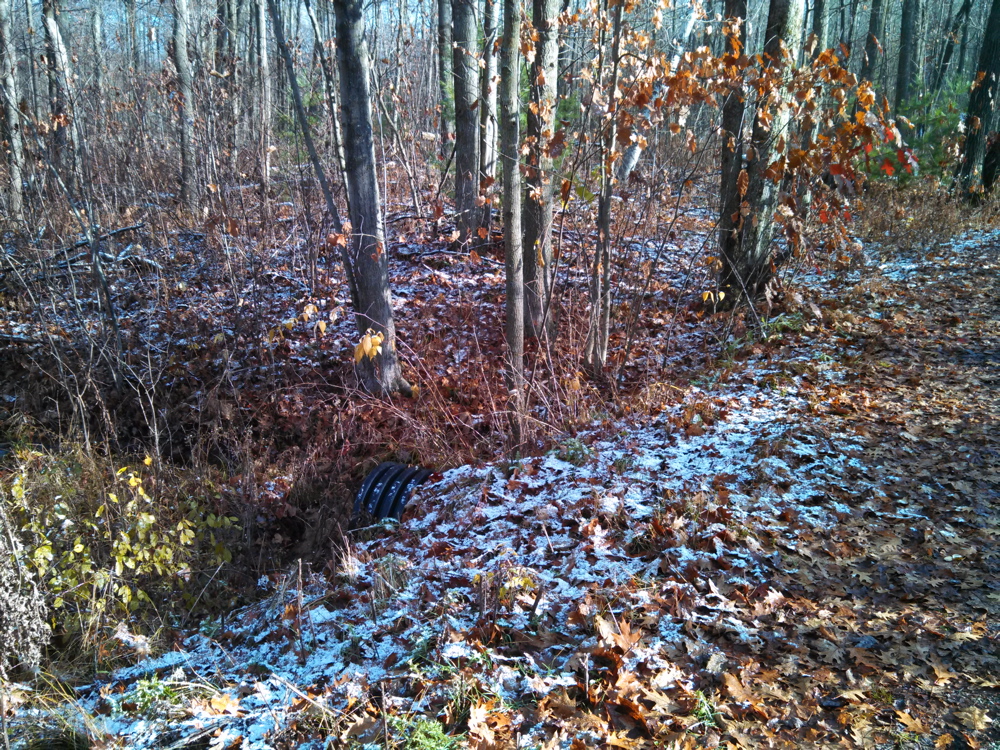
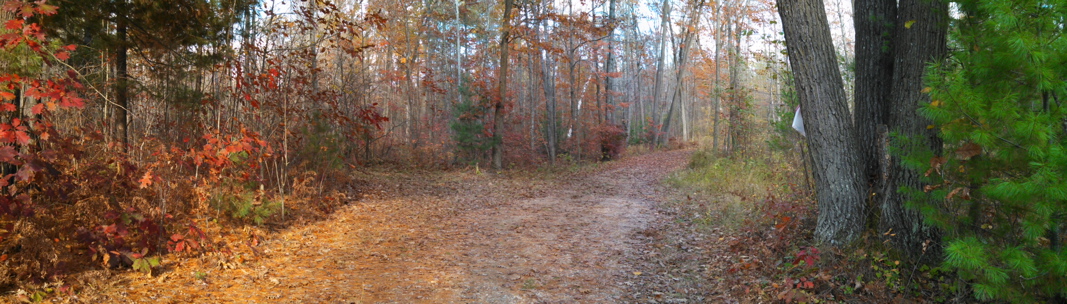
Putting in a 700 ft lane to get from the main road back to the ridge that over looks the river meant crossing the protected wetlands in the middle of the acreage and involved working with the Michigan Department of Environmental Quality.  It took nearly 700 cubic yards of sand and gravel to build up the road and 3 culverts (1 of which is 2ft in diameter!) to keep the natural drainage of the wetlands.
Library - 5884

Year 2 (2010)
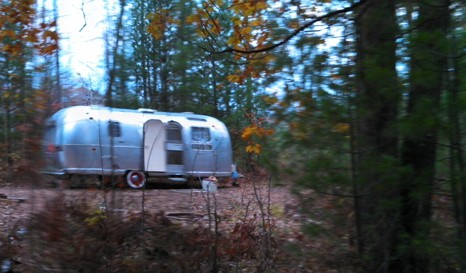
I purchased a 1970 Airstream trailer to have a living space that is a step up from rustic tent camping.
airstream2

Years 3 & 4 (2011-2012)
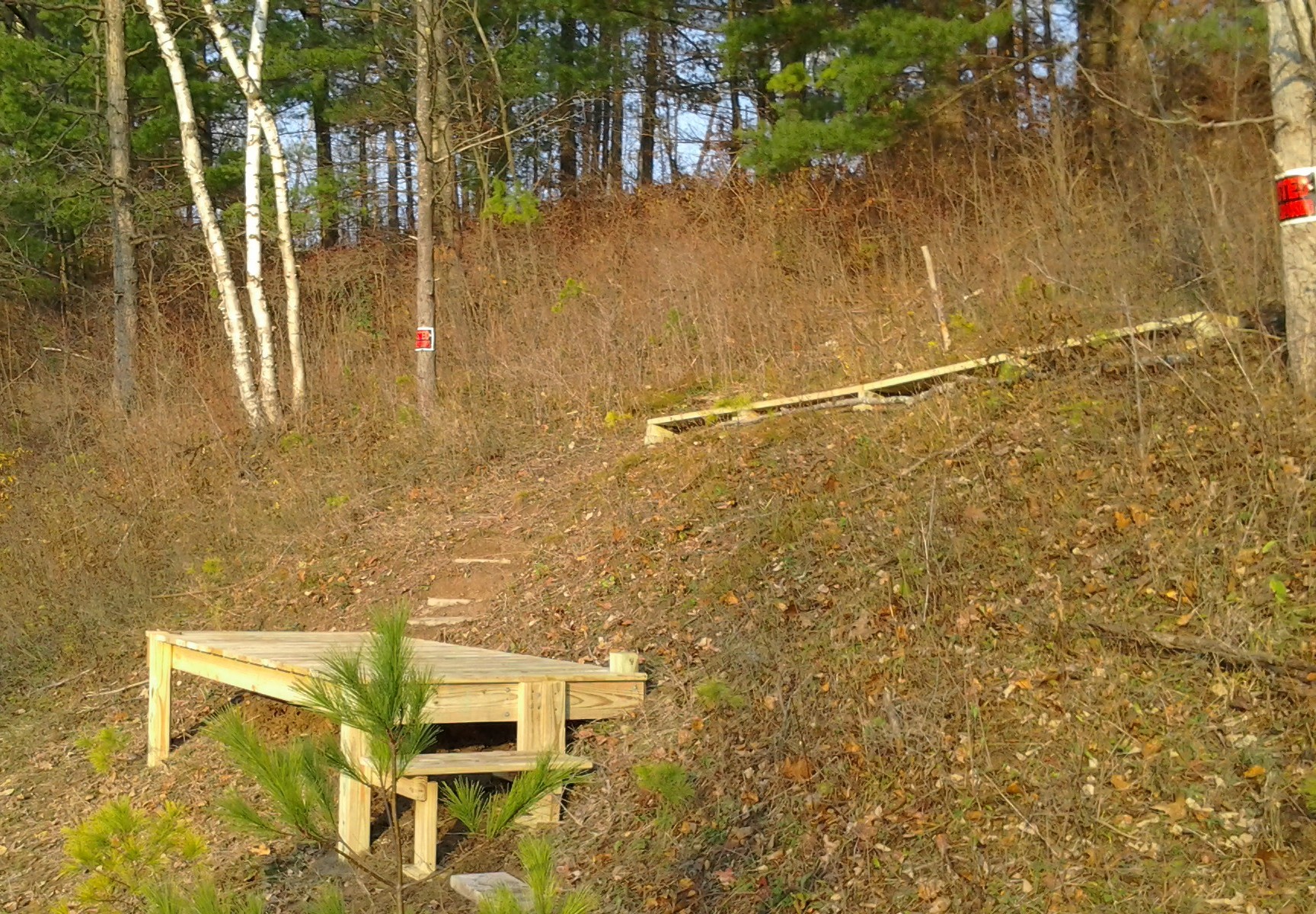
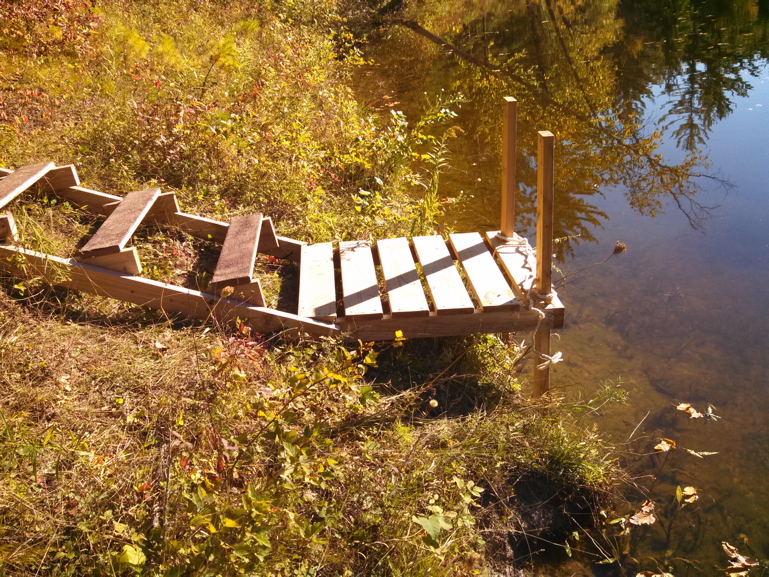
Improved the path down the steep ridge to the river, built a small deck for sitting and dock.

river deck and boardwalk  dock

Year 5 (2013)
Every time I go up to Riverbend I am filled with a sense of peace and tranquility.

Library - 5892

Library - 5885  Library - 5889

Deer, raccoons, porcupines, garter snakes, geese, grouse, and turkeys are just a few of the critters that stop by on a regular basis.  Staying in the Airstream works OK for kitchen and common space but it’s a pain to keep pulling out the couch for sleeping, there’s no space for a travel loom, and more importantly… the plumbing is shot.  Building a ‘real’ house with electricity, a well, and a septic field is not in my future financially but luckily, I am married to an engineer who is fascinated with the challenge of building a small studio space ‘off the grid and environmentally sound & sustainable’.

And so the next phase of this adventure begins…..

Posted by: bschutzgruber | September 10, 2013

Weaving in Wales – Summer school comes to an end….

As we packed up our weaving, tools and looms we paused to give a big THANK YOU to our instructor, Alastair Duncan.  For 7 days he encouraged us as we honed new skills…..
classroom_7

challenged us to push our art…..
classroom_6

help us work through the ‘bumps in the road’ that come with every project…..
classroom_4

and was completely taken aback when he opened our Farewell & Thank You gift…..2_Alastair opening bobbins  3_Alastair holding up bobbins
2 beautiful wood bobbins with brass tips!

The final event of the week is the Gala Dinner where folks ‘clean up pretty darn good’!
dinner_1
Andrew Johnson – 2013 Summer School Coordinator

The Certificates of Achievement and Diploma in Advanced Textile Studies awards are presented.  The purpose of the COA is to preserve and improve craftsmanship in hand-weaving, tapestry weaving, spinning, natural dyeing and synthetic dyeing and to promote education in such craftsmanship.

Certificate of Achievement_2     Certificate of Achievement_1

It was a fabulous ending to a fantastic week spent with phenomenal fiber folks!
(L-R)  Alison Coates, Jane Kirby, Andrea Cross, Alastair Duncan, Chris Cundiff, Elizabeth Hancock, Rita Corbett, Barbara Wright, Heather Dean, Sandra Combes, Sally Bohling.

dinner_2 dinner_3

The next AWSD Summer School will be in 2015 – in the Midlands of England.
I’ve started saving up….

« Newer Posts - Older Posts »

Categories

Barbara Schutzgruber - Storyteller & Weaver

Every weaving tells a story.......

handwovenharmony

adventures in fiber

A Little Cloth

a little stitching, weaving, writing & hiking

StillWalks

Bringing the outside in

Fairy Tale Lobby

a dialogue for storytellers and story lovers

BUSY BRUSH CAFE

a self-taught artist discusses acrylic painting, photoshop and the creative process.

MaryGwyn's Art

Artist | RN | Art Educator

Barb-e Designs

Follow me as I weave along the way