
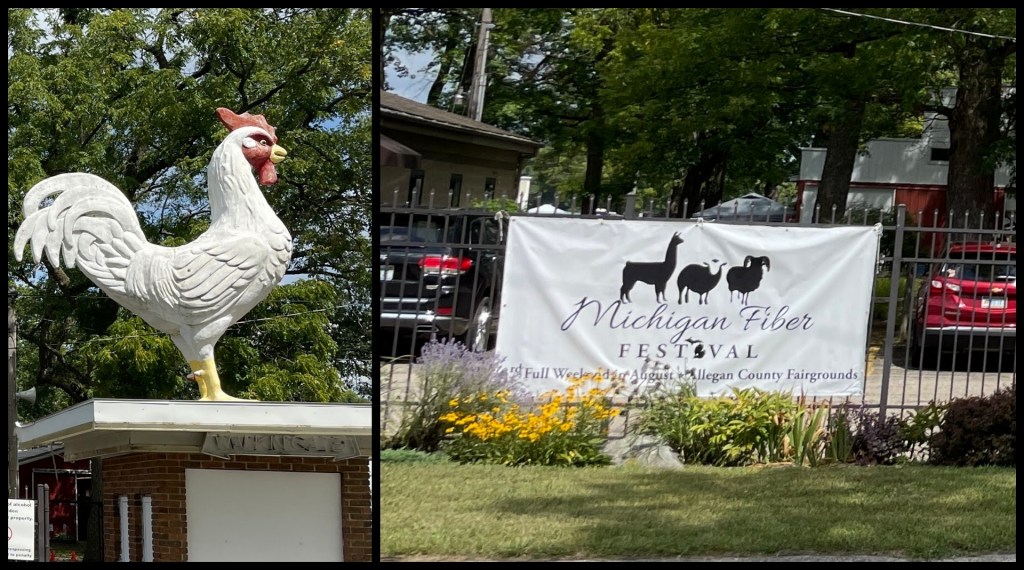
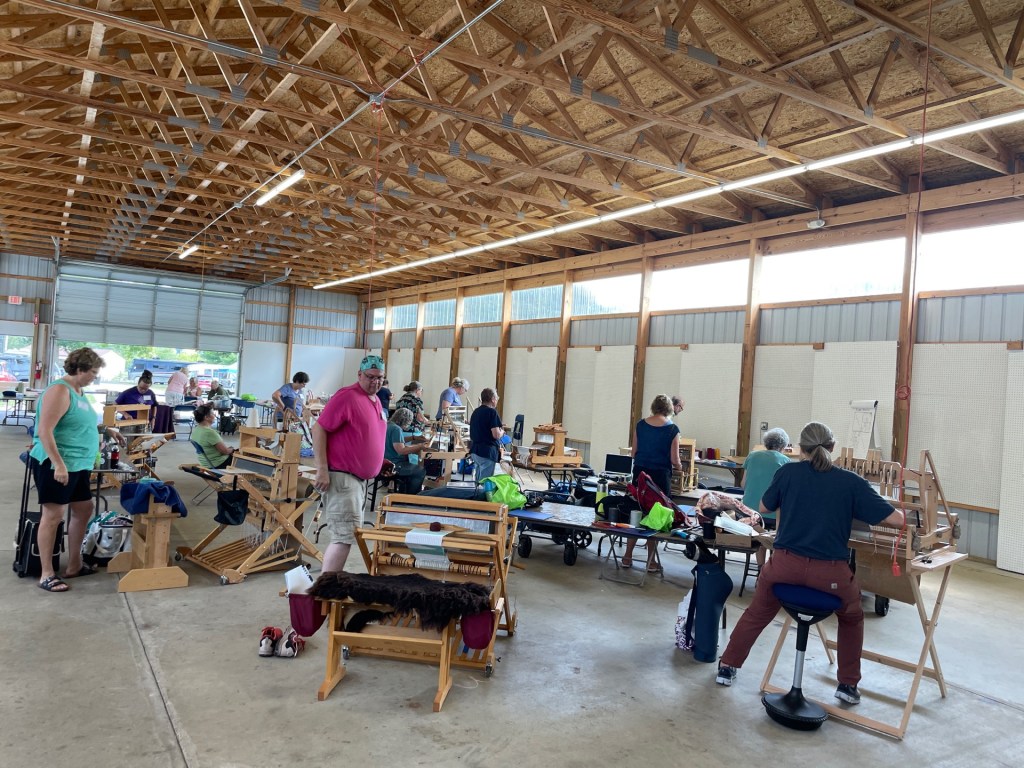
The Michigan Fiber Festival happens Wednesday through Sunday the third full weekend in August every year at the Allegan County Fair Grounds. My first year going was back in 1998 and I have attended on and off ever since. [see blogs September 2022 Summer Comes to an end – August 2018 Big Looms…Little Looms…and a bit of color – August 2016 City Mouse…. Country Mouse…. part 2] This is a fabulous gathering of fiber artists and offers up a feast of creativity and inspiration. This year I registered for 3 all day workshops and 2 mini workshops featuring new as well as familiar techniques.
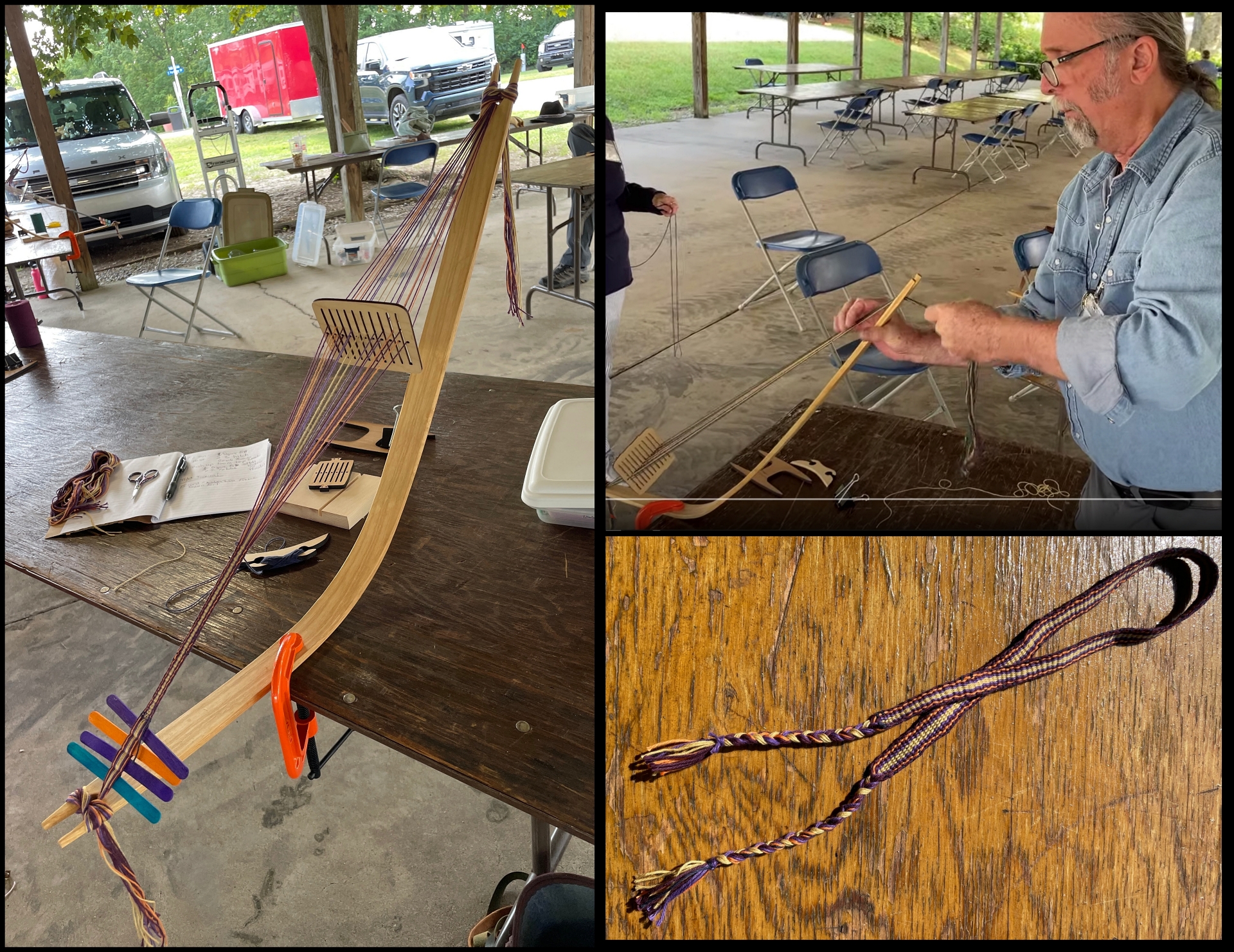
Wednesday – Using the Mediaeval Bow Loom with Roman Pompeii Rigid Heddle with Robin Goatey.
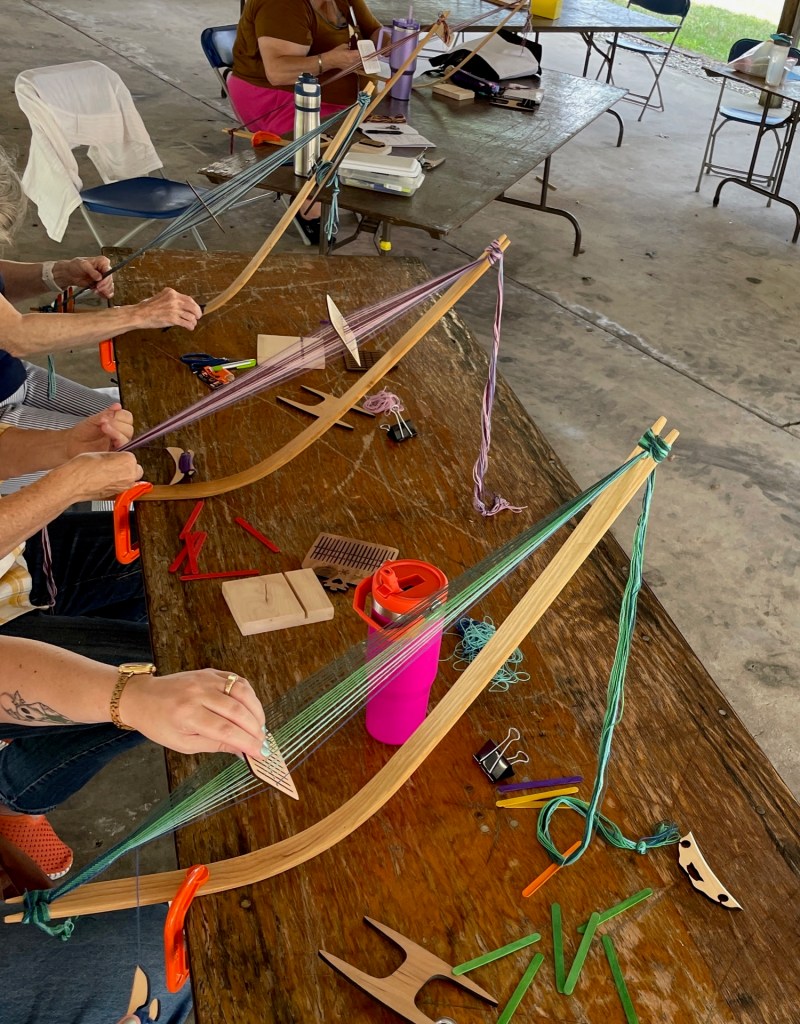
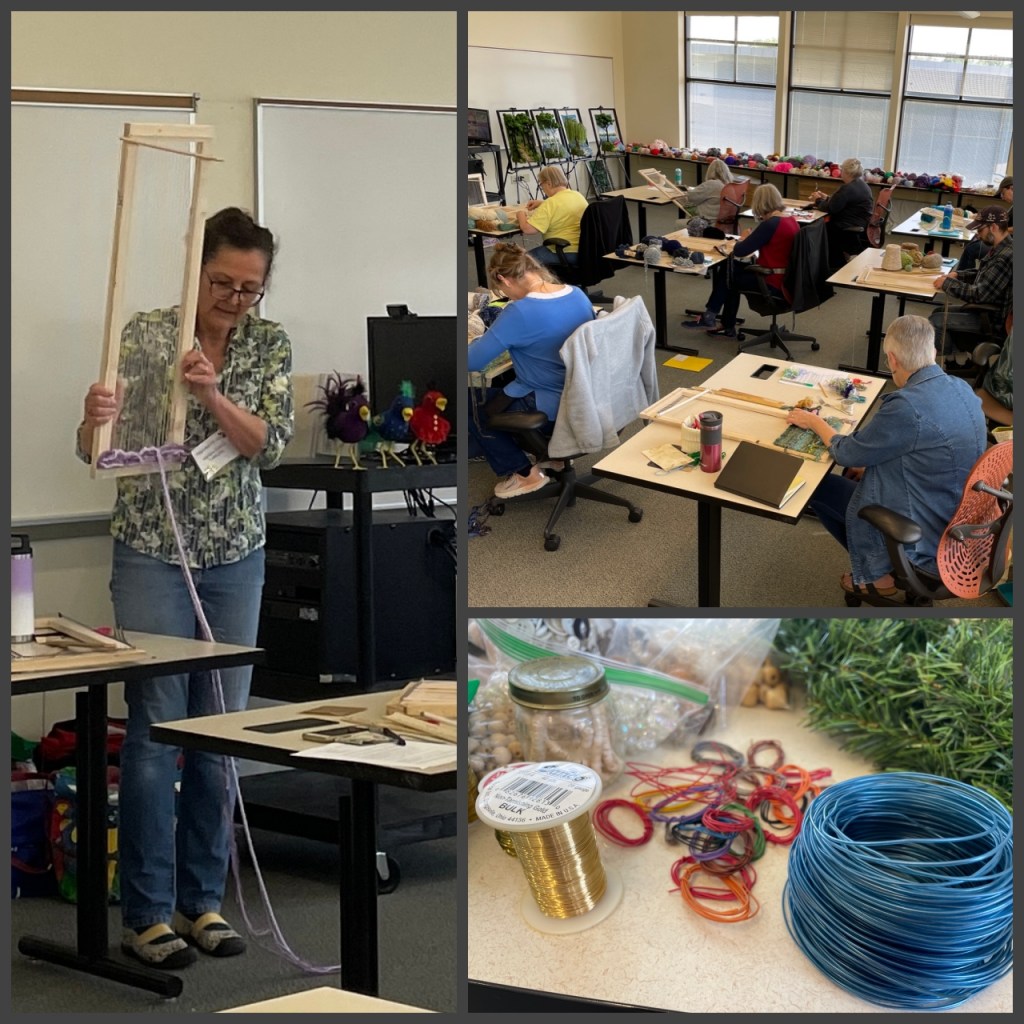
The Mediaeval Bow Loom and Small Scandinavian Rigid Heddle have been used to make small Bands or Tapes for repairing everything. The Small Heddles were used during Roman Times, 2000 years ago. We will Warp a small 21 thread heddle, then tie onto the single beam bow and start weaving a simple band.
I did narrow band weaving in 2015 with Susan Faulkes in the UK [see September 2015 blog On the Road and Across the Sea] but have not done much since then. In 2022 I took Robin’s workshop Appalachian Hearth Broom (Besom) Making. The depth Robin’s knowledge of ancient fiber techniques is amazing and Susan has been instrumental in reintroducing the bow loom to modern weavers.
We spent the morning learning the history, measuring out our warp, threading the heddle and tying the warp onto the bow. The afternoon was spent weaving – finishing one band and starting a second. The material fee included our loom, heddle, and other tools needed to continue at home. This is a loom is a wonderful addition to the items I have on hand when giving weaving demonstrations.
~~~~~~~~~~~~~~~~~~~~~~~~~~~~~~~~~~
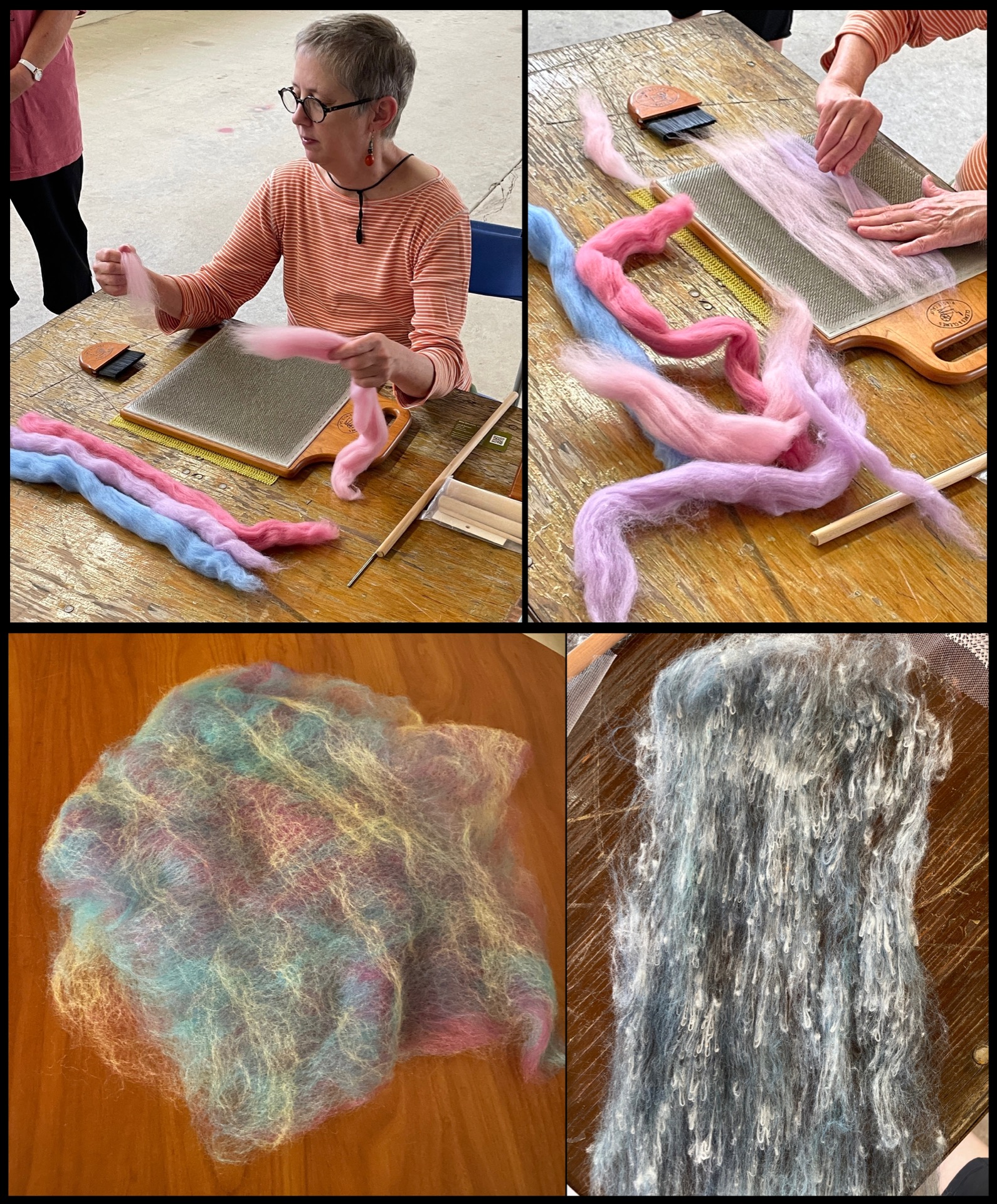
Thursday – Blending Board Basics and More with Amy Tyler
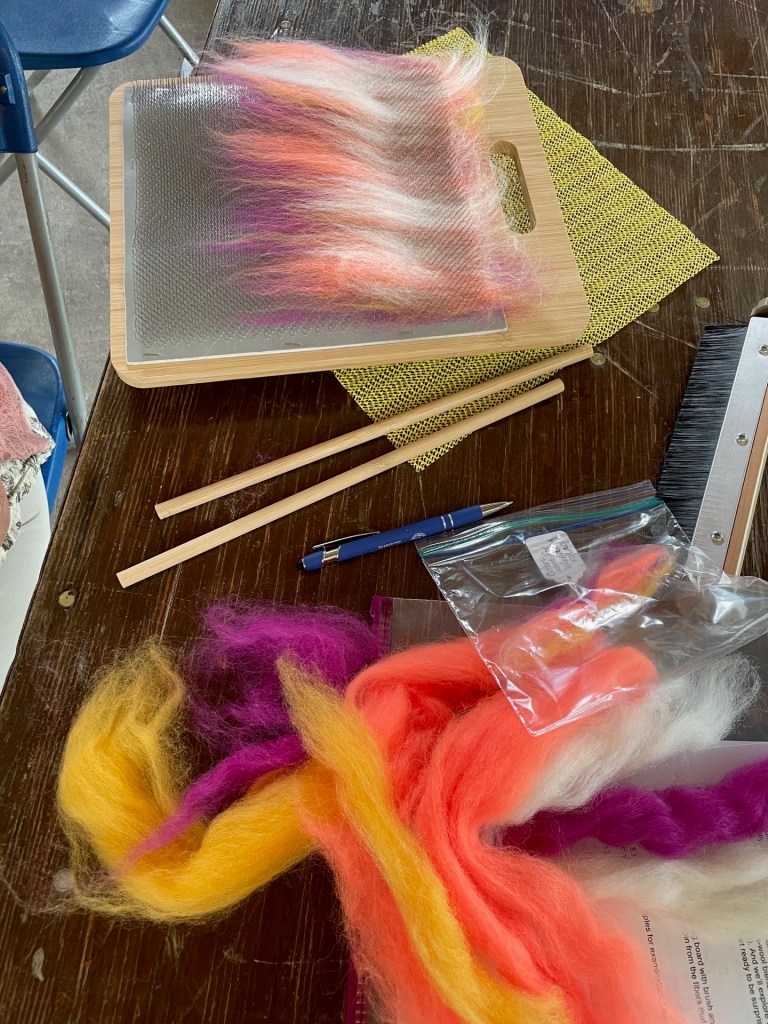
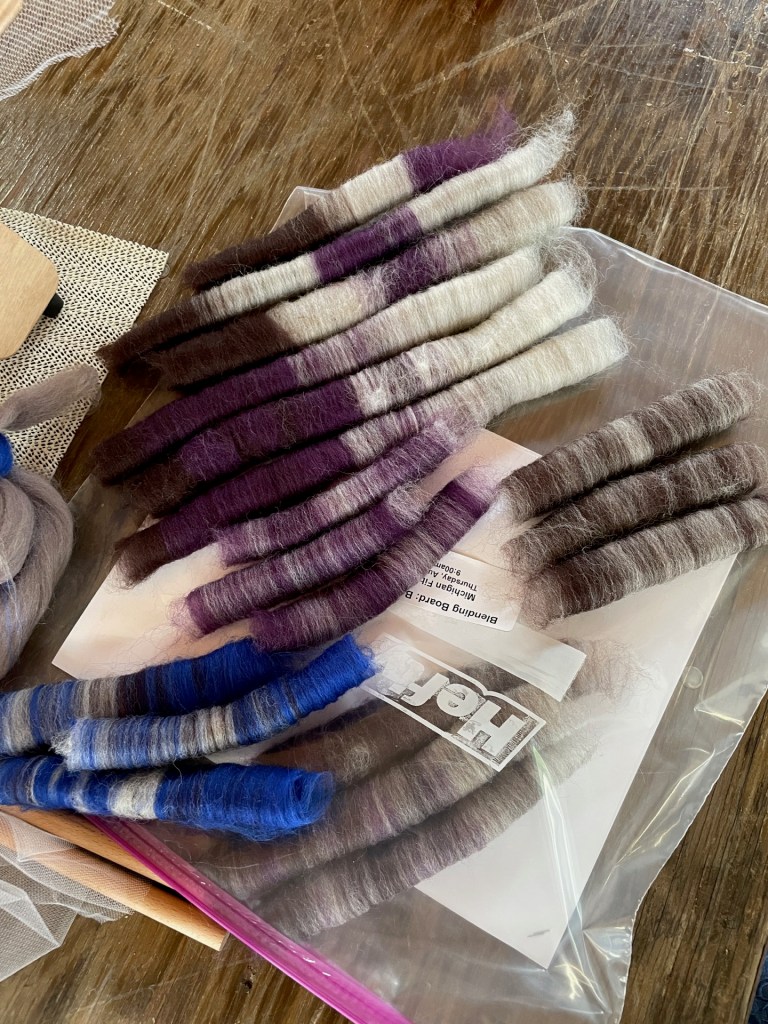
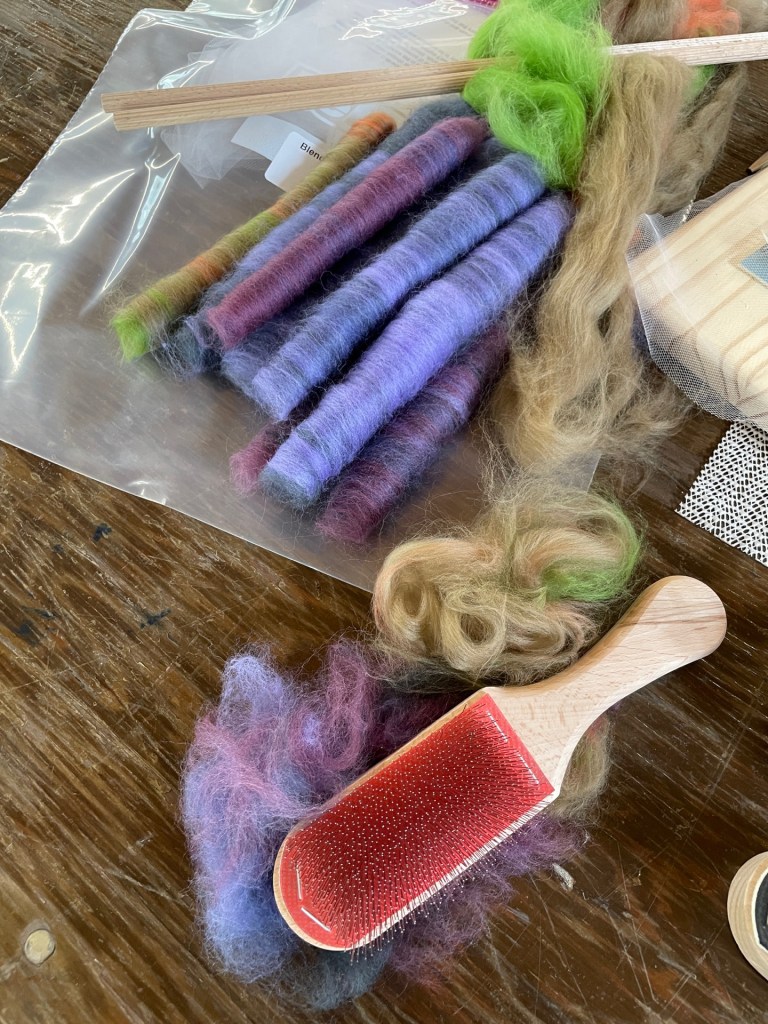
The blending board is not just a glorified hand carder or a low-tech version of a drum carder. It is a delightfully simple but incredibly versatile tool. It has obvious uses for blending already prepared fibers. We will cover blending strategies to create rolags, batts, and rovings. In addition, we will explore the use of accessory tools for the blending board. Along the way, we will make cotton-wool blends, blends for tweed yarns, and blends for garnet yarns (both subtle and extreme). And we’ll explore ways of preparing fiber “paintings” that can then be wet felted.
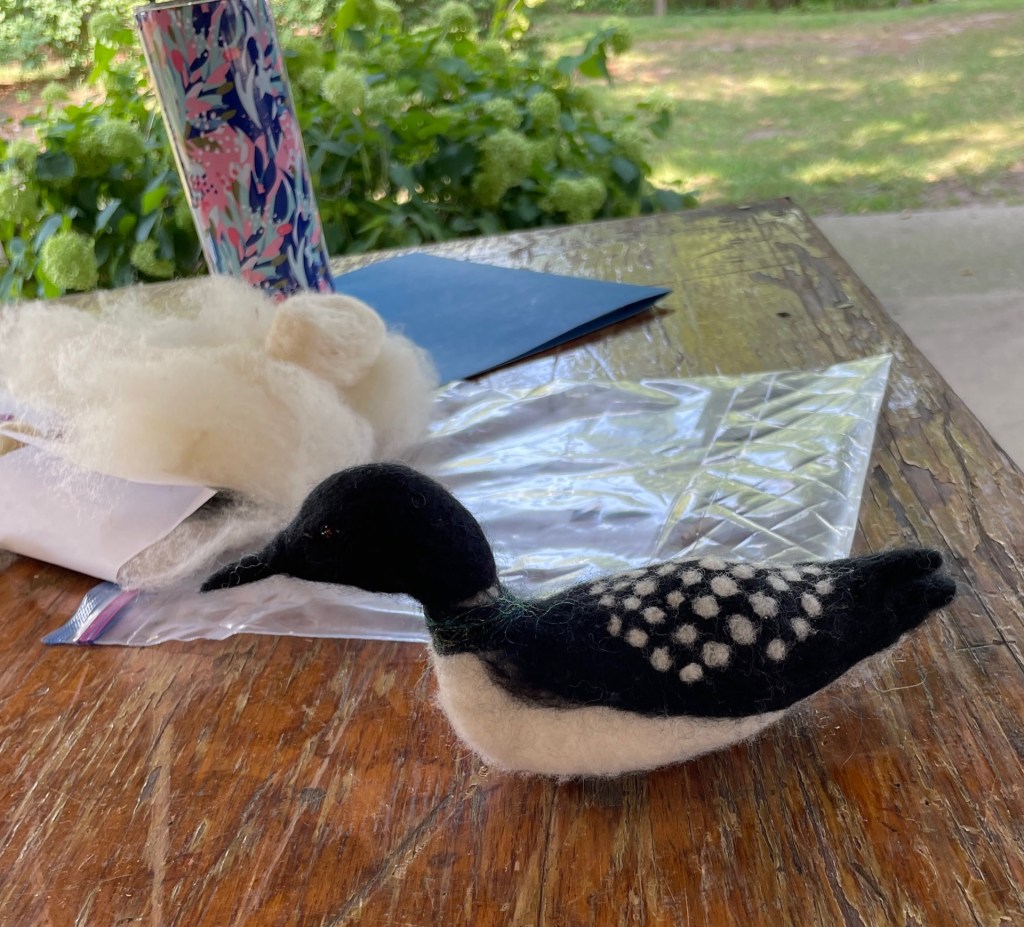
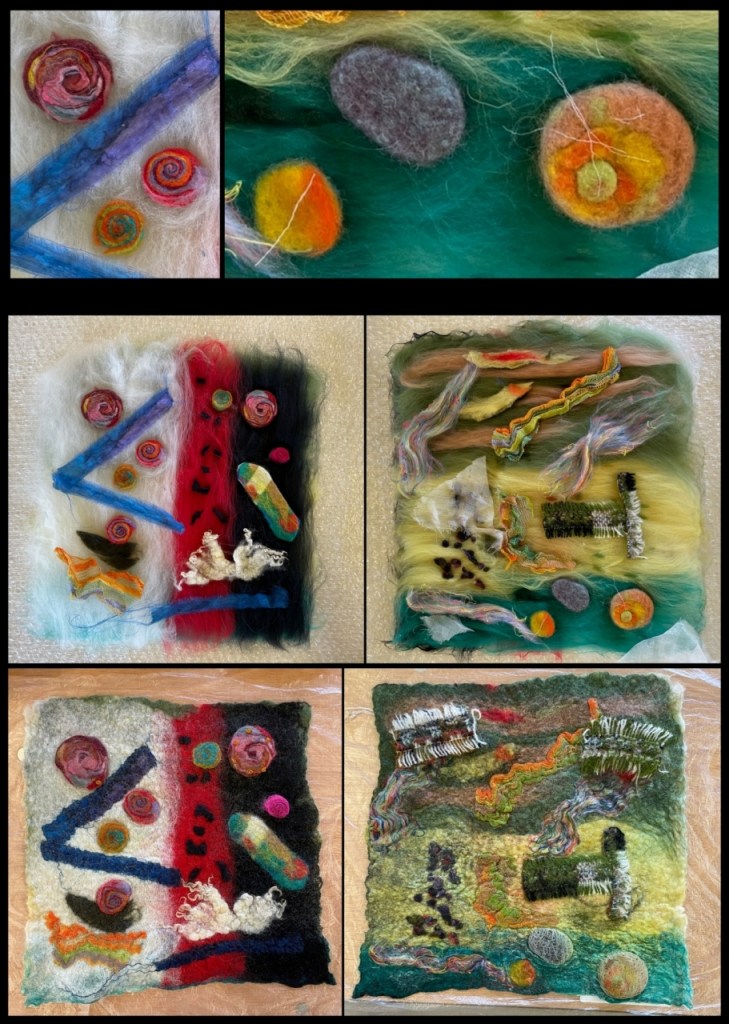
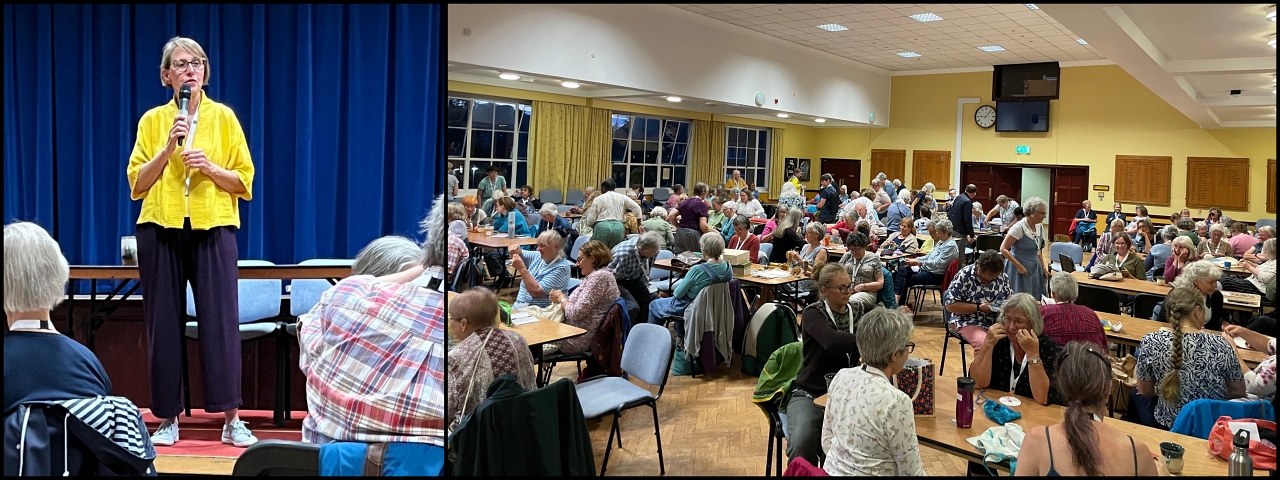
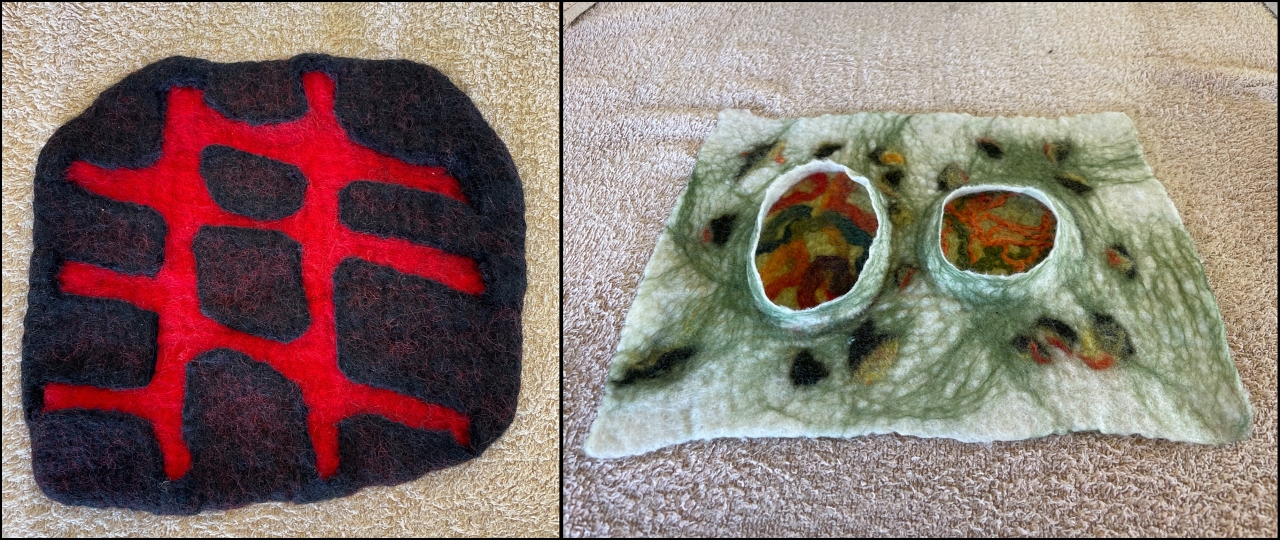
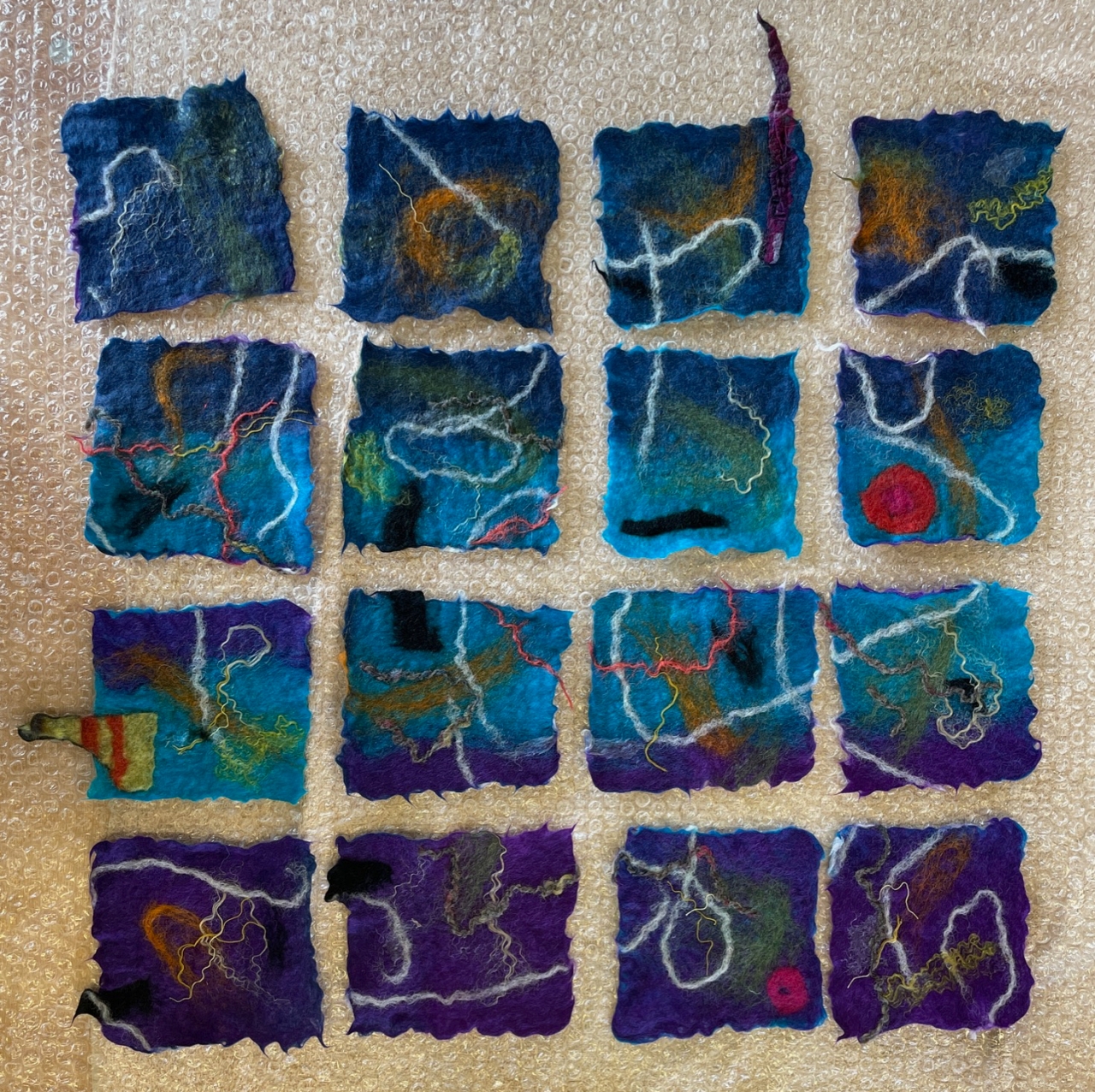
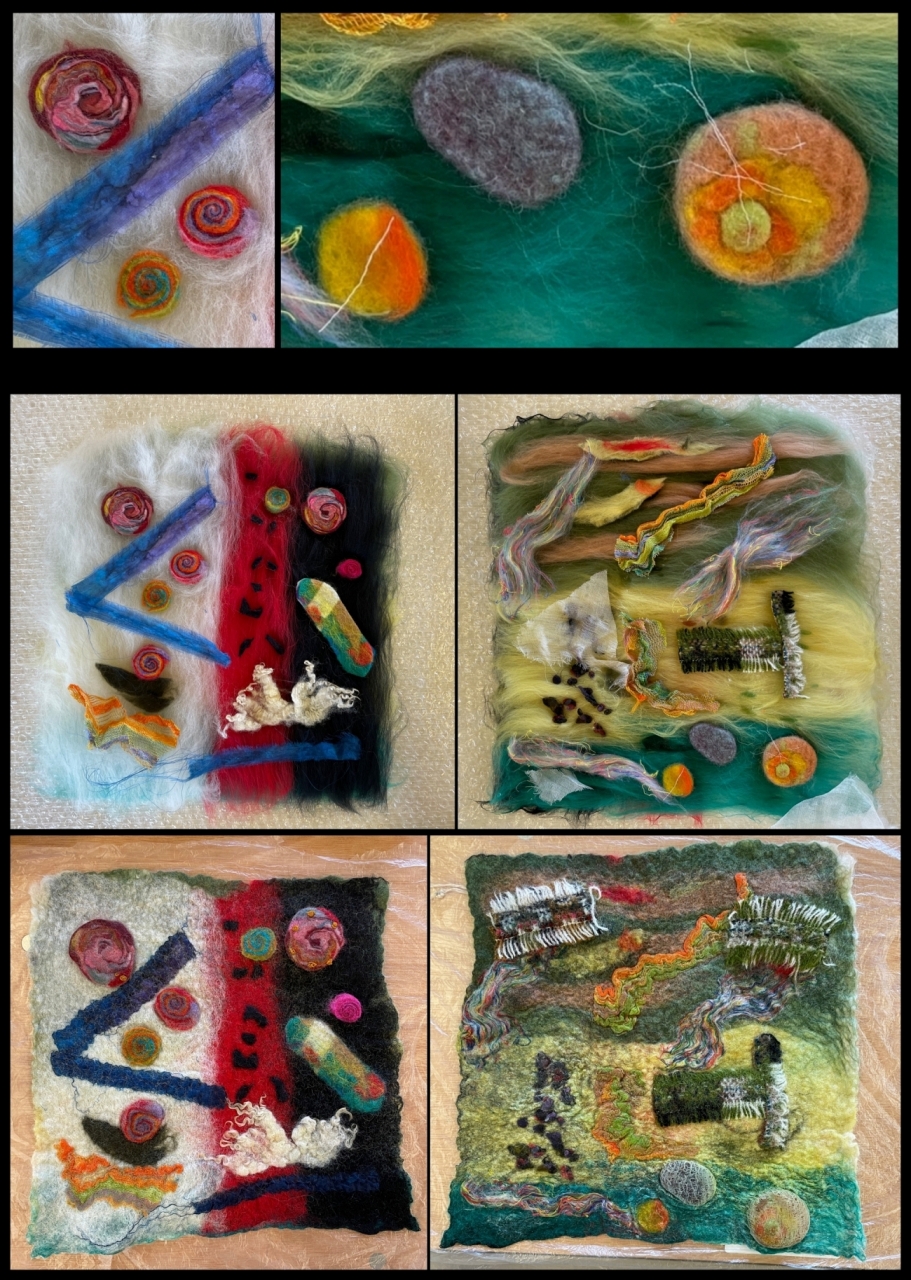
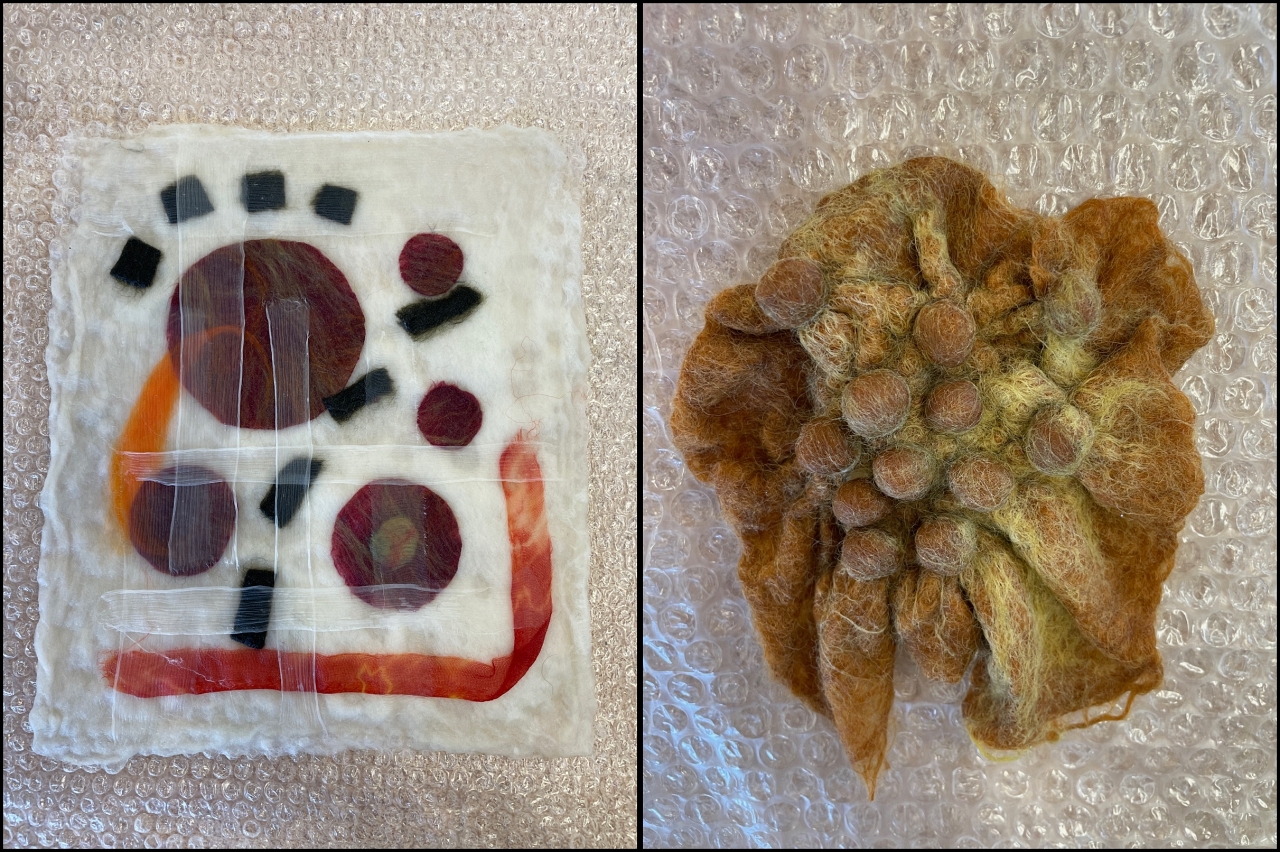
I purchased a blending board several years ago to blend different colored wool roving for felting. It is not a complicated tool but even with YouTube videos I was not able to figure out the proper technique for laying out fibers and combing them to form a suitable batt. This is when in-person workshops are so much better than YouTube or books. Having Amy there to see exactly what I was doing, give me the often subtle corrections needed and share tricks she’s learned from others and her own trial & error experiences made this one of the best workshops I’ve taken. I was the only felter in the group so rather than create rolags for spinning my focus was on creating samples that I will felt to a prefelt stage now that I’m back home. I am especially interested in seeing how the wool and cotton fiber blend will look after wet felting.
~~~~~~~~~~~~~~~~~~~~~~~~~~~~~~~~~~
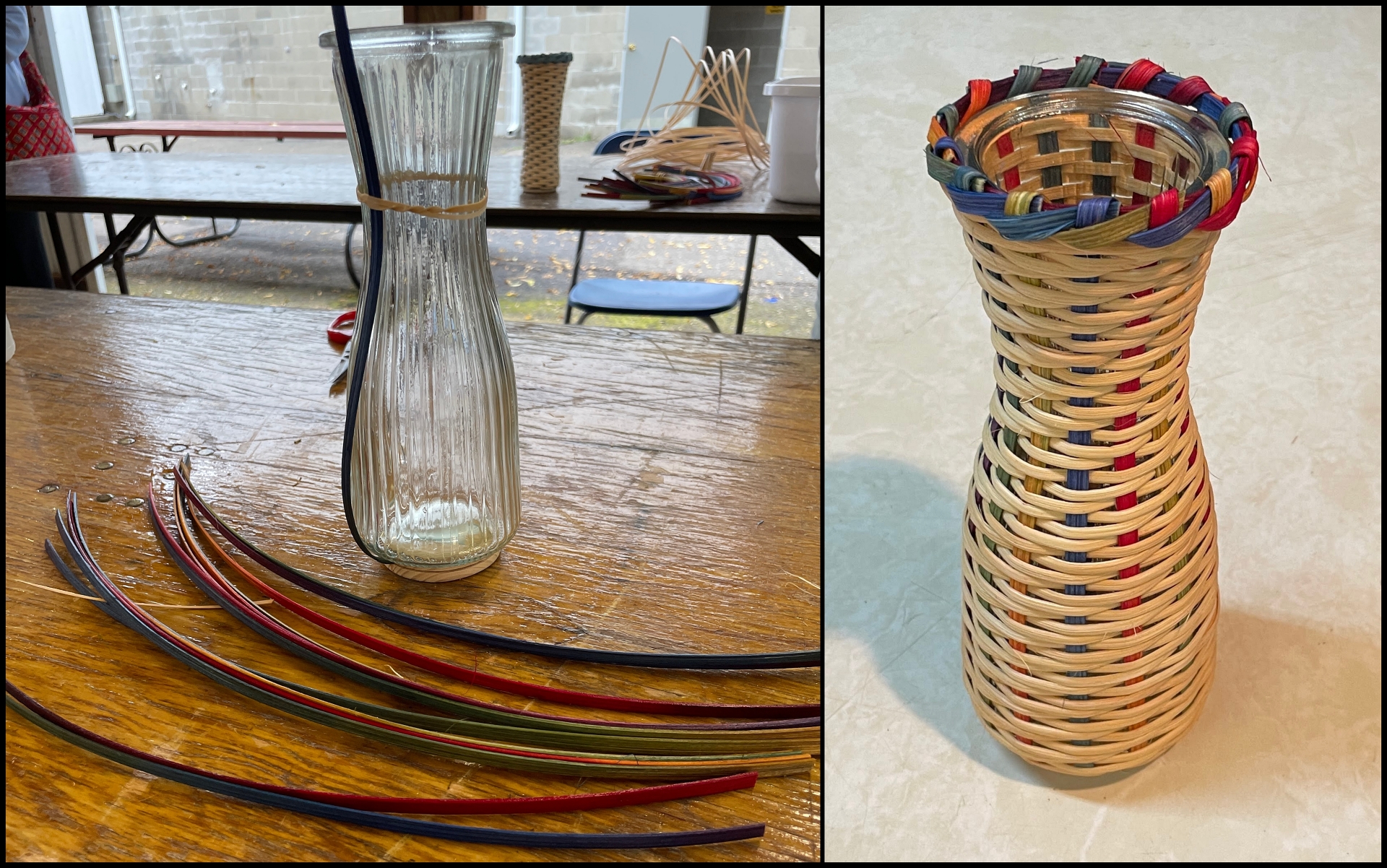
Woven Vase with Kathy McMinn
Weave a colorful twill over a glass vase that has a wood base attached for stability. This is a fun and easy project that can be completed in a few hours.
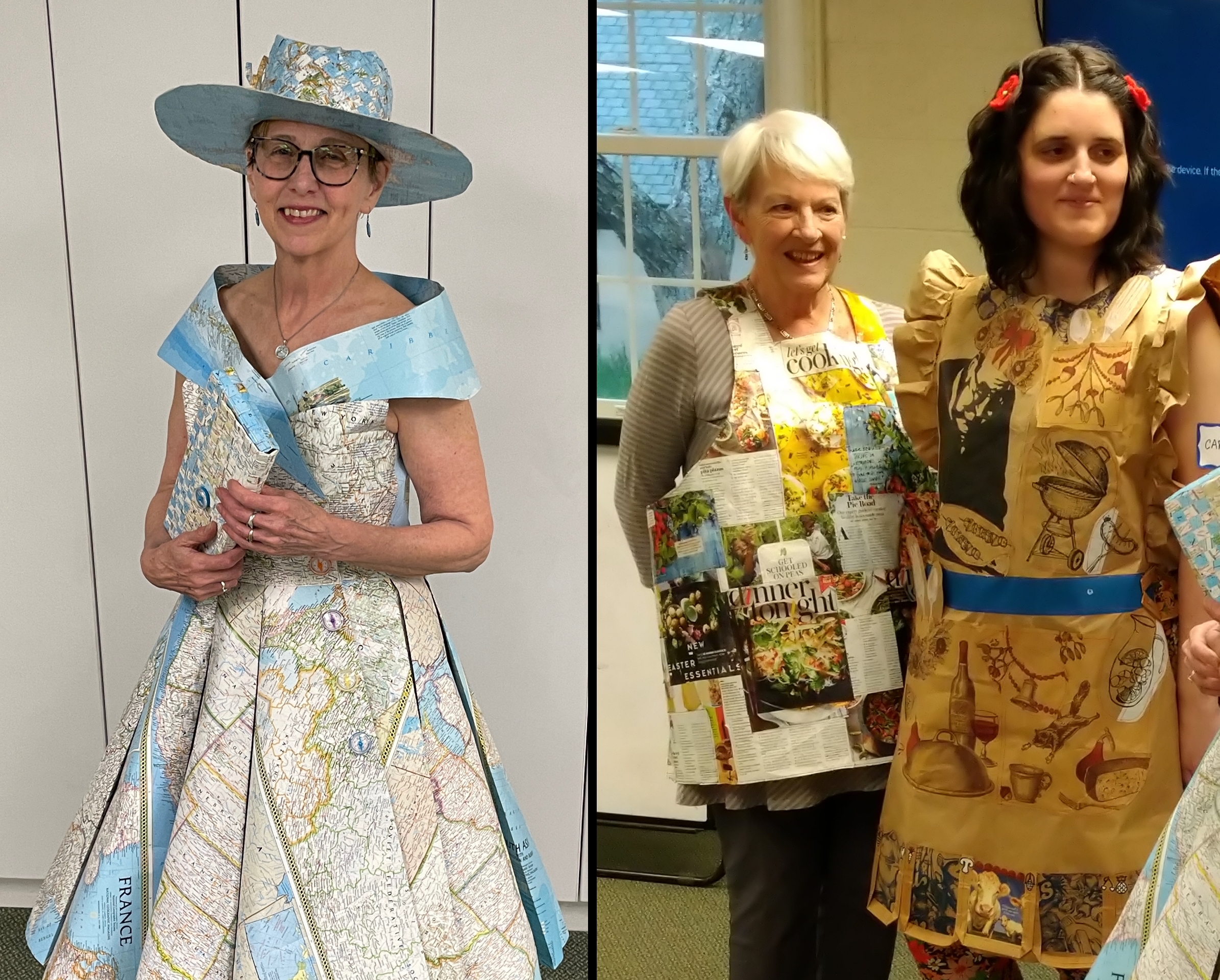
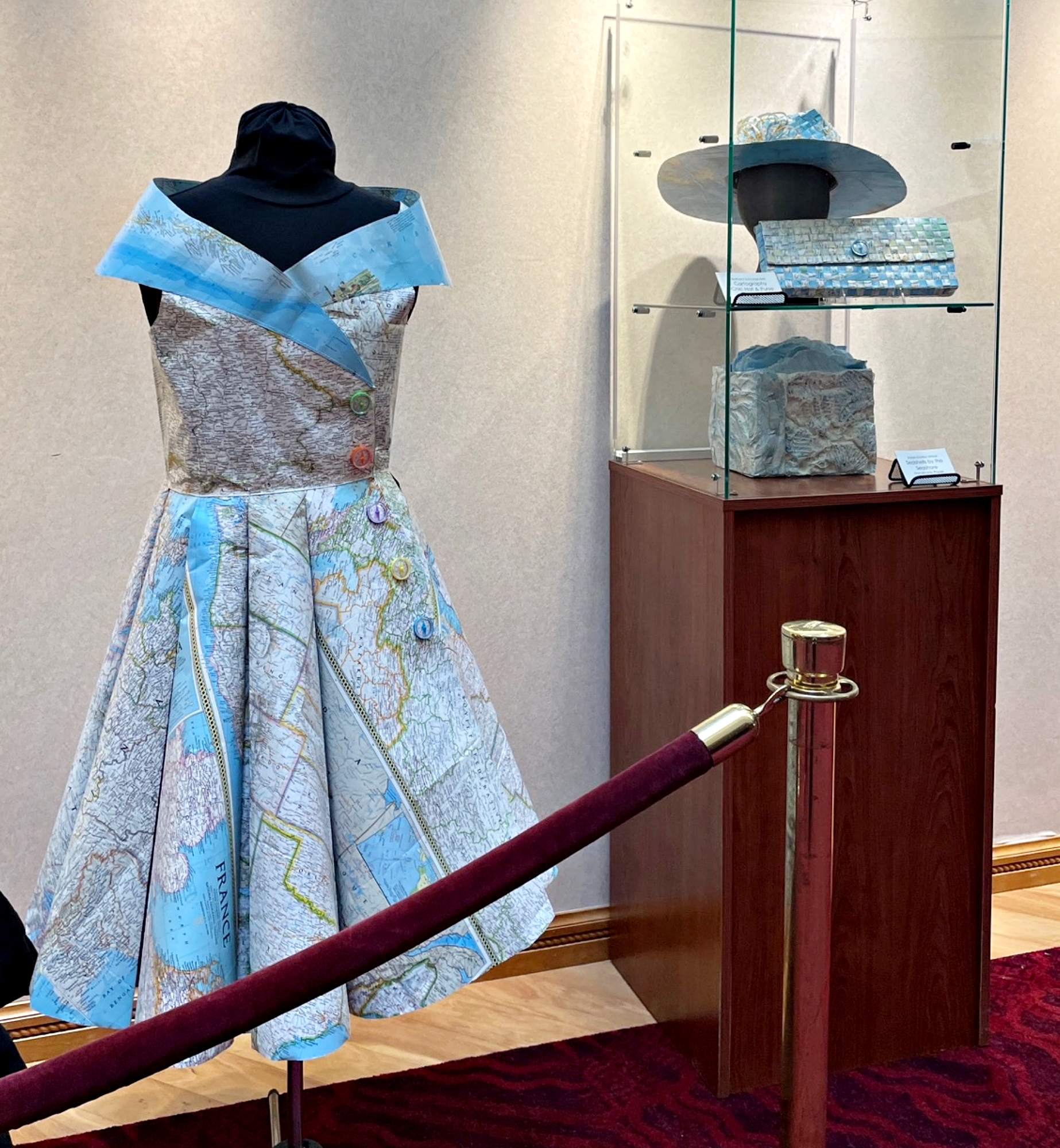
MFF has added evening mini workshops to the schedule. This is great for those who are staying over in the area or those who are not available during the weekday. I had done a lot of traditional basket weaving in the 1990’s but since then only for the occasional project using unconventional materials. [see March 2015 blog Cartography Chic; August 2017 blogs Summer School and January 2018 blog Back When the World was Flat]
A small but enthusiatic group of mixed experience from ‘never tried basket weaving before’ to my ‘it’s 20 years since I wove with reed’ made for a delightful evening weaving plain and dyed reed over a glass vase so our finished product is useable for cut flowers in water. The muscles in my hands certainly reminded me that I have not done any basket weaving in a long time!
~~~~~~~~~~~~~~~~~~~~~~~~~~~~~~~~~~~
Friday – Ecoprint on Leather Naturally & in Color with M. Teresa Brown
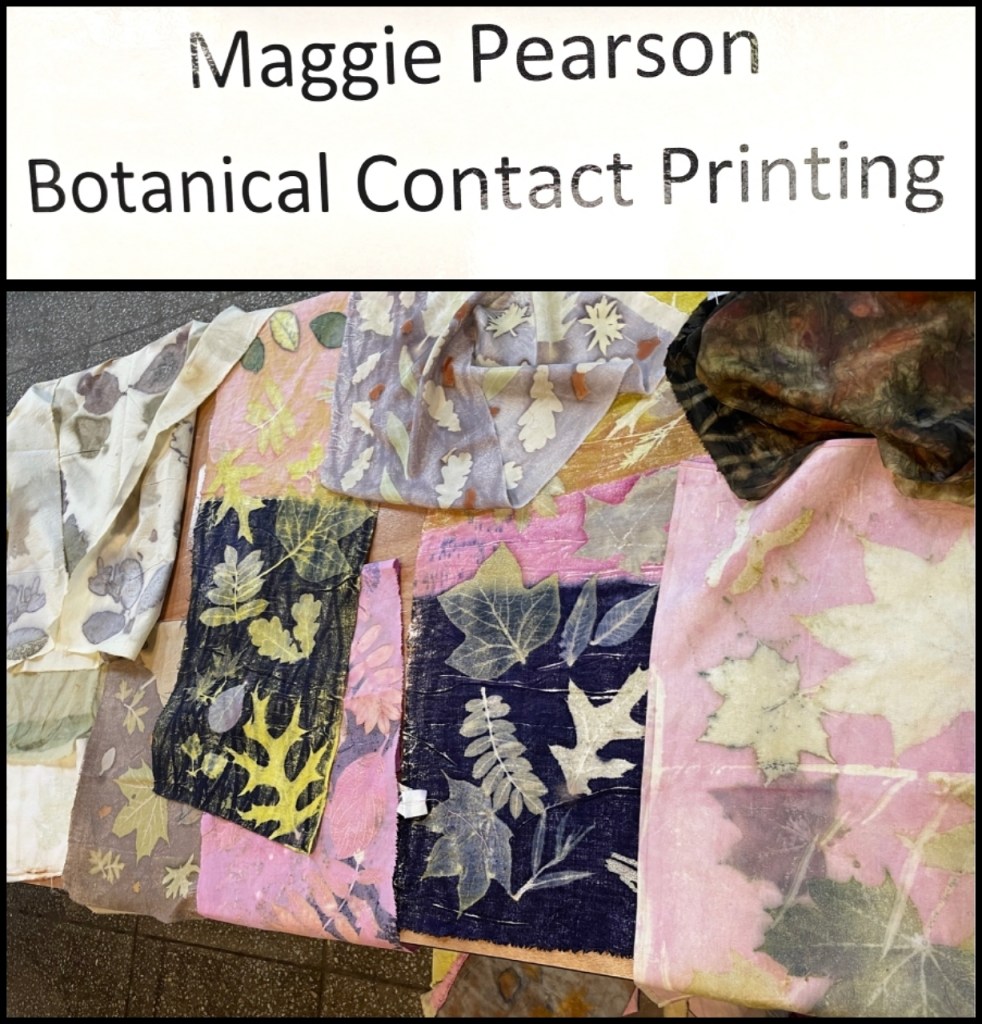
Learn how to ecoprint on lambskin leather naturally as well as create a beautiful background in color! Ecoprinting (also known as botanical printing) involves collecting leaves, plants and flowers to imprint their images directly upon the leather.
Because I am not really a plant person and have never done any Ecoprinting on fabric, let a lone leather, I wasn’t sure what to expect. Throughout the day Teresa discussed:
• Leather -everything you need to know to understand, locate, select and work with leathers that accept ecoprinting no matter where you live!
• Equipment-what you need and how to use it (most of which you already have!
• Plants-All about plants, leaves, weeds and flowers and using them on Leather
• Mordants- descriptions and ratios
• Dyes- easy to use selections for permanent results
• Care – and conditioning of your leather
• Sources for leather, dyes and mordants and tools (in US and online)
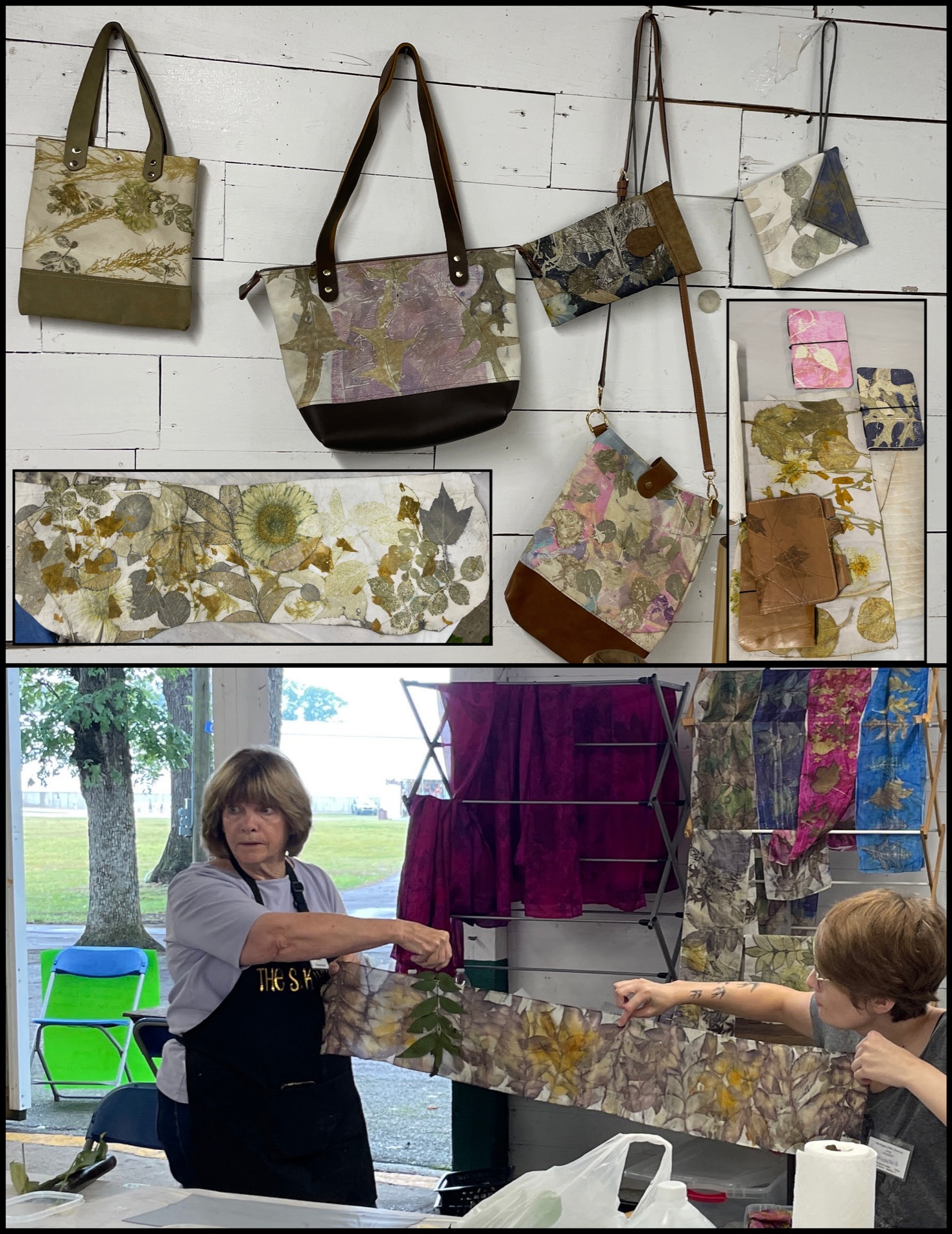
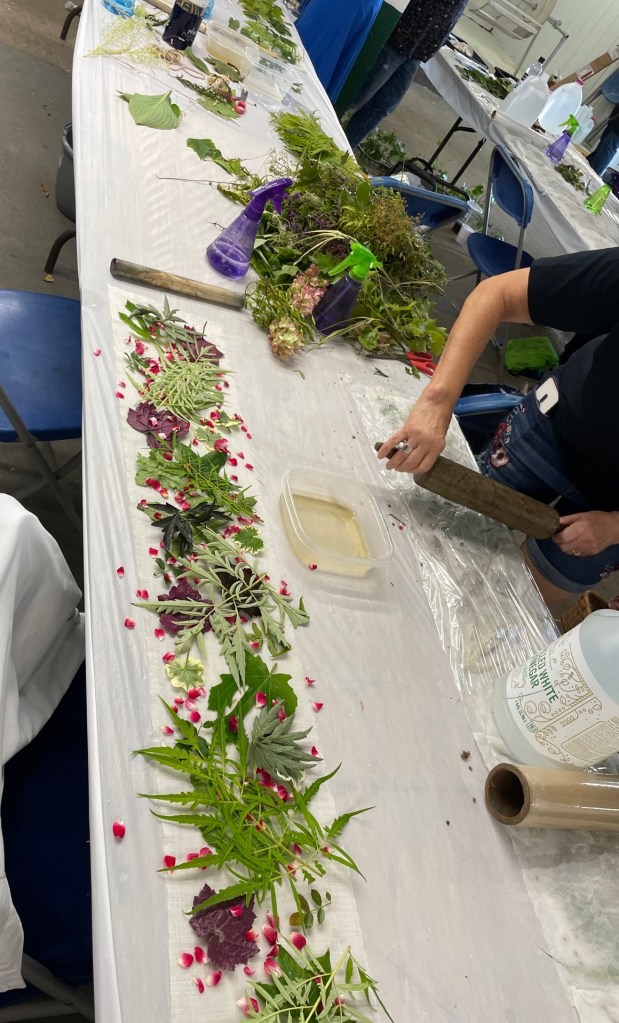
We used sheepskin and lambskin (8in x 20in/20cm x 50cm), laid our plant materials, rolled, wrapped and set the bundles into a hot water bath (175F/80C) for 75 min.
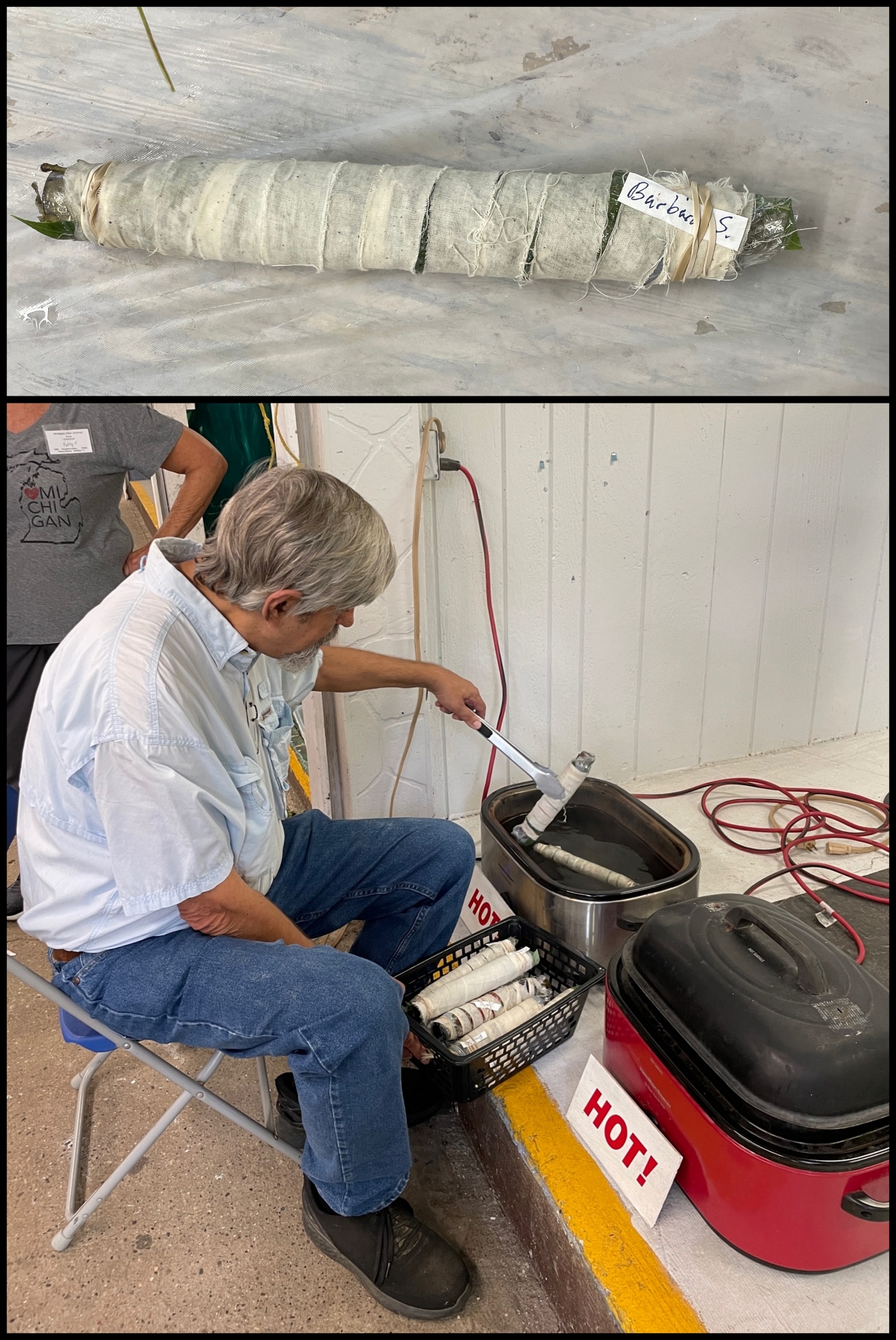
Coming back after lunch we unrolled our bundles and WOW!. It was really interesting to see how the different leaves and blossoms printed. The lambskin piece also incorporated using a dye blanket to create a background color to the leather.

~~~~~~~~~~~~~~~~~~~~~~~~~~~~~~~~~~~
Saturday – Easy Dye Silk Scarves with Teresa Brown
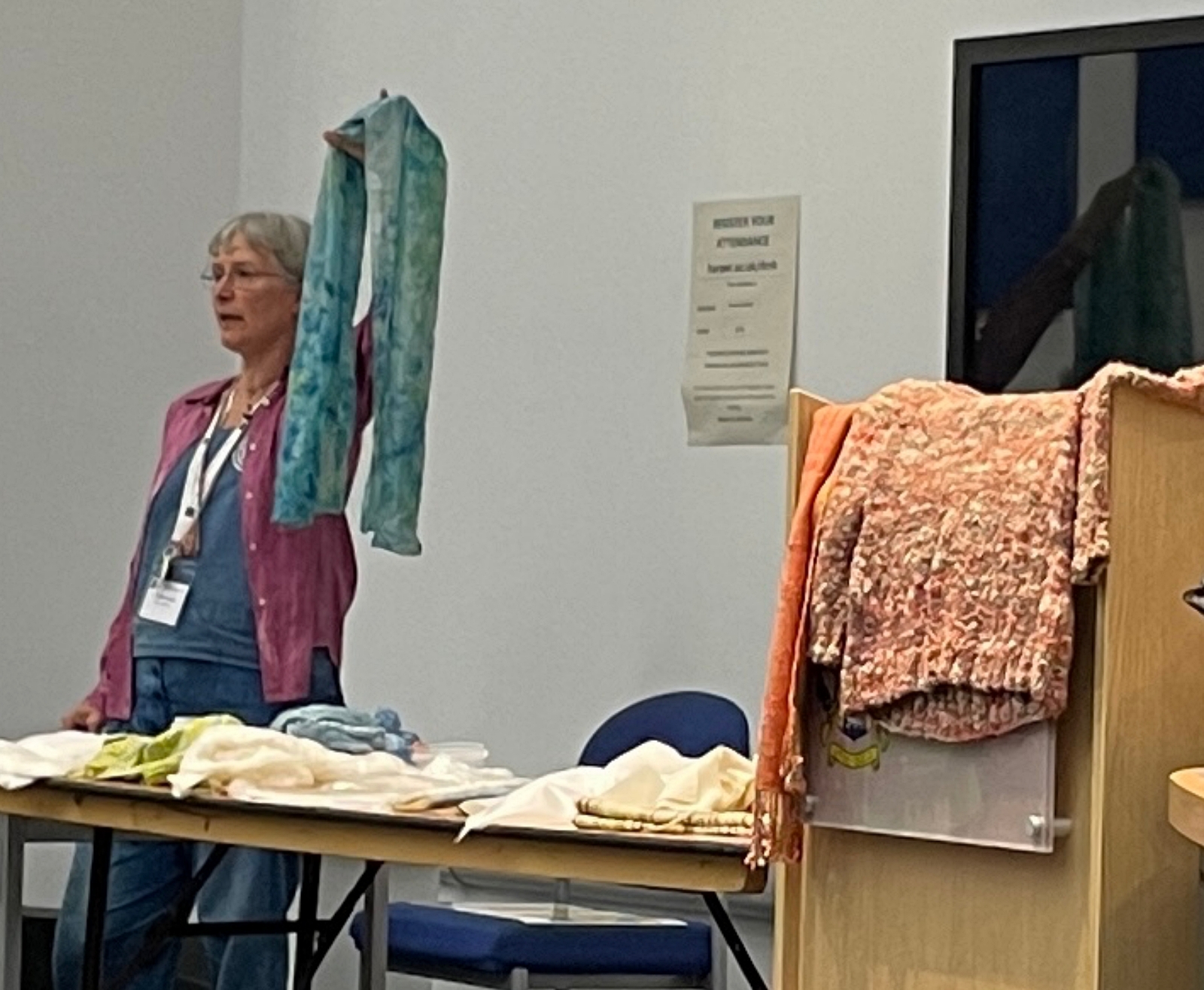
Create your own beautiful abstract designs on silk scarves. No need to steam or heat set with the specially formulated, safe dyes. You’ll leave with 2 ready to wear pure silk scarves.
I enjoyed the EcoPrint on Leather and when saw that there were still openings for Teresa’s mini workshop on Saturday morning I signed up. I have limited space at home to do any dyeing so I was interested in which dyes we would use that do not require steam or heat to set.

For the first scarf we were shown 3 different ways of folding and scrunching the fabric then used pipette to draw the dye in a line or simply one drop at a time. The second scarf was of our won design.

~~~~~~~~~~~~~~~~~~~~~~~~~~~~~~~~~~~
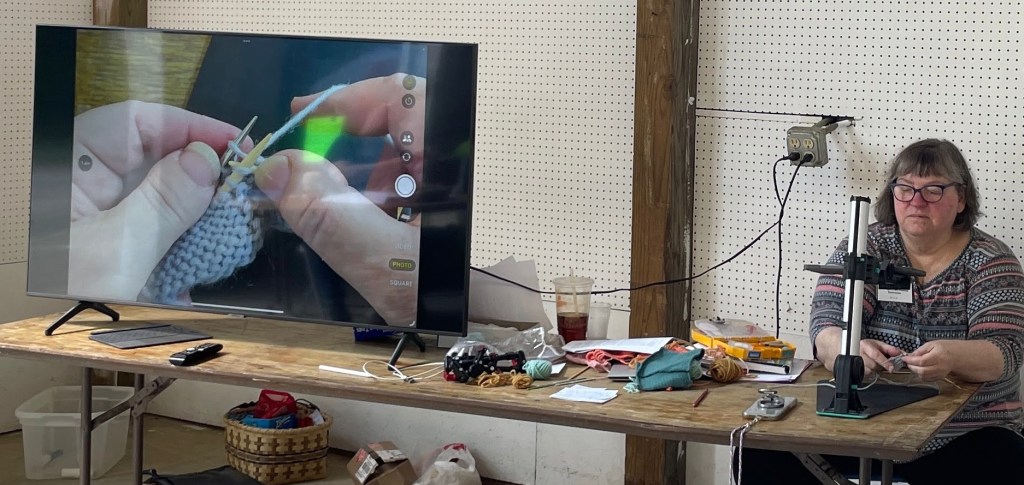
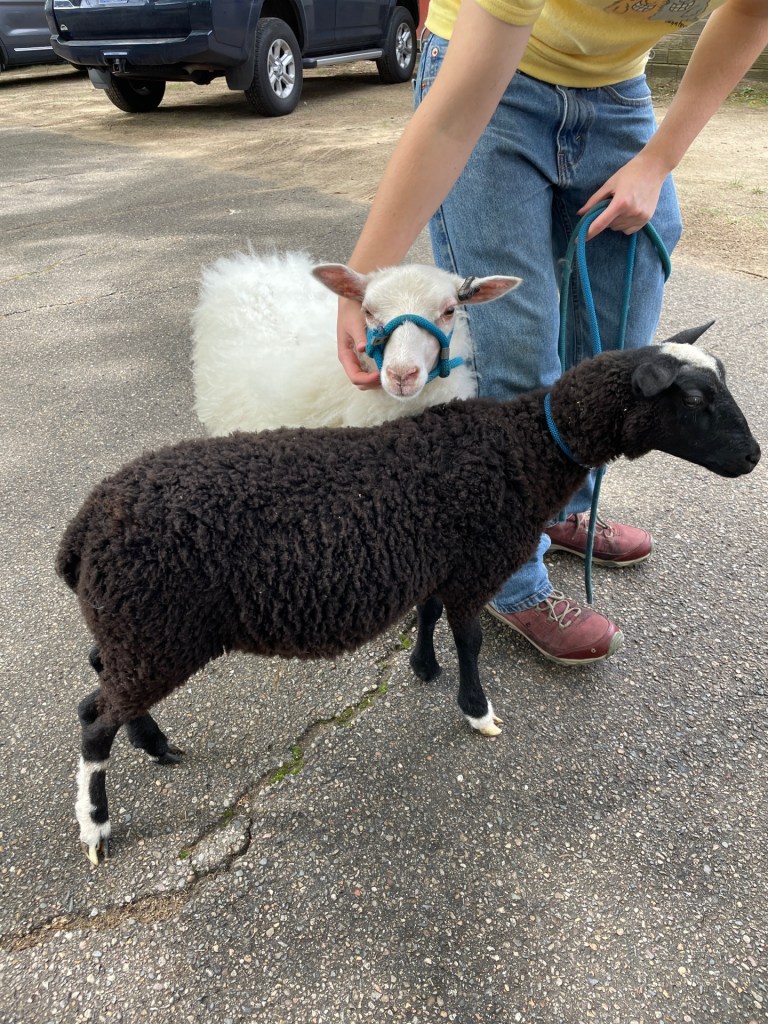
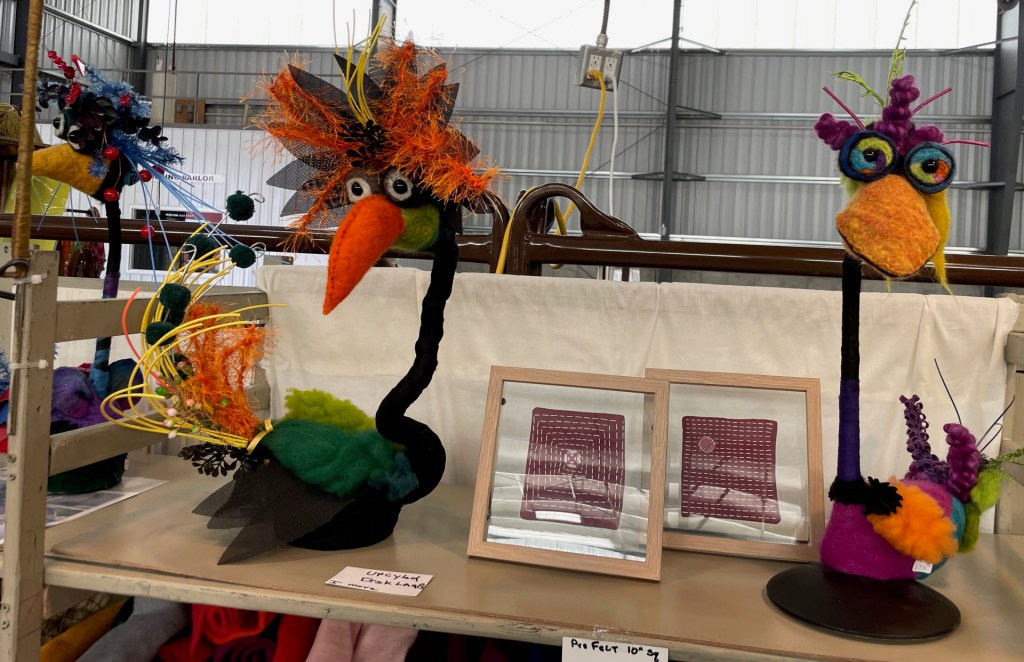
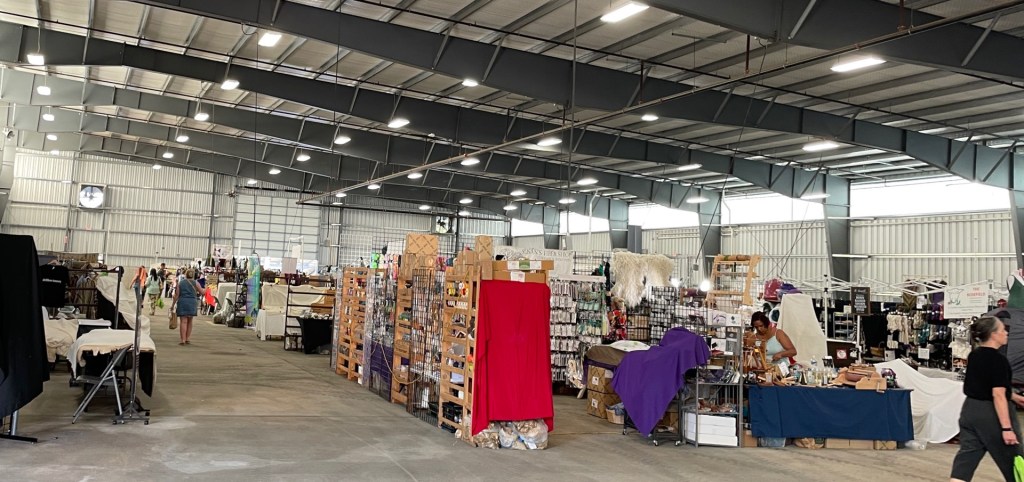
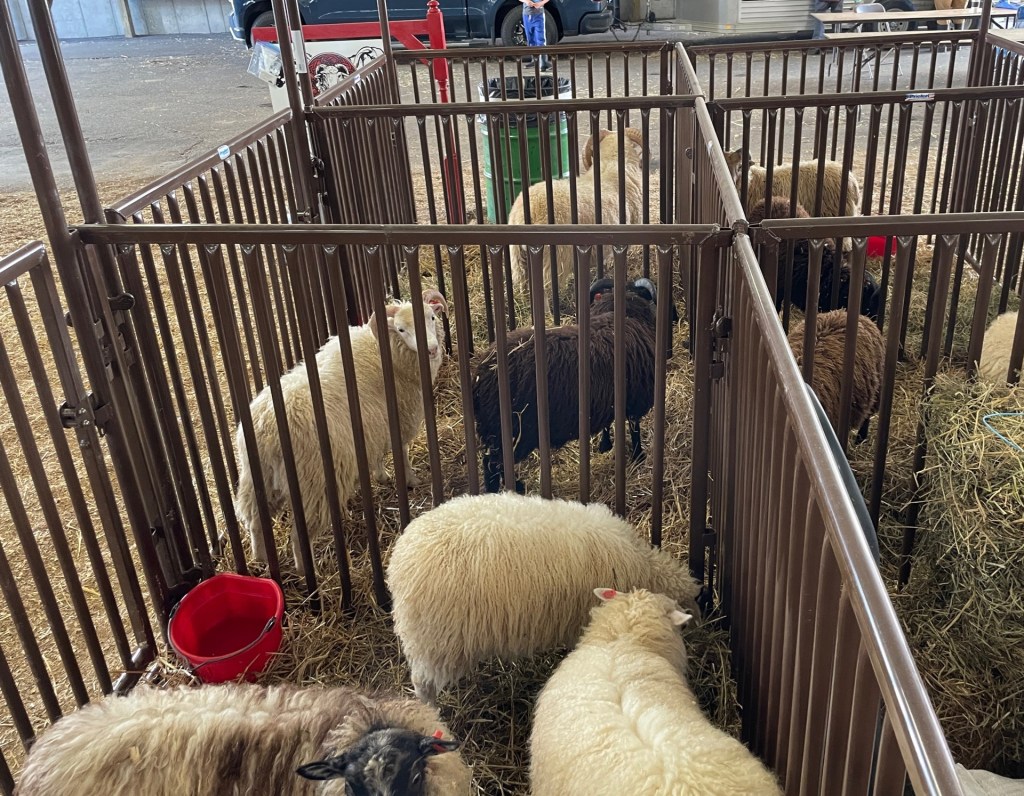
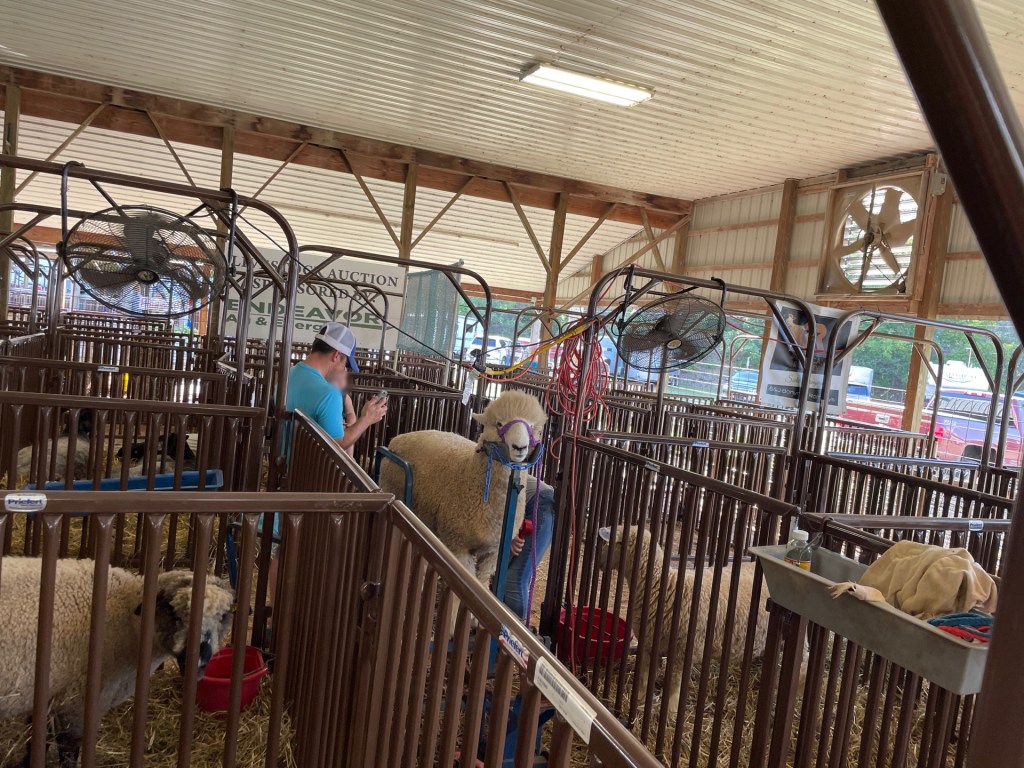
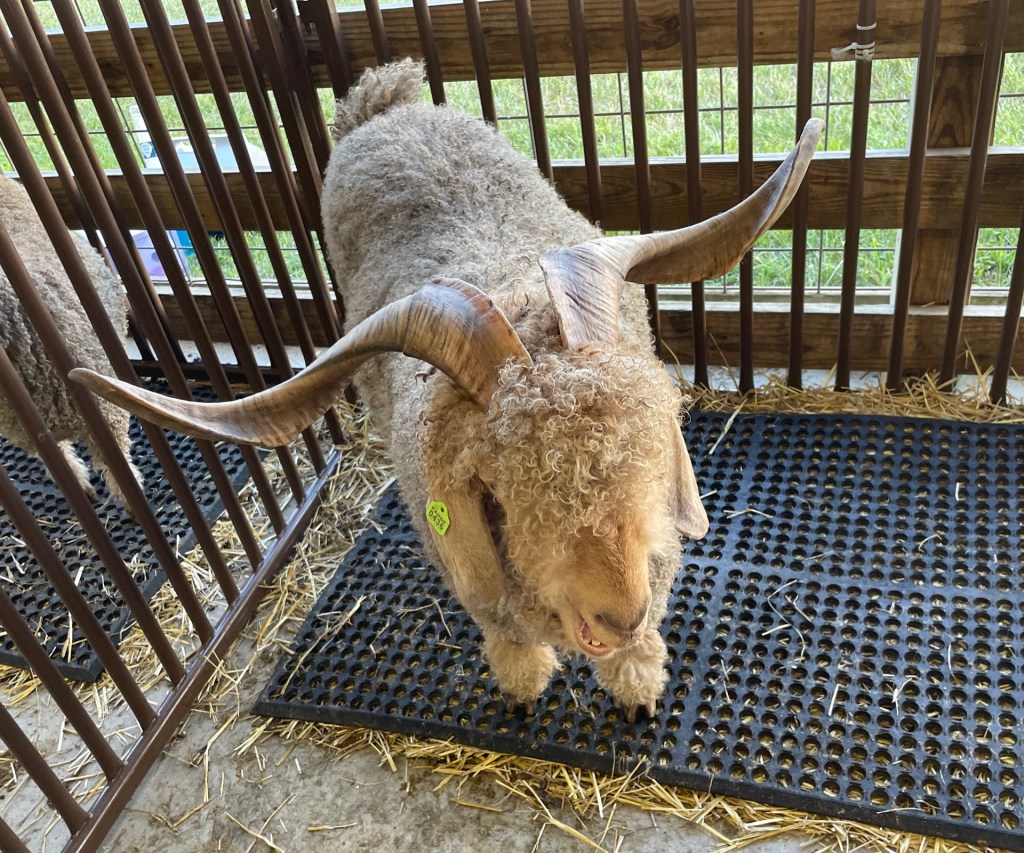
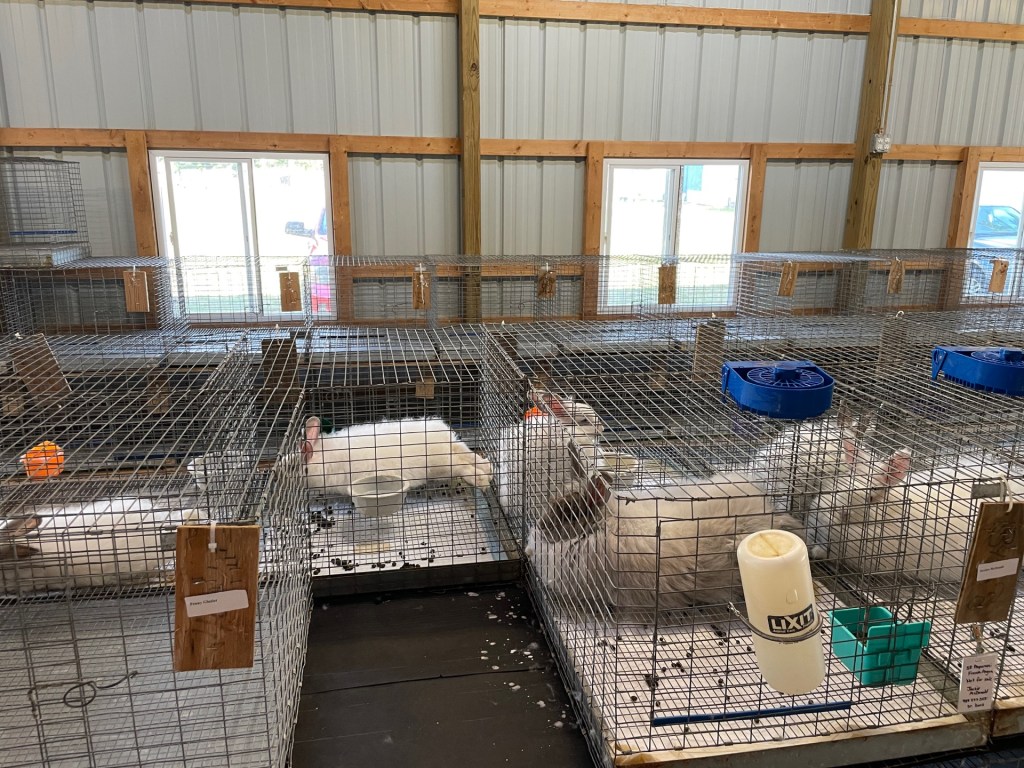
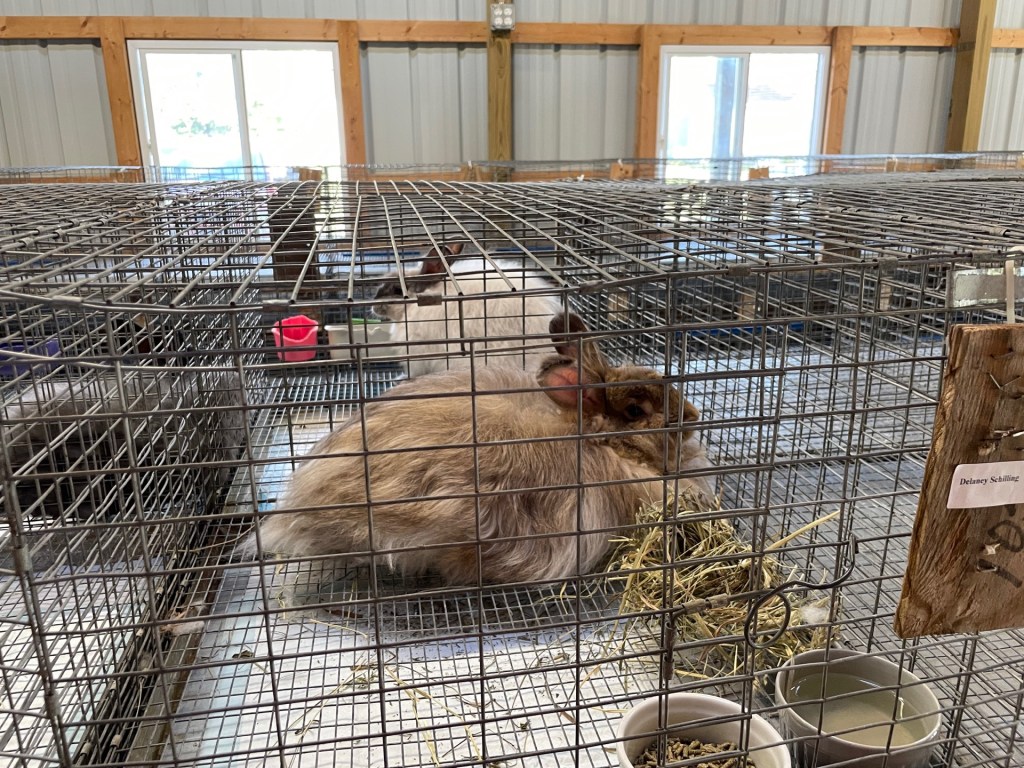
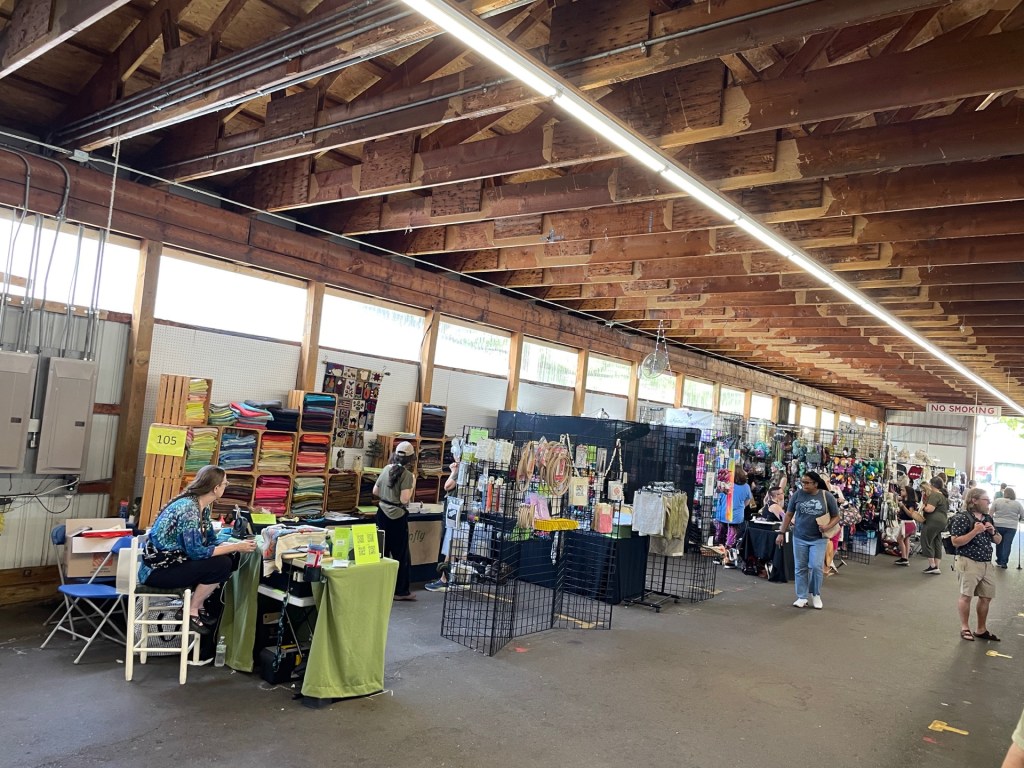
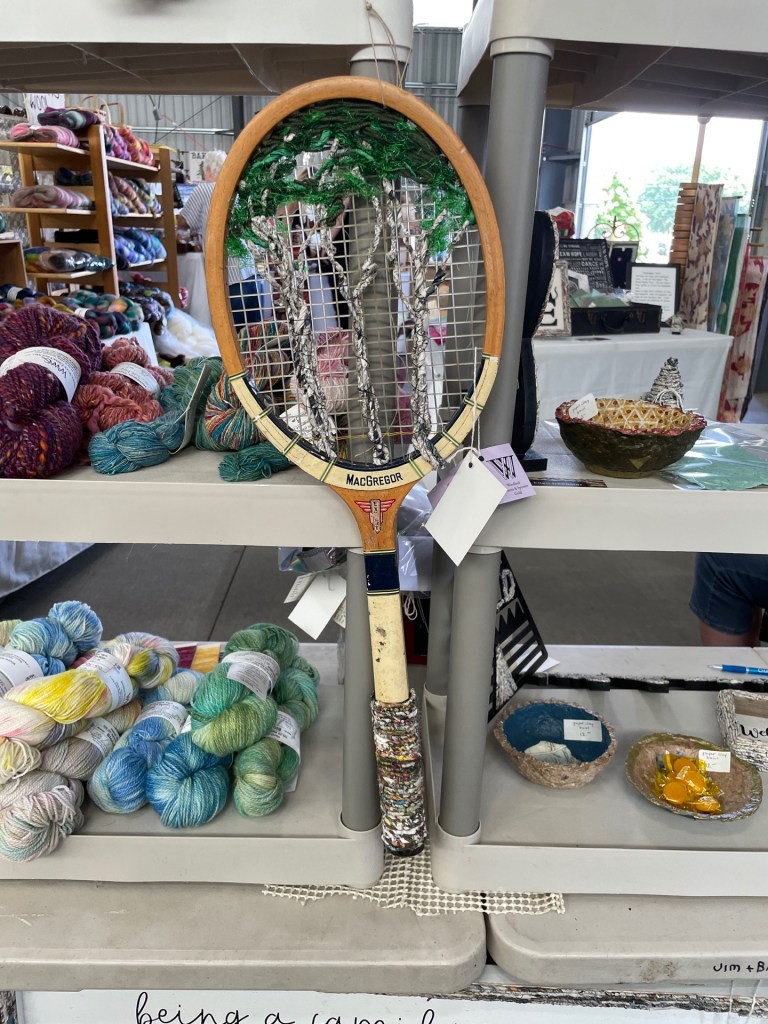
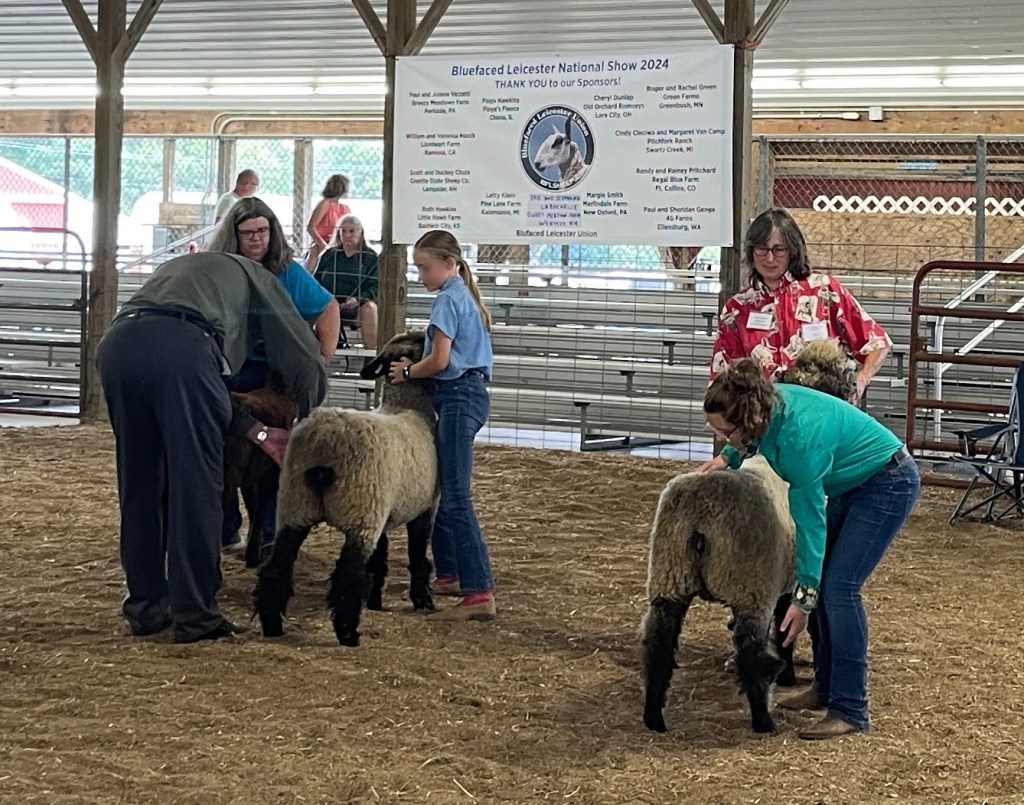
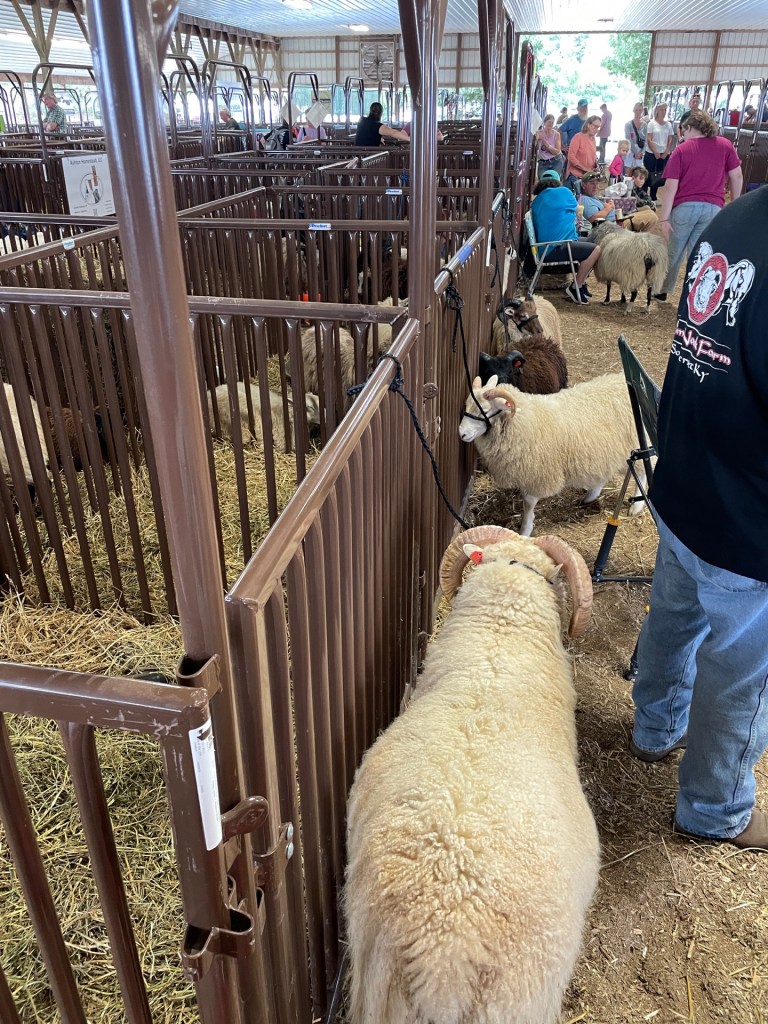
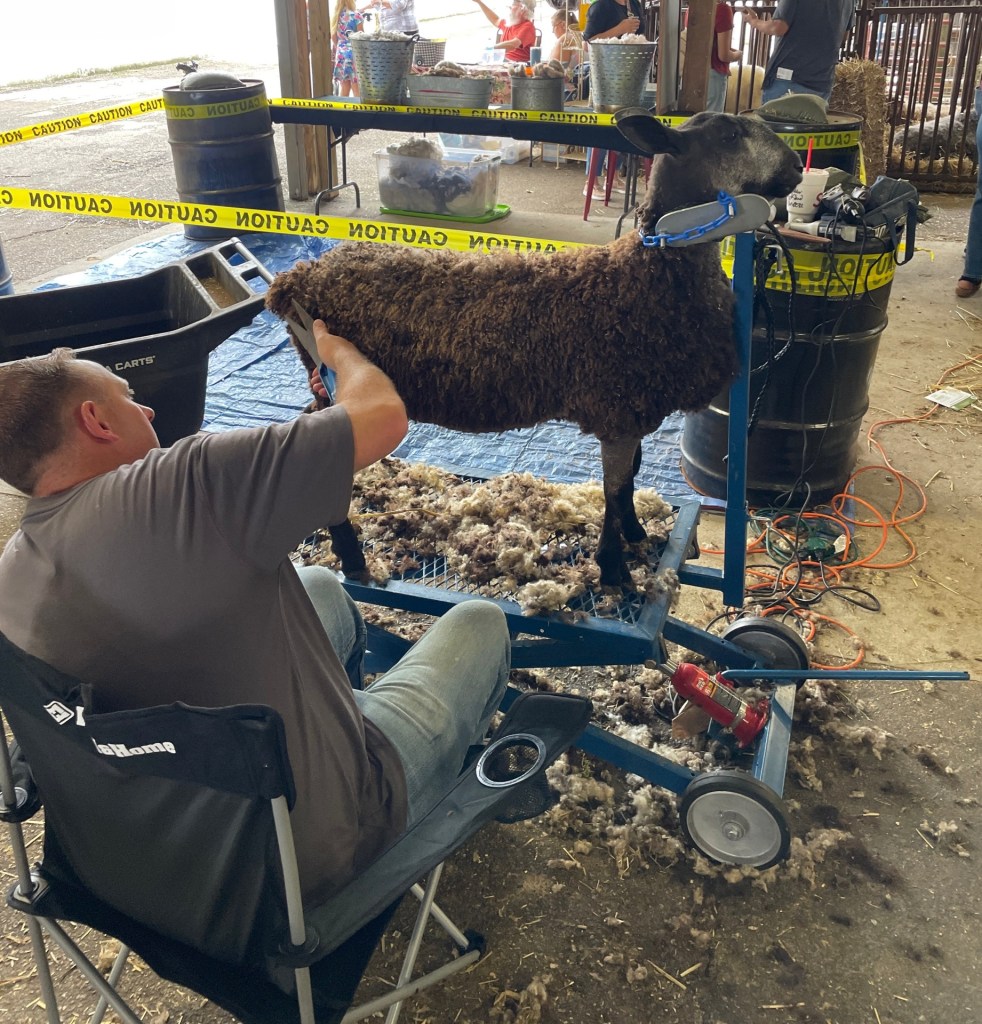
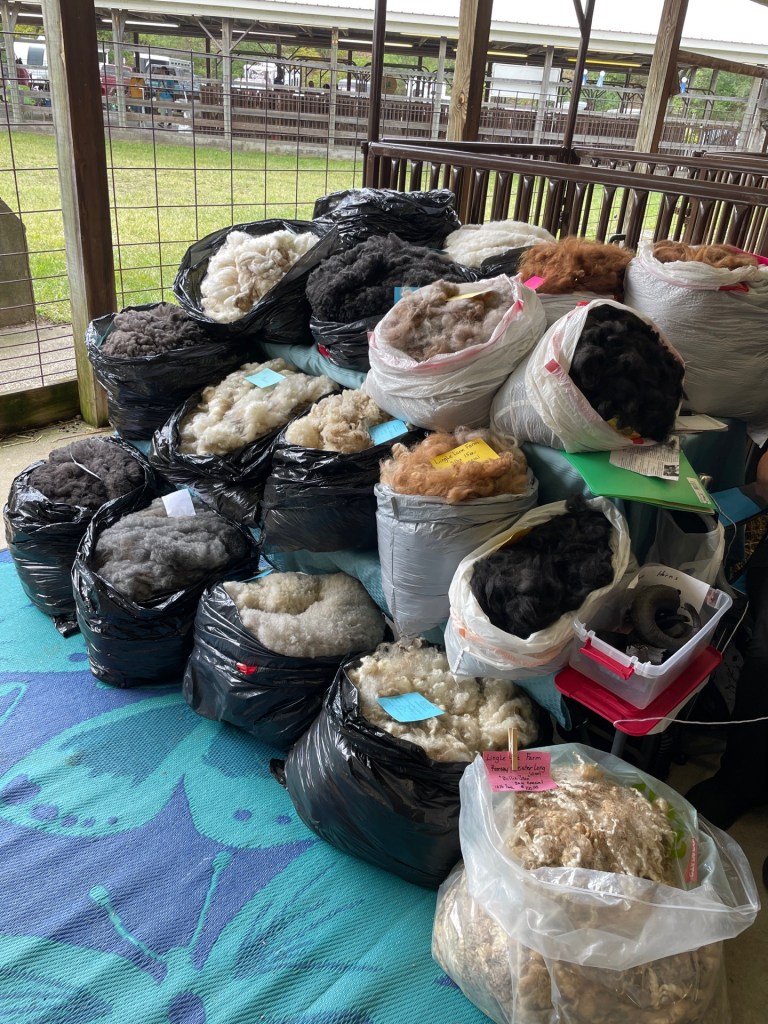
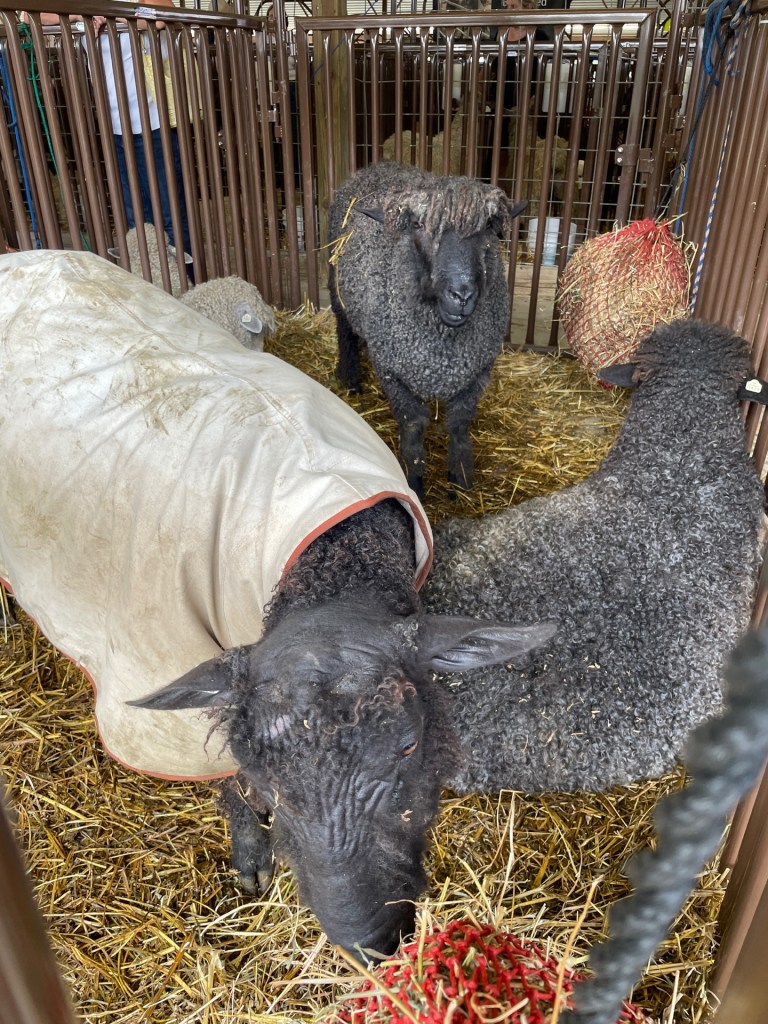
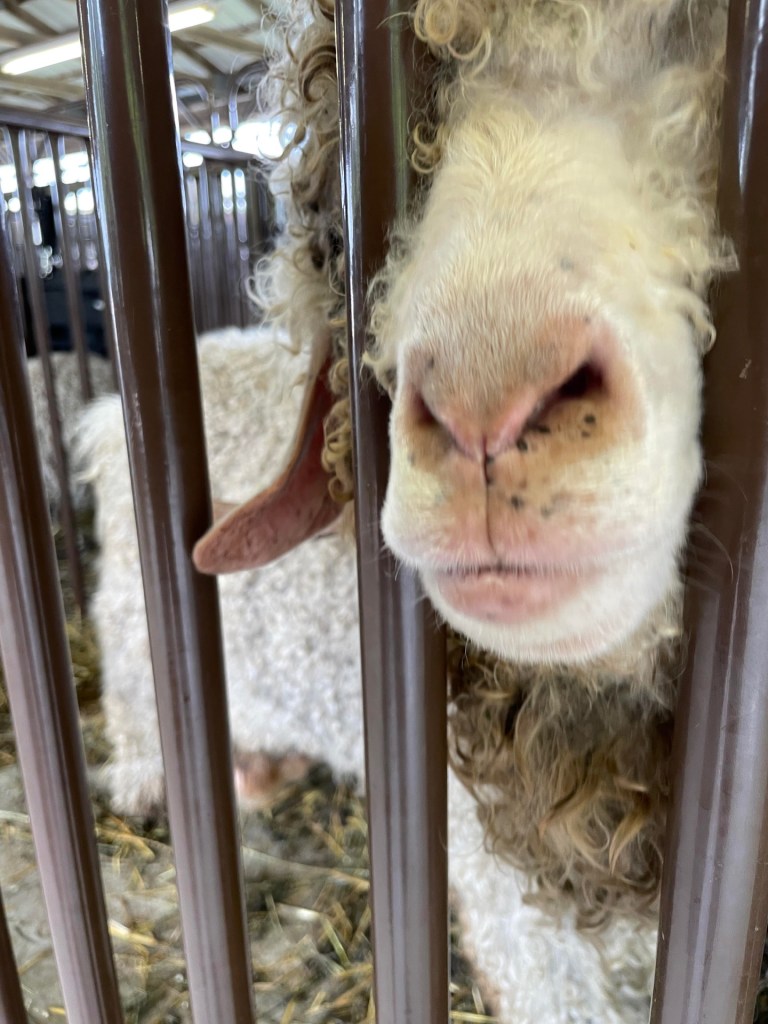
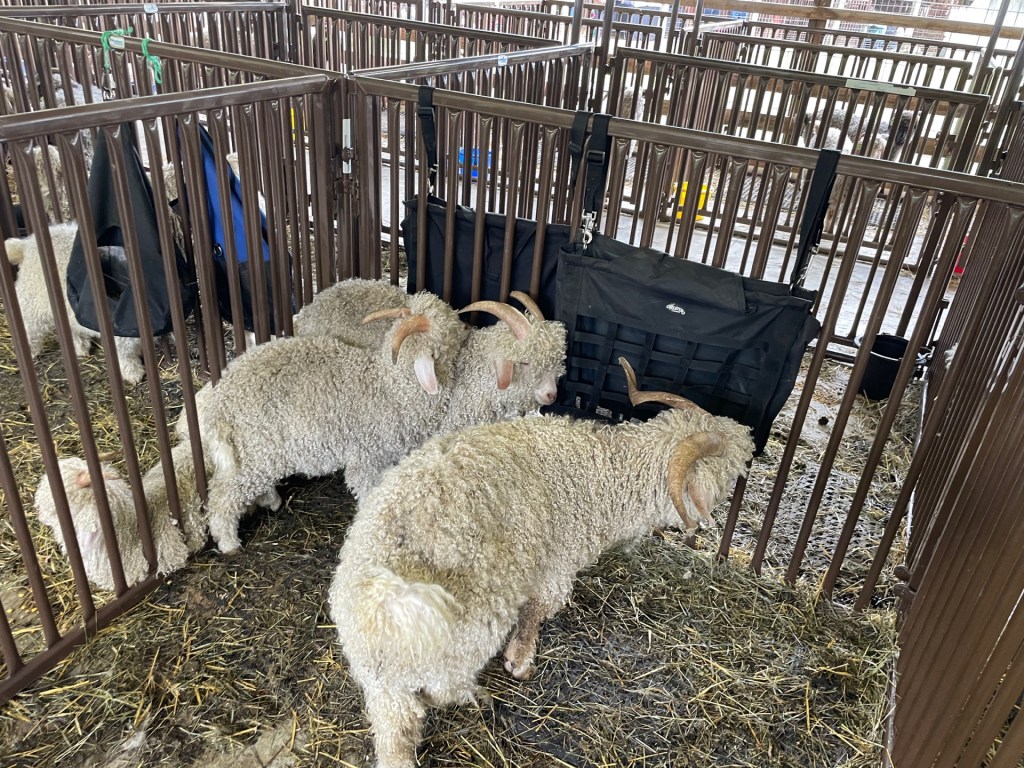
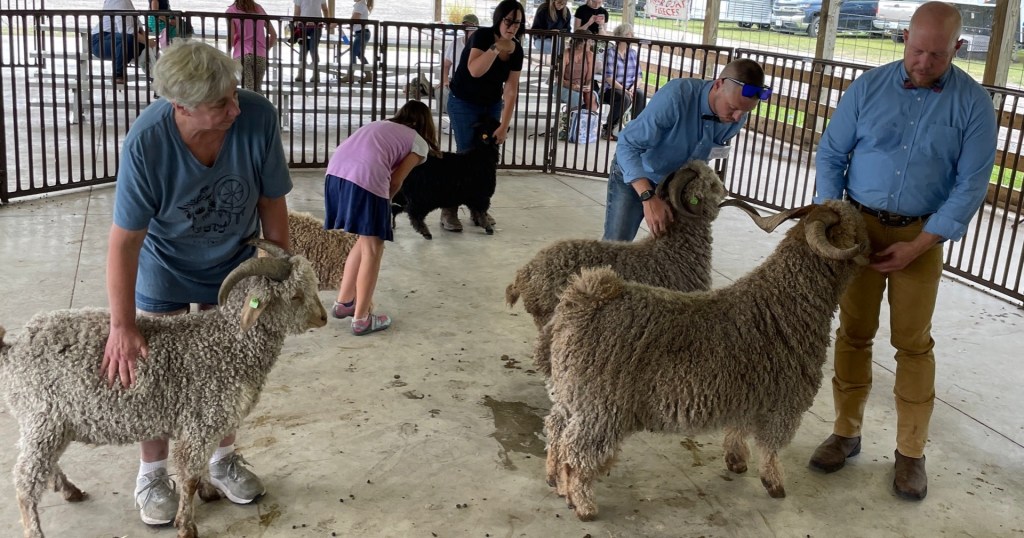
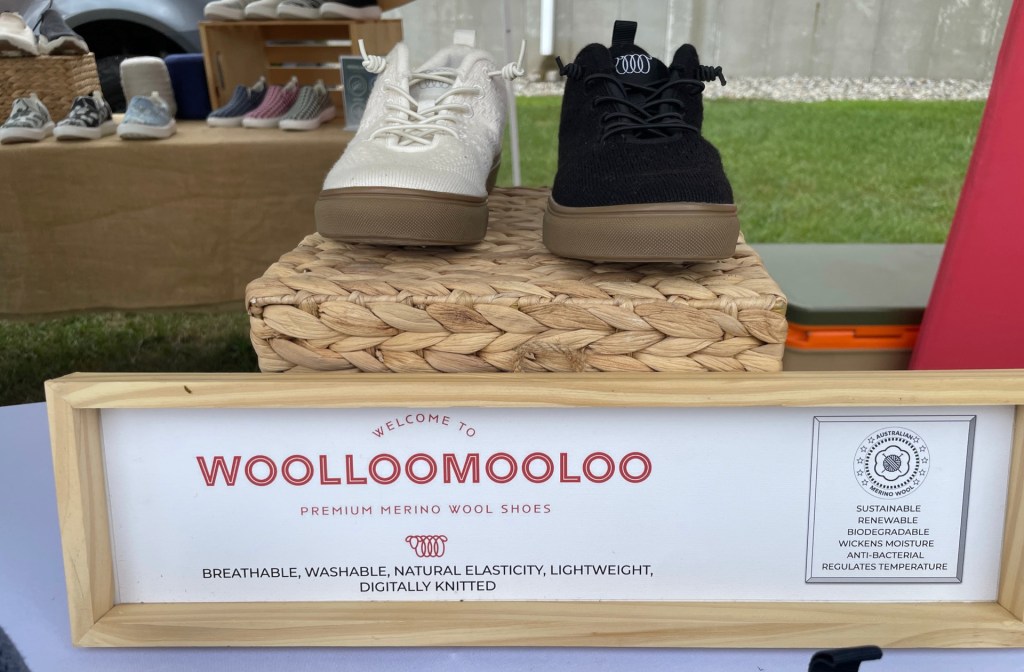
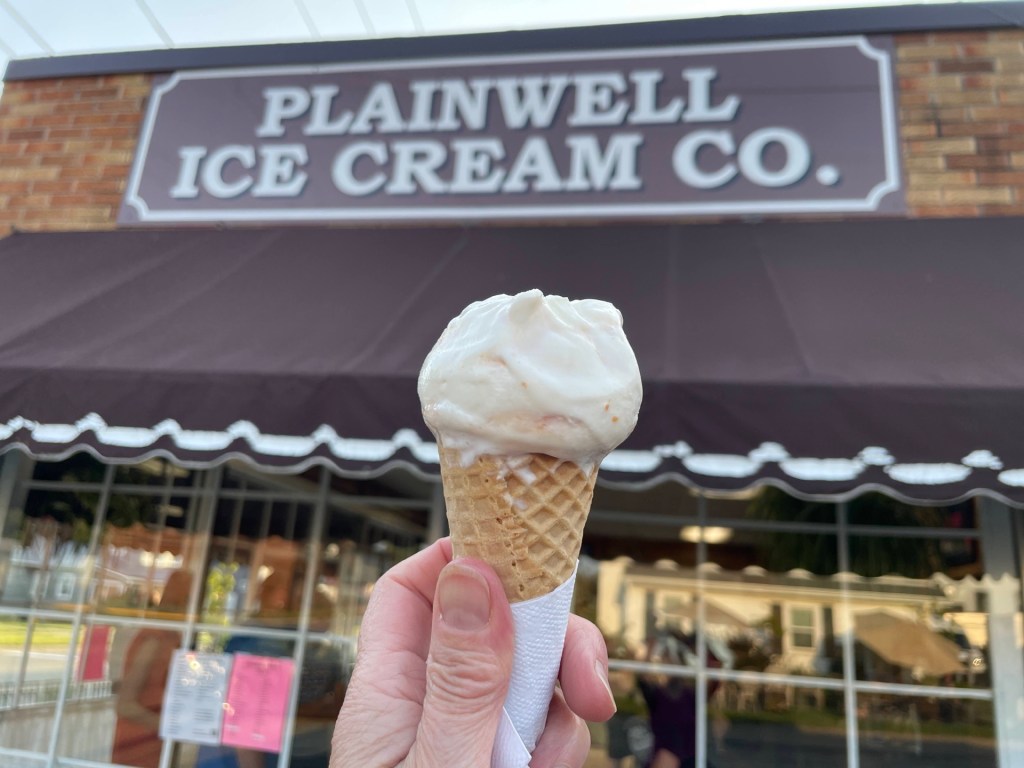
This year’s Michigan Fiber Festival was another welcoming set of days filled with excellent workshops, strolls past vendor stalls and in the animal barns, chatting with old friends and new, topped off with evening meals at favorite local brewpubs Schaendorf Brewing Co. in Allegan, Maude’s Taphouse in Otsego, Old Mill Brewpub in Plainwell and of course a stop at Plainwell Ice Cream Company.






















 Barbara Schutzgruber - Storyteller & Weaver